


ABSTRACT:
OBJECTIVE: Few longitudinal studies have evaluated the COVID-19 pandemic's impact on the mental
health of youth, particularly in low- and middle-income countries, where financial
vulnerability may heighten risk. This study examined changes in psychopathology and
well-being among Brazilian youth during the pandemic and the potential protective
role of an emergency cash transfer program.
METHODS: Data were collected from 1,385 Brazilian High-Risk Cohort for Mental Conditions participants
before and during the COVID-19 pandemic. Mental health problems and well-being were
assessed with the Strengths and Difficulties Questionnaire and the Short Warwick-Edinburgh
Mental Well-Being Scale. In a subsample, daily well-being was assessed using ecological
momentary assessment. Changes over time were examined using linear mixed-effects models.
RESULTS: Participants not exposed to COVID-19 infection (estimate = -1.25, t = -4.637, p <
0.001) and those reporting no difficulty adhering to social distancing (estimate =
-1.33, t = -4.401, p < 0.001) had fewer mental health problems. Those who did not
receive emergency cash transfers experienced decreased well-being (estimate = -0.88,
t = -2.766, p = 0.034), while beneficiaries reported more positive affect in the ecological
momentary assessment subsample (estimate = -0.25, t = -2.991, p = 0.009).
CONCLUSIONS: Lower exposure to pandemic-related stressors was associated with better mental health.
Emergency cash transfers may have mitigated declines in well-being, highlighting their
relevance for supporting youth during crises.
Keywords: Youth mental health; COVID-19; cash transfer program; well-being; psychopathology.
FIGURES
| Note: How to cite this article: Silva-Jr FD, Damiano RF, Haas LM, Ribeiro SM, de Giusti C, Souza LO, et al. Mental health and well-being of adolescents and young adults before and during COVID-19: the impact of pandemic-related risk factors and the protective role of a cash transfer program. Braz J Psychiatry. 2026;48:e20254495. Epub 2026 Feb 15. http://doi.org/10.47626/1516-4446-2025-4495 |
| Received: August 12 2025; Accepted: January 20 2026 |
INTRODUCTION
The COVID-19 pandemic profoundly impacted global health and economic resources, having a particularly negative effect on mental health and well-being around the globe.1,2 While studies in adult populations have yielded conflicting results regarding changes in depression, anxiety, and other mental health symptoms between the pre-pandemic and pandemic periods,3,4 meta-analytic evidence supports a consistent increase in such symptoms among children and adolescents.5,6 However, there is a notable scarcity of longitudinal studies addressing COVID-19 pandemic-related changes in the mental health of youth from low- and middle-income countries, where the majority of the world's youth population lives.6
The main risk factors associated with increased mental health problems among youth during the COVID-19 pandemic have been identified as older age,7 female sex,7,8 and low socioeconomic status (SES),9 as well as pandemic-related factors such as heightened local COVID-19 prevalence.10,11 The COVID-19 pandemic may have had an even broader impact on the mental well-being of young people, considering that mental well-being is more than the simple absence of psychopathology.12 Young people may have experienced the pandemic in a way that altered their day-to-day sense of happiness and life satisfaction, as well as their psychological functioning and self-realization.12 To address these types of changes, researchers have increasingly incorporated real-time assessment strategies, such as ecological momentary assessment (EMA), to capture more subtle and ecologically valid variations in mental well-being.13 In the present study, EMA was used as a complementary and exploratory approach, allowing for the assessment of mood and well-being in natural contexts and reduced recall bias. Although longitudinal studies have found that the mental well-being of youth significantly worsened during the COVID-19 pandemic,7 few have incorporated EMA-based assessments as a secondary outcome to examine changes before and during COVID-19.14,15 By capturing short-term fluctuations in emotional states, EMA can complement traditional retrospective questionnaires and provide additional information on daily variations in well-being.16-18
A recent meta-analysis assessing the impact of the COVID-19 pandemic on the mental health of youth highlighted the scarcity of studies from Latin America.6 This situation is unfortunate, given that the impact of the pandemic on mental health and well-being may be particularly harsh in low- and middle-income countries.19 Indeed, in response to the economic challenges associated with the COVID-19 pandemic, some countries employed societal-level strategies, such as cash transfer programs. For example, Auxílio Emergencial, the Brazilian COVID-19 emergency cash transfer program, was launched on April 7, 2020, providing financial aid to eligible individuals (approximately USD 115).20 Importantly, meta-analytic data suggest that cash transfer programs have positive effects on the mental health of youth.21 Given the relative paucity of studies examining available programs,21 we felt it necessary to further evaluate this moderating strategy in the context of a greater evaluation of the mental health of youth during the COVID-19 pandemic.
In this context, using data from an ongoing community-based Brazilian cohort study, we explored the deleterious impact of pandemic-related factors, such as financial loss and the potential protective effect of a societal-level strategy (i.e., a government emergency cash transfer program) on the mental health and well-being of youth. First, we sought to identify relevant sociodemographic and COVID-related factors potentially associated with changes in mental health between the pre-pandemic and pandemic periods. Second, we aimed to expand these previous analyses by incorporating a broader concept of mental health, directly assessing the dimension of mental well-being. Third, we sought to explore the effects of a national emergency cash transfer program on levels of psychopathology and well-being between the pre-pandemic and pandemic periods. Fourth, in an exploratory analysis using a cohort subsample, we used EMA data to compare mental well-being between the pre-pandemic and pandemic periods and to evaluate the potential moderating effects of the emergency cash transfer program.
METHODS
Sample
The Brazilian High-Risk Cohort for Mental Conditions is an ongoing multisite cohort study that began collecting data from children and adolescents in 2009 in two large Brazilian metropolitan areas (São Paulo and Porto Alegre). For a detailed description of enrollment and baseline procedures, see Salum et al.22
At baseline (Wave-0) in 2010, we evaluated 2,511 participants using an extensive protocol, involving a 2- to 3-hour household evaluation with the biological parents and two 2-hour evaluations of the children at school (by a psychologist and a speech therapist). Follow-up assessments were planned at 3-year intervals. Here, we compare data from Wave-2 (henceforth, the pre-COVID-19 wave) with Wave-3, which occurred after the COVID-19 pandemic began (henceforth, the COVID-19 wave) collected approximately 3 years after Wave-2. Collected approximately 6 years after baseline assessment, the retention rate in the pre-COVID-19 wave was 76% (n=1,909 families), from whom we collected 1,801 parent/caregiver-reports and 1,690 youth self-reports (mean age 18.2, SD 2.0, range 13.5 to 23.0)23 between April 29, 2018 and Jan 31, 2020.
Data from the COVID-19 wave were collected via telephone interviews or Internet self-report questionnaires between April 3, 2020, and April 26, 2021 (histograms with interview date distributions are shown in Supplementary Figures S1 and S2). We collected data from 1,615 youths (telephone n=1,011, 62.6%; Internet form n=604, 37.4%).
Measures/outcomes
The main outcomes of the present analyses were the participants' self-reported mental health problems using the Strengths and Difficulties Questionnaire (SDQ) and their self-reported mental well-being using the Short Warwick-Edinburgh Mental Well-Being Scale (SWEMWBS). Additionally, daily mental well-being was assessed through an EMA protocol through the question "How do you feel now?," both in the pre-COVID-19 and COVID-19 waves.
Strengths and Difficulties Questionnaire (henceforth, mental health problems)
The Brazilian Portuguese version of the 25-item self-report SDQ,24 a widely used research instrument for the detection of emotional and behavioral problems, was administered to the participants. Each item was rated as: not true (0), somewhat true (1), or certainly true (2). Only one option could be checked per item. Here, we used the Total Difficulties score, which included 20 items (ranging from 0 to 40 points). Higher scores indicate greater self-reported mental health problems.
Short Warwick-Edinburgh Mental Well-being Scale (henceforth, mental well-being)
We assessed mental well-being using the Brazilian Portuguese version of the SWEMWBS,25 a seven-item self-report instrument that was specially developed to measure mental well-being in non-clinical samples. The SWEMWBS covers two different aspects of mental well-being: affect, i.e., the subjective experience of happiness and life satisfaction (hedonia), and psychological functioning (eudaimonia).12 Each item is rated on a Likert scale from 1 to 5, from 1 = "never" to 5 = "all the time." Scores range between 7 and 35 points, with higher scores indicating better levels of mental well-being. Twenty participants did not complete all SWEMWBS questions and were excluded from analyses involving this outcome (thus, n=1,367 for models with mental well-being as the outcome).
Ecological momentary assessment protocol (henceforth, daily well-being)
The Brazilian High-Risk Cohort for Mental Conditions EMA app was developed to collect real-time self-report data on mental health symptoms through up to five smartphone prompts per day. The protocol included several behavioral domains based on previous EMA protocols, and the present analysis focused on an EMA item developed by the cohort team to evaluate mental well-being: "How do you feel now?" Participants rated their current emotional state on a graphic scale ranging from three thumbs down to three thumbs up, corresponding to a 1-7 Likert scale (Supplementary Figure S3). Detailed information about our outcomes is available in the Supplementary Methods.
Predictors
Socioeconomic and demographic factors
We also examined age at evaluation, socioeconomic status, sex, ethnicity (White or non-White), and educational level (low/unknown education, high school, or higher education), which was categorized into three groups. For a detailed description of the variables, see the Supplementary Methods.
COVID-19 pandemic-related risk and protective factors
We examined key domains of mental distress and resilience during the COVID-19 pandemic using the Brazilian Portuguese version of the Coronavirus Health Impact Survey questionnaire.10 This global initiative provided a standardized, reliable tool to investigate the impact of COVID-19 on mental health (available at www.crisissurvey.org).10 Here, we used a set of dichotomized Coronavirus Health Impact Survey self-reported variables to assess: 1) exposure to COVID-19 infection, 2) COVID-19 pandemic-related socioeconomic impact, 3) any COVID-19-related changes in the participants' lives, and 4) any difficulties adhering to social distancing. For a detailed description of all items, see the Supplementary Methods.
Government monetary aid
Participants were asked whether they received any financial assistance from the government during the COVID-19 pandemic. If they answered positively, they were asked to provide a detailed description of the specific type of government program they were enrolled in. The answers were categorized as: 1) COVID-19 emergency government cash-transfer programs or 2) other programs. Importantly, any other aid unrelated to the ongoing pandemic was not considered a positive response to this variable, such as continuous monetary cash transfer programs (e.g., Bolsa Família).
Statistical analysis
Our analyses involved linear mixed-effects models to examine changes in both mental health problems and mental well-being across the two time points (the pre-COVID-19 and COVID-19 waves). Separate models were used for each dependent variable (mental health problems and mental well-being), including fixed effects for time, sociodemographic variables, pandemic-related factors, and their interactions with time. To account for repeated measurements, a random intercept for participant ID was included in all models. Models were estimated using restricted maximum likelihood, and p-values for fixed effects were obtained using the lmerTest package. All analyses were conducted in RStudio 4.1.3, with the statistical significance threshold set at < 0.05.
First, we explored the main effect of time in models without time-by-predictor interactions. Second, we examined time-by-predictor interactions to understand how these predictors may have influenced changes in outcomes over time. Third, for significant time-by-predictor interactions, post-hoc analyses were performed by applying Bonferroni correction to adjust p-values for multiple comparisons. Post-hoc analyses were restricted to within-group longitudinal contrasts (pre- vs. during-COVID-19 waves), focusing on identifying which subgroups showed significant changes over time rather than differences between groups. The level of statistical significance was set at p < 0.05 after Bonferroni adjustment for post-hoc analyses.
Exploratory analysis: ecological momentary assessment and government monetary aid program
We conducted an exploratory analysis using the participants' responses to an EMA protocol in the pre-COVID-19 and COVID-19 waves. This exploratory analysis focused on the government monetary aid programs predictor and its effect on changes in the EMA "thumbs up/thumbs down" item. Statistical analyses were conducted using a linear mixed-effects model adjusted for age and sex, including the government monetary aid-by-time interaction, with Bonferroni adjustment for post-hoc analyses.
Sensitivity analysis
Our COVID-19 wave began on April 3, 2020 and concluded on April 26, 2021. However, most questionnaires were answered during the initial months of the pandemic. Therefore, to account for the fact that assessments were made at different timepoints during the COVID-19 pandemic, we re-ran all linear mixed-effects models, including participants who were assessed by September 26, 2020 (n=1,274) (Supplementary Methods).
Ethics statement
This study was approved by the National Research Ethics Commission and the institutional review board from all involved universities. Informed consent was obtained from the parents and participants. This report was written in compliance with the STROBE statement (Supplementary Methods).
RESULTS
Sample
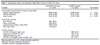
Present analysis focused on individuals who completed all questionnaires in the pre-COVID-19 and COVID-19 wave assessments, resulting in a sample size of n=1,385, with a mean age of 18.3 (SD 1.5 years) and 19.7 years (SD 1.5 years) for the pre-COVID-19 and COVID-19 waves, respectively. Mean follow-up time was 17 months (SD 5.8 months). Descriptive sample characteristics are presented in Table 1. Sociodemographic differences between those who participated in one, two, or all waves are reported in Supplementary Results and Supplementary Tables S1 to S3. For the COVID-19 wave, 12.2% of participants reported exposure to the COVID-19 virus, 19.9% experienced some difficulty adhering to social distancing, and 18.1% reported receiving money from the COVID-19 emergency cash transfer program.
| Variable | Pre-COVID-19 wave (n=1,385) | COVID-19 wave (n=1,385) | Test statistic |
|---|---|---|---|
| Pre-COVID-19 and COVID-19 waves, mean (SD) | |||
| Mental health problems | 14.47 (6.36) | 13.67 (6.64) | p┼ < 0.001 |
| Mental well-being | 24.40 (5.60) | 24.13 (5.39) | p┼ = 0.093 |
| Age in years | 18.33 (2.00) | 19.76 (1.90) | p┼ < 0.001 |
| Pre-COVID-19 wave | |||
| Sex: female | 665 (48.0) | ||
| Race: non-White | 608 (43.9) | ||
| Socioeconomic status, mean (SD) | 18.60 (4.54) | ||
| Site: São Paulo | 723 (52.2) | ||
| COVID-19 wave | |||
| COVID-19 finance impact: yes | 886 (64.0) | ||
| Exposure to COVID-19: yes | 164 (11.8) | ||
| Difficulty distancing: yes | 276 (19.9) | ||
| COVID-19 emergency cash transfer: yes | 251 (18.1) |
Data presented as n (%), unless otherwise specified.
Bold type denotes statistical significance.
┼ Student's t-test for repeated measures.
Impact of sociodemographic and COVID-19 pandemic-related factors on mental health problems
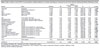
The main effect of time was statistically significant for the mental health problems variable (estimate = 1.256, t = 6.782, p < 0.001), showing a 1-point mean decrease in SDQ scores between the pre-COVID-19 and COVID-19 waves (Supplementary Table S4). Across both time points, females had higher levels of mental health problems than males. Statistically significant interactions emerged for the mental health problems model, including time-by-sex (estimate = -0.626, t = -2.126, p = 0.033), time-by-difficulty distancing (estimate = -1.632, t = -4.420, p < 0.001), time-by-COVID-19 financial impact (estimate = -0.756, t = -2.472, p = 0.013), and time-by-exposure to COVID-19 (estimate = -1.477, t = -3.287, p = 0.001) (Table 2). Additional models, including significant non-longitudinal interactions, are presented in Supplementary Table S5. Time-by-race and time-by-cash transfer program participation interactions were significant, but post-hoc analyses showed no between-group differences. The time-by-SES interaction was not significant. Significant group differences during the COVID-19 wave by risk factors are shown in the Supplementary Results. Adjusted post-hoc analyses revealed significant results for COVID-19 exposure and difficulty adhering to social distancing. To facilitate data interpretation, post-hoc analyses focused on within-group longitudinal changes (before and during COVID-19), rather than between-group comparisons. This approach allowed us to identify which subgroups experienced significant changes over time in the same individuals, rather than comparing mean differences across distinct groups.
| 95%CI | ||||||||
|---|---|---|---|---|---|---|---|---|
| Names | Effect | Estimate | SE | Lower | Upper | df | t | p-value |
| (Intercept) | (Intercept) | 5.432 | 1.71 | 2.079 | 8.781 | 1666.3518 | 3.168 | 0.001 |
| Time | COVID-19-Pre-COVID-19 | 3.965 | 0.72 | 2.556 | 5.374 | 1430.540 | 5.499 | < 0.001 |
| Sex | Male-female | 3.695 | 0.32 | 3.051 | 4.339 | 2017.356 | 11.202 | < 0.001 |
| Race | White-non-White | -0.101 | 0.33 | -0.758 | 0.554 | 2017.178 | -0.303 | 0.761 |
| Age at evaluation | Age at evaluation | 0.322 | 0.07 | 0.170 | 0.475 | 1576.511 | 4.136 | < 0.001 |
| SES score | SES score | -0.011 | 0.03 | -0.082 | 0.060 | 2017.250 | -0.305 | 0.760 |
| Site | Porto Alegre - São Paulo | 0.037 | 0.34 | -0.641 | 0.716 | 2008.450 | 0.108 | 0.913 |
| Educational level | Low/unknown education-high school | -1.619 | 0.38 | -2.372 | -0.867 | 2015.491 | -4.203 | < 0.001 |
| Educational level | Low/unknown education-higher education | -2.787 | 0.55 | -3.874 | -1.700 | 1990.169 | -5.007 | < 0.001 |
| COVID-19 financial impact | No-yes | 1.316 | 0.34 | 0.646 | 1.986 | 2015.254 | 3.838 | < 0.001 |
| Exposure to COVID-19 | No-yes | 1.664 | 0.50 | 0.678 | 2.650 | 2013.316 | 3.295 | 0.001 |
| Difficulty distancing | No-yes | 3.407 | 0.41 | 2.600 | 4.214 | 2017.236 | 8.246 | < 0.001 |
| Cash transfer | No-yes | -0.525 | 0.42 | -1.358 | 0.306 | 2009.299 | -1.233 | 0.217 |
| Time * sex | COVID-19-Pre-COVID-19 * male-female | -0.626 | 0.29 | -1.202 | -0.050 | 1372.867 | -2.126 | 0.033 |
| Time * race | COVID-19-Pre-COVID-19 * White-non-White | -0.756 | 0.30 | -1.342 | -0.169 | 1372.843 | -2.518 | 0.011 |
| Time * cash transfer | COVID-19-Pre-COVID-19 * no-yes | 0.848 | 0.37 | 0.110 | 1.587 | 1372.849 | 2.247 | 0.024 |
| Time * SES score | COVID-19-Pre-COVID-19 * SES score | -0.058 | 0.03 | -0.122 | 0.004 | 1373.476 | -1.811 | 0.070 |
| Time * difficulty distancing | COVID-19-Pre-COVID-19 * no-yes | -1.632 | 0.36 | -2.353 | -0.910 | 1372.872 | -4.420 | < 0.001 |
| Time * COVID-19 finance impact | COVID-19-Pre-COVID-19 * no-yes | -0.756 | 0.30 | -1.353 | -0.158 | 1372.857 | -2.472 | 0.013 |
| Time * exposure to COVID-19 | COVID-19-Pre-COVID-19 * no-yes | -1.477 | 0.44 | -2.355 | -0.599 | 1372.946 | -3.287 | 0.001 |
| Time | Difficulty distancing | Time | Difficulty distancing | Difference | SE | t | df | PBonferroni |
| COVID-19 | No | Pre-COVID-19 | No | -1.334 | 0.303 | -4.401 | 1762 | < 0.001 |
| COVID-19 | No | COVID-19 | Yes | -3.407 | 0.413 | -8.246 | 2018 | < 0.001 |
| COVID-19 | No | Pre-COVID-19 | Yes | -3.109 | 0.487 | -6.388 | 2571 | < 0.001 |
| Pre-COVID-19 | No | COVID-19 | Yes | -2.073 | 0.484 | -4.284 | 2580 | < 0.001 |
| Pre-COVID-19 | No | Pre-COVID-19 | Yes | -1.775 | 0.413 | -4.296 | 2018 | < 0.001 |
| Time | Exposure to COVID-19 | Time | Exposure to COVID-19 | Difference | SE | t | df | PBonferroni |
| COVID-19 | No | Pre-COVID-19 | No | -1.257 | 0.271 | -4.637 | 1851 | < 0.001 |
| COVID-19 | No | COVID-19 | Yes | -1.664 | 0.505 | -3.295 | 2014 | 0.006 |
df = degrees of freedom; SE = standard error; SES = socioeconomic status.
Number of observations: 2,770; participants included: 1,385; R-square: 0.661; random components intraclass correlation coefficient: 0.609.
Bold type denotes statistical significance.
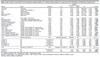
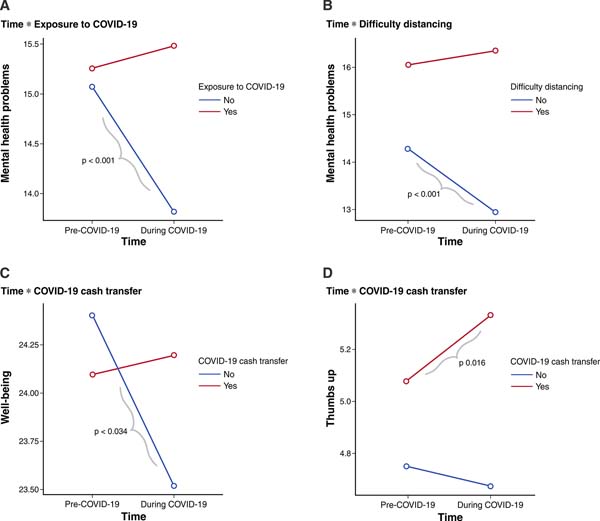
As shown in Table 2, those who reported not being exposed to COVID-19 infection had lower SDQ scores in the COVID-19 wave than the pre-COVID-19 wave (mean difference: -1.257, standard error [SE] 0.271, PBonferroni < 0.001), as shown in Figure 1A. SDQ scores also decreased over this time frame among those who did not experience difficulty adhering to social distancing during the pandemic (mean difference: -1.334, SE. 0.303, PBonferroni < 0.001) (Figure 1B).
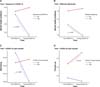
Impact of sociodemographic and COVID-19 pandemic-related risk factors on changes in mental well-being between the pre-COVID-19 and COVID-19 waves
The main effect of time on mental well-being as measured by the SWEMWBS was not significant (estimate = 0.262, t = 1.412, p = 0.158) (Supplementary Table S6). Additional models, including significant non-longitudinal interactions, are shown in Supplementary Table S7. Significant interactions emerged for the effects of time-by-COVID-19 financial impact (estimate = 7.381, t = 2.199, p = 0.028), see Supplementary Results for significant post-hoc comparisons), time-by-COVID-19 cash transfer program participation (estimate = -9.875, t = -2.392, p = 0.016), time-by-race (estimate = 6.491, t = 1.971, p = 0.048), time-by-site (estimate = -0.918, t = 0.413, p = 0.026), and time-by-educational level (higher education group)(estimate = -9.891, t = -2.940, p = 0.003). Unlike what was observed for the SDQ, there were no significant interactions for time-by-difficulty distancing (p = 0.476) or time-by-exposure to COVID-19 infection (p = 0.263). Additionally, the time-by-educational level (high school group) and time-by-SES interactions were also not significant (Table 3).
| 95%CI | ||||||||
|---|---|---|---|---|---|---|---|---|
| Names | Effect | Estimate | SE | Lower | Upper | df | t | p-value |
| (Intercept) | (Intercept) | 25.543 | 1.47 | 22.668 | 28.418 | 1663.452 | 17.348 | < 0.001 |
| Time | COVID-19-Pre-COVID-19 | -1.573 | 0.79 | -3.122 | -0.023 | 1390.170 | -1.983 | 0.047 |
| Sex | Male-female | -2.126 | 0.29 | -2.700 | -1.552 | 2343.218 | -7.235 | < 0.001 |
| Race | White-non-White | -0.043 | 0.29 | -0.628 | 0.541 | 2342.816 | -0.146 | 0.883 |
| Age at evaluation | Age at evaluation | -0.005 | 0.06 | -0.134 | 0.124 | 1472.643 | -0.077 | 0.938 |
| SES score | SES score | 0.026 | 0.03 | -0.037 | 0.089 | 2343.126 | 0.799 | 0.424 |
| Site | Porto Alegre -São Paulo | 0.029 | 0.30 | -0.573 | 0.632 | 2328.708 | 0.095 | 0.924 |
| Educational level | Low/unknown education-high school | -0.005 | 0.34 | -0.677 | 0.665 | 2340.465 | -0.017 | 0.986 |
| Educational level | Low/unknown education-higher education | 0.319 | 0.49 | -0.645 | 1.284 | 2297.754 | 0.647 | 0.517 |
| COVID-19 financial impact | No-yes | -0.916 | 0.30 | -1.513 | -0.319 | 2340.085 | -2.997 | 0.002 |
| Exposure to COVID-19 | No-yes | -0.597 | 0.44 | -1.476 | 0.280 | 2336.616 | -1.329 | 0.184 |
| Difficulty distancing | No-yes | -1.380 | 0.36 | -2.097 | -0.662 | 2343.067 | -3.754 | < 0.001 |
| Cash transfer | No-yes | 0.680 | 0.37 | -0.058 | 1.418 | 2330.278 | 1.797 | 0.072 |
| Time * sex | COVID-19-Pre-COVID-19 * male-female | 0.239 | 0.32 | -0.391 | 0.870 | 1356.011 | 0.740 | 0.459 |
| Time * race | COVID-19-Pre-COVID-19 * White-non-White | 0.649 | 0.32 | 0.005 | 1.292 | 1355.994 | 1.971 | 0.048 |
| Time * cash transfer | COVID-19-Pre-COVID-19 * no-yes | -0.989 | 0.33 | -1.646 | -0.331 | 1356.138 | -2.940 | 0.003 |
| Time * SES score | COVID-19-Pre-COVID-19 * SES score | 1.803 | 0.52 | 0.771 | 2.836 | 1356.541 | 3.412 | < 0.001 |
| Time * difficulty distancing | COVID-19-Pre-COVID-19 * no-yes | -0.987 | 0.41 | -1.793 | -0.181 | 1355.995 | -2.392 | 0.016 |
| Time * COVID-19 finance impact | COVID-19-Pre-COVID-19 * no-yes | 0.047 | 0.03 | -0.022 | 0.117 | 1356.425 | 1.323 | 0.186 |
| Time * exposure to COVID-19 | COVID-19-Pre-COVID-19 * no-yes | 0.287 | 0.40 | -0.501 | 1.077 | 1356.009 | 0.713 | 0.476 |
| (Intercept) | (Intercept) | 0.738 | 0.33 | 0.082 | 1.393 | 1356.000 | 2.199 | 0.028 |
| Time | COVID-19-Pre-COVID-19 | 0.551 | 0.49 | -0.410 | 1.513 | 1356.067 | 1.120 | 0.263 |
| Time | Cash transfer | Time | Cash transfer | Difference | SE | t | df | PBonferroni |
| COVID-19 | No | Pre-COVID-19 | No | -0.886 | 0.320 | -2.766 | 1601 | 0.034 |
df = degrees of freedom; SE = standard error; SES = socioeconomic status.
Model 2: Number of observations: 2,734; groups ident: 1,367, R-square: 0.434: random components intraclass correlation coefficient: 0.396.
Bold type denotes statistical significance.
Unpacking the significant time-by-cash transfer program participation interaction revealed that SWEMWBS scores decreased among non-beneficiaries (i.e., until the COVID-19 wave interview) between the pre-COVID-19 and COVID-19 waves (mean difference: -0.88, SE 0.320, PBonferroni = 0.034), as shown in Figure 1C.
Exploratory analysis - Ecological momentary assessment
Exploratory analyses using EMA revealed that participation in the emergency cash transfer program had a significant longitudinal effect (time-by-emergency cash transfer program participation interaction estimate = 0.330, t = 5.256, p < 0.001) (Supplementary Figure S4). Post-hoc analyses showed that recipients of COVID-19-related emergency cash transfers reported feeling more positive throughout the day (i.e., more "thumbs up" ratings) during the COVID-19 wave than during the pre-COVID-19 wave (mean difference: -0.254, SE 0.085, PBonferroni = 0.016 (Supplementary Table S8, Figure 1D).
Sensitivity analysis
Similar findings emerged when restricting our main analyses to interviews that were completed within the first 6 months after the COVID-19 pandemic began, for both mental health problem (Supplementary Table S9) and mental well-being (Supplementary Table S10) outcomes.
DISCUSSION
This is one of the few longitudinal studies to have assessed the impact of the COVID-19 pandemic on the mental health and well-being of youth in South America.6 Overall, we found a modest decrease in mental health problem scale scores between the pre-pandemic and pandemic periods. Nevertheless, several sociodemographic and COVID-related factors were associated with higher levels of mental health problems during the pandemic, such as financial hardship due to the pandemic (e.g., housing and food insecurity). Interestingly, mental health problems significantly decreased between the pre-pandemic and pandemic periods among participants who reported: 1) not being exposed to COVID-19 infection or 2) not facing difficulties in adhering to social distancing policies. Mental well-being scores did not significantly change between the waves in the overall sample, although participants who were not enrolled in the emergency cash transfer program had lower mental well-being scale scores during the pandemic. An exploratory analysis using EMA and a small sub-sample reinforced this finding by showing higher mental well-being scale scores among those who participated in the emergency cash transfer program.
The present study is part of Brazilian High-Risk Cohort for Mental Conditions study,22 a Brazilian developmental cohort established in 2009. Its analysis of mental health changes between the pre-pandemic and pandemic periods complements a recently published systematic review on longitudinal studies investigating changes in emotional symptoms between the pre-pandemic and pandemic periods in children and adolescents, which identified 53 unique reports from 12 countries from North America, Europe, and Asia.6 It is troubling that no studies from Latin America fulfilled the criteria for their systematic review.
The data from our sample of youth are consistent with a large Brazilian adult cohort that found no significant changes in psychiatric symptoms between the pre-pandemic and pandemic periods4 but, surprisingly, a consistent decrease in global psychopathology across three evaluations during the first year of the pandemic. The modest decrease in symptoms we observed is in contrast to the meta-analytic findings of Madigan et al.,6 who documented an increase in mental health problems during the pandemic. However, our results do align with Madigan et al.'s6 finding that negative pandemic-related effects on mental health were inversely correlated with income, i.e., individuals with lower income tended not to show these effects,6 similar to our sample. Our findings also harmonize with a longitudinal study from China,26 another low-/middle-income country, which identified either decreasing or no significant changes in mental health symptoms over time during the pandemic. Taken together, it is clear that economic background must be considered when assessing the impact of global health emergencies such as the COVID-19 pandemic. Our findings suggest that participants who did not experience negative pandemic-related factors may have been "protected" from greater mental health problems during the pandemic.
We found no association between exposure to COVID-19 infection and increased mental health problems or decreased mental well-being. It is important to note that our "exposure to COVID-19 infection" variable was assessed through self-report, which may have over- or under-estimated cases of infection and failed to capture this association. Conversely, the group that was not exposed to COVID-19 infection had fewer mental health problems during the pandemic than those who were exposed, and also showed a statistically significant decrease in these symptoms between the pre-pandemic and pandemic waves. This group may have been protected from negative psychosocial mechanisms associated with COVID-19 infection, such as fear of death or of developing a severe infection, and fear or guilt associated with spreading COVID-19 to loved ones.27
Several markers of the negative economic impact of COVID-19 have been associated with increased mental health problems and decreased mental well-being during the pandemic, even after adjusting for baseline socioeconomic status. For instance, a systematic review found that socioeconomically disadvantaged youth were up to three times more likely to develop a mental health condition during the pandemic.28 The role of poverty and financial hardship as causal mechanisms for increased mental health symptoms has been well established.29 Our findings call attention to preventive measures that go beyond psychological interventions. Previously, Lund et al.30 called for further investigation of the role monetary aid programs could play in alleviating the impact of poverty and economic inequality on mental health. Since then, strong evidence has supported a role for such programs,21,29,31 although few of these studies were conducted during the COVID-19 pandemic. For instance, a recent large study found that the introduction of the Brazilian national cash transfer program (Bolsa Familia) was associated with lower suicide rates.32 Corroborating this finding, we present novel evidence that the mental well-being scores of youth who were not enrolled in a national COVID-19 emergency cash transfer program decreased between the pre-pandemic and pandemic periods. Overall, our findings provide preliminary evidence for the role of emergency cash transfer strategies as tools to promote mental well-being and mitigate mental health problems among youth during crisis periods, a topic worthy of further investigation.33
On a related note, our exploratory EMA analysis found that participants who received cash from the COVID-19 emergency program showed were more likely to report "feeling well" (i.e., more "thumbs up" smartphone ratings). EMA can capture phenotypic aspects that go beyond the typical "questionnaire" approach, which was particularly relevant during the isolation associated with the pandemic. This methodology allowed us to capture real-time changes, minimizing recall bias and maximizing ecological validity, thus enabling the investigation of real-world contexts that influenced participants' perceptions over time. Although EMA data were derived from a single-item question answered in naturalistic, uncontrolled environments, this approach is consistent with prior EMA research showing that brief, momentary self-reports can provide meaningful information on subjective well-being and affective states.33 Single-item EMA measures are particularly suited to capturing within-person fluctuations over time rather than absolute levels of well-being, complementing traditional questionnaire-based assessments. In the present study, EMA findings were interpreted as exploratory and were used to contextualize changes in daily affect, rather than to replace validated multi-item well-being scales.
Certain study limitations should be pointed out. First, the cash transfer program findings should be interpreted with caution since we analyzed data from a community-level observational cohort, which was not designed to test any specific intervention for the COVID-19 crisis. Second, some findings relied on self-report data, including COVID-19 exposure, economic impact, and adherence to distancing recommendations. Third, although the EMA methodology provided data for one week each in the pre-COVID-19 and COVID-19 waves, we did not collect data during other COVID-19 waves, such as the second major COVID-19 wave, which affected Brazil in April 2021. Nevertheless, our data add to the growing number of studies examining longitudinal mental health changes during the pandemic period.4 Fourth, given the nature of the relatively brief online data collection protocol for the COVID-19 wave, we were not able to collect data on specific sociodemographic variables at that time point, such as the number of household members. Information on educational level was thus derived from the pre-COVID-19 assessment and was included in all analyses.
In this cohort study, we observed a modest decrease in mental health problems during the COVID-19 pandemic for the entire cohort, and a significant decrease among participants who were not infected with COVID-19. Thus, direct factors associated with COVID-19 (e.g., exposure to infection) and related factors (e.g., housing and food insecurity, difficulty adhering to social distancing) moderated the impact of the pandemic on mental health problems among young people. Our findings on the positive effects of an emergency cash transfer program warrant future studies on societal interventions to mitigate mental health issues and increase well-being among youth during crisis periods.
ACKNOWLEDGEMENTS
The authors are grateful for support provided by the Instituto Nacional de Psiquiatria do Desenvolvimento para Crianças e Adolescentes, funded by Brazilian government agencies, including Fundação de Amparo à Pesquisa do Estado de São Paulo (FAPESP; grants 2014/50917-0, 2013/08531-5), Conselho Nacional de Desenvolvimento Científico e Tecnológico (CNPq; grant 465550/2014-2), the Projeto Temático (FAPESP grant 2021/05332-8), and the Centro de Pesquisa e Inovação em Saúde Mental (FAPESP; grant 2021/12901-9). We also acknowledge FAPESP Grant COVID 2020/06172-1, which enabled the COVID-19 wave of the Brazilian High-Risk Cohort for Mental Conditions, including the development of an ecological momentary assessment app.
RAB has received research grants from FAPESP, CNPq, Coordenação de Aperfeiçoamento de Pessoal de Nível Superior (CAPES), Fundação E.J. Safra, and Fundação ABAHDS.
SUPPLEMENTARY MATERIALS
REFERENCES

 PDF
 Print
 Send this article by email
 How to cite this article
 Submit a comment
 Mendeley
 Pocket
 Share on Facebook
 Share on Twitter