



| Note: How to cite this article: Weber CAT, da Silva AG. Online betting in Brazil. Braz J Psychiatry. 2025;47:e20254482. Epub 2025 Oct 14. http://doi.org/10.47626/1516-4446-2025-4482 |
| Received: August 29 2025; Accepted: September 29 2025 |
Online sports betting has rapidly become one of the most pervasive and underregulated digital phenomena in Brazil. Driven by the ubiquity of smartphones, frictionless payment systems like Pix, and a largely unregulated advertising environment, gambling is no longer an activity restricted to physical venues. It is now embedded in everyday digital experiences, accessible 24/7 from the palm of one's hand. This shift has transformed betting from a localized recreational pursuit into a powerful system of behavioral reinforcement with clear public health implications - especially among adolescents and young adults.
Unlike Mexico, Colombia, Peru, and Chile - which have initiated regulatory debates on advertising restrictions, age verification, and taxation - Brazil's regulatory and institutional landscape remains fragmented and reactive. This has created fertile ground for exponential growth in online gambling, particularly fixed-odds sports betting. In 2023, the Brazilian betting market reportedly exceeded BRL 100 billion in revenue, with estimates suggesting further expansion in 2024. The market has grown largely unchecked, supported by targeted marketing campaigns that leverage social media influencers, professional athletes, and celebrities to promote betting platforms as socially acceptable, desirable, and even aspirational.
Recent empirical research has shown that these advertising strategies are not benign. Di Censo et al. have demonstrated that youth-oriented sports betting marketing plays a direct role in normalizing gambling behaviors. These campaigns often depict gambling as an expression of masculinity, competitiveness, and success. Such portrayals are particularly effective among young men, who are also the demographic most at risk of developing problematic betting behaviors.1 The normalization of gambling via strategic marketing leads to increased betting intention, greater frequency of gambling episodes, and decreased awareness of the associated risks.
This marketing ecosystem intersects dangerously with psychosocial vulnerabilities in adolescents and young adults. Individuals between 15 and 30 years of age are at a critical stage of cognitive development and are especially susceptible to compulsive digital behaviors. As Russell et al. reported, problematic betting among young adults is significantly associated with elevated symptoms of depression, anxiety, and stress. In many cases, these individuals also report higher levels of alcohol and drug use, diminished subjective well-being, and impaired quality of life.2 Thus, sports betting is not merely a leisure activity but a clinically significant behavioral risk factor requiring coordinated preventive and therapeutic interventions.
Importantly, gambling disorder is no longer classified as merely an impulse control disorder. In 2013, the DSM-5 reclassified pathological gambling as an addictive disorder, based on substantial neurobiological evidence.3 This classification reflects the disorder's shared characteristics with substance use disorders, particularly its reliance on the dopamine-mediated brain reward system. The neurocognitive processes underlying intermittent wins, "near-miss" scenarios, and uncertain outcomes activate the same circuits associated with drug addiction, particularly the nucleus accumbens. These experiences generate a potent feedback loop that encourages repeated engagement with gambling platforms.
Modern online betting platforms are designed to exploit these reward mechanisms through personalized algorithms. These systems use real-time data to optimize user retention by providing tailored stimuli, such as bonus offers, rapid reward cycles, visual effects, and competitive social elements. Such features increase dopamine release and impair risk perception. As Brevers and Noël have shown, these reinforcement mechanisms have a stronger and more lasting impact on adolescents, whose prefrontal cortex - the center of executive function and decision-making - remains underdeveloped into early adulthood.4
Beyond neurobiological vulnerability, there is increasing clinical evidence linking sports betting with broader psychiatric comorbidities. Valenciando-Mendoza et al. conducted a systematic review showing that sports bettors often present with high levels of impulsivity, deficits in inhibitory control, and cognitive distortions, such as the illusion of control and gambler's fallacy.5 Many of these individuals also meet the diagnostic criteria for depression, generalized anxiety disorder, or substance use disorder. These findings suggest that betting behaviors exist within a broader framework of psychological dysfunction and cannot be addressed solely through individual behavioral interventions.
A newly emerging clinical profile has been observed: young individuals with high digital exposure, rapid onset of betting behaviors, and early progression toward gambling disorder. López-González et al. describe this group as particularly vulnerable due to their familiarity with technology, constant connectivity, and susceptibility to instant gratification mechanisms that characterize digital gambling environments.6
International studies offer a valuable benchmark. In Denmark, a cohort of 1,381 patients diagnosed with gambling disorder showed alarming rates of psychiatric comorbidity - such as depression in nearly 40% of cases - as well as significant associations with criminal behavior and increased demand on public health systems. In the United Kingdom, 42% of individuals aged 18-24 engaged in online gambling in 2023 alone, and gambling-related harms are increasingly recognized in clinical and public health literature.7 A longitudinal UK study by Wardle et al. revealed a strong association between gambling severity and suicide attempts among young adults, reinforcing the need for early intervention. A 2024 meta-analysis by Kristensen et al. found that individuals with gambling disorder experience suicidal ideation at a rate of 31.6%, and suicide attempts at a rate of 13.2% - both more than double the prevalence in the general population.8
In Brazil, comprehensive national epidemiological data remain scarce. However, findings from the Third Brazilian National Alcohol and Drug Survey (III Levantamento Nacional de Álcool e Drogas), published in 2025, suggest worrying trends. The study found that 14% of Brazilian adolescents have gambled at least once in their lives and 10.5% have done so in the past 12 months. Furthermore, a 2024 survey revealed that 44% of active bettors report losing more money than they win, regardless of region, age, or sex.9
Given these epidemiological findings, targeted clinical interventions are essential to address gambling disorder.
Recognizing gambling disorder as a public health priority is essential, but clinical guidance is equally important. Recent systematic reviews and meta-analyses have confirmed that psychological interventions, particularly cognitive-behavioral therapy, are highly effective in reducing gambling severity and frequency. For example, a 2023 Cochrane review demonstrated that cognitive-behavioral therapy significantly decreases the intensity of gambling behaviors (effect size g = -0.91) and episode frequency (g = -0.52) compared with minimal or no treatment, highlighting the need to integrate structured psychological therapy into public health strategies.10
Furthermore in addition to psychological interventions, pharmacological treatments have been explored, with evidence supporting the use of opioid antagonists such as naltrexone and nalmefene to reduce gambling behaviors. Recent meta-analyses have shown that these agents improve clinical outcomes, although tolerability can limit long-term adherence.11
In response to these developments, Brazil passed Law No. 14,790/2023 to regulate fixed-odds betting.12 While the law introduces licensing and integrity requirements, its application has been partial and inconsistent. Critical areas, such as youth protection, spending limits, public education, and clinical treatment protocols, remain largely unaddressed.
The Third Brazilian National Alcohol and Drug Survey proposed a national strategy organized into four action pillars to mitigate the risks associated with online betting. These are summarized in Table 1.
| Action pillar | Main recommendations |
|---|---|
| 1. Change the narrative | Move beyond "responsible gambling" messages; enforce stricter regulation and oversight |
| Acknowledge power asymmetries between users and platforms | |
| 2. Protect minors | Strengthen age and identity verification systems |
| Ban advertising directed at minors | |
| Restrict the use of influencers, celebrities, and athletes | |
| 3. Transparent information | Disclose real loss probabilities and gambling risks |
| Mandate warning messages modeled after anti-smoking campaigns | |
| Implement evidence-based educational initiatives | |
| 4. Invest in public policies | Establish a public fund sourced from operator revenues |
| Finance independent research and specialized mental health services |
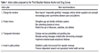
These pillars highlight the need for a paradigm shift, recognizing gambling not just as a consumer choice but as a social determinant of health requiring structural intervention. Reinforcing this, the Brazilian Federal Court of Accounts (Tribunal de Contas da União) published Ruling No. 1173/2025 after an in-depth audit on the effects of fixed-odds betting on public health. The report noted that the sector's exponential growth - reaching BRL 130 billion in 2024 - has intensified debt, contributed to family breakdown, and disproportionately harmed low-income households, including recipients of the Bolsa Família social welfare program.13
The Court identified significant institutional shortcomings, including the Ministry of Health's lack of clinical indicators for gambling disorder, weak public awareness campaigns, poor intersectoral coordination, and the limited capacity of the Psychosocial Care Network (RAPS). Most critically, 55.2% of surveyed public health care professionals reported feeling unprepared to treat gambling-related disorders. The ruling concluded that government action is poorly coordinated, under-resourced, and vastly overshadowed by the marketing power of betting operators.
These findings are reinforced by additional data emerging from civil society and institutional reports. Growing indebtedness among youth and the use of gambling as a means to escape economic hardship are increasingly reported throughout Brazil. Alarmingly, some municipalities have documented gambling activity among recipients of the Bolsa Família program, indicating how gambling disproportionately affects socially vulnerable individuals. In many cases, families face cascading consequences - loss of income, evictions, and school dropout - linked directly or indirectly to betting-related losses.
Brazil's public health care system, the Sistema Único de Saúde, is ill-equipped to address this growing demand. The limited number of Psychosocial Care Centers for Alcohol and Drugs (CAPS-AD) that treat gambling disorders do not follow standardized protocols for diagnosis and intervention. Furthermore, medical and mental health professionals often lack adequate training to recognize and treat gambling-related conditions. There is an urgent need for national continuing education programs, the integration of gambling disorder content into health curricula, and the inclusion of gambling disorder as a reportable condition in mental health surveillance systems.
Failure to act decisively now risks entrenching a new cycle of digital dependence, clinical harm, and intergenerational poverty. Gambling-related harms are not distributed equally; they disproportionately affect younger, poorer, and more digitally immersed populations. Regulatory inertia and commercial interests must not outweigh the public's right to protection. Framing online sports betting as a social determinant of health enables Brazil to pursue policy guided by equity, epidemiology, and justice - ensuring that no vulnerable group is left behind in this emerging public health crisis.
In summary, tackling the public health crisis posed by online sports betting in Brazil requires a multisectoral strategy grounded in scientific evidence. Recognizing gambling disorder as a public health priority would facilitate earlier detection, more effective interventions, and stronger protection for vulnerable populations. Regulatory frameworks must be strengthened, clinical capacity must be expanded, and education systems must be mobilized to address this challenge. The objective is not to prohibit gambling entirely, but to dismantle the structural asymmetries that render individuals defenseless against platforms designed to encourage loss, dependence, and long-term harm.
 PDF
 Print
 Send this article by email
 How to cite this article
 Submit a comment
 Mendeley
 Pocket
 Share on Facebook
 Share on Twitter