



ABSTRACT:
OBJECTIVE: Sleep problems are common in patients with psychotic disorders, especially schizophrenia.
Although pharmacological methods are at the forefront of treatment, they have some
drawbacks. Cognitive behavioral therapy for insomnia (CBT-I) is an option for the
treatment of individuals with insomnia; in recent years, interest in its use in patients
with psychotic disorders has been increasing. This meta-analysis aims to evaluate
the effectiveness of CBT-I for sleep problems in patients with psychotic disorders.
METHODS: A systematic search of the PubMed, Scopus, and EBSCO (MEDLINE) databases was conducted
to identify relevant studies. The inclusion criteria were randomized controlled trials
(RCTs) and uncontrolled studies that focused on participants diagnosed with schizophrenia,
schizoaffective disorder, delusional disorder, psychotic disorders not otherwise specified,
bipolar disorders, or unipolar depression with psychotic features, who had had sleep
problems for at least 1 month, and who were receiving treatment. The initial search
yielded 246 studies, of which eight were ultimately selected for meta-analysis after
screening and applying inclusion and exclusion criteria. Statistical analysis was
conducted in the R software environment.
RESULTS: CBT-I significantly ameliorates insomnia and sleep quality in patients with psychotic
disorders in both the short and long term. Additionally, CBT-I leads to significant
improvement in psychotic symptoms in the short-term period and contributes significantly
to improvement in mental well-being in both short- and long-term follow-up.
CONCLUSIONS: CBT-I is an effective, valuable method for sleep problems in patients with psychotic
disorders. Its widespread use for this purpose is recommended.
Keywords: Cognitive behavioral therapy; insomnia; psychotic disorders; schizophrenia.
FIGURES
| Note: How to cite this article: Ugurlu M, Karakas Ugurlu G, Kabadayi Sahin E, Kamis GZ, Caykoylu A. Short and long-term effects of cognitive behavioral therapy on sleep problems and psychotic symptoms in patients with psychotic disorders: a meta-analysis. Braz J Psychiatry. 2025;47:e20243623. http://doi.org/10.47626/1516-4446-2024-3623 |
| Received: March 13 2024; Accepted: July 24 2024 |
INTRODUCTION
Sleep problems are present in approximately 33% of the general population. This percentage is even higher among those with psychotic disorders, nearly 50% of whom are reported to experience insomnia.1,2 Among the most common reasons for sleep problems in this population are the use of antipsychotic medications, the psychotic symptoms themselves (especially auditory hallucinations), and behaviors that disrupt the sleep-wake cycle (sleep hygiene problems).3,4 Insomnia and deterioration in sleep quality have adverse effects on symptom severity, treatment adherence, treatment response, prognosis, quality of life, and general well-being in these patients.5-7 Therefore, recognition and appropriate treatment of sleep problems in patients with psychotic disorders is seen as a significant problem in clinical practice.
The treatment of insomnia in individuals with psychotic disorders often involves the administration of antihistamines, sedatives, or antipsychotics with sedative properties. Other pharmacological approaches, including melatonin and orexin antagonists, are also commonly utilized.8 However, guidelines for managing sleep problems recommend psychosocial interventions as the primary approach in clinical conditions such as insomnia. These interventions generally include methods in which behavioral or cognitive strategies are preferred.9 The preference for pharmacological methods in treating psychotic disorders is likely due to the perception that interventions such as cognitive behavioral therapy for insomnia (CBT-I) require a certain level of patient cooperation, which can be difficult to achieve in individuals with psychotic disorders. Additionally, factors such as time constraints, costs, and a preference for immediate solutions by the patient, their family, or the physician may also contribute to the increased use of pharmacological methods.10
Nevertheless, pharmacological methods are not typically considered the first-line treatment choice for sleep problems due to several factors. First, while pharmacological interventions often provide temporary relief, their long-term effectiveness is limited. Second, pharmacological approaches may lead to additional side effects or drug-drug interactions, potentially complicating adherence to antipsychotic treatment by incorporating more drugs into the patient's regimen.11 Contrary to this, CBT-I offers significant advantages. It is known to be effective, often without causing major side effects, and its effects tend to be long-lasting. Moreover, CBT-I can strengthen the patient-physician relationship and may yield other positive effects in addition to relieving sleep problems.12 CBT-I encompasses various techniques, including cognitive restructuring, which involves challenging dysfunctional beliefs or unrealistic expectations about sleep. Another aspect is stimulus control, which seeks to diminish the connection between the bed and stimuli that disrupt sleep. Sleep restriction is another strategy employed, which aims to reduce the time spent awake in bed. Additionally, CBT-I emphasizes the importance of sleep hygiene habits, such as optimizing the sleep environment and considering physiological factors. Finally, relaxation techniques are often incorporated into CBT-I.13
Cognitive behavioral therapy (CBT) has been employed for purposes beyond addressing sleep issues in individuals with psychotic disorders, with promising results in enhancing treatment adherence, improving insight, and alleviating psychotic symptoms.14-16 While studies have demonstrated the effectiveness of adapted CBT-I in patients with psychotic disorders, there is currently no meta-analysis available that comprehensively summarizes the findings of these studies. Thus, our primary objective was to assess the impact of CBT-I on insomnia and sleep quality in individuals diagnosed with psychotic disorders. As secondary objectives, we sought to evaluate its effects on psychotic symptoms and overall well-being.
METHODS
Protocol
We conducted this systematic review and meta-analysis according to the Preferred Reporting Items for Systematic Reviews and Meta-Analyses (PRISMA).
Inclusion and exclusion criteria
Inclusion criteria
The meta-analysis focused on including randomized controlled trials (RCTs) or uncontrolled studies with a repeated measures design, all written in English. Studies were deemed eligible if they involved participants aged 18 to 65 with a diagnosis of schizophrenia, schizoaffective disorder, delusional disorder, psychotic disorders not otherwise specified, bipolar disorders, or unipolar depression with psychotic features. Eligible participants were required to have experienced sleep problems for at least 1 month and maintained stable clinical conditions and drug therapy throughout the study. In the experimental group, participants received CBT-I in various formats, such as group sessions, face-to-face sessions, telephone sessions, digital interventions, and self-guided interventions, as well as pharmacotherapy. The control group received pharmacotherapy alone.
Exclusion criteria
The meta-analysis implemented several exclusion criteria to ensure the selection of appropriate studies. Firstly, studies with an insufficient or undetailed CBT-I protocol, as well as those where participants received less than four CBT-I sessions, were excluded. Secondly, studies missing outcome variables to evaluate sleep problems that are crucial for the analysis were also excluded. Thirdly, case reports, case series, and reviews were excluded. Duplicate studies reporting on the same study or dataset were streamlined to avoid duplication of results.
Literature search and data extraction
The literature search was conducted on PubMed, Scopus, and EBSCO (MEDLINE). The search included studies published up to 2024. The search queries were designed as follows: (insomnia or sleep disorders or sleep disturbance or sleeplessness) AND (schizophrenia or psychosis or psychoses or psychotic disorder or schizophrenic disorder) AND (cognitive behavioral therapy or cbt or cbt-i or cognitive behavioral therapy for insomnia). In addition to searching the databases, the authors also hand-searched the references included in systematic reviews on the topic. After the literature selection process, the authors proceeded to extract data from the identified studies. The extracted data included the author's name, year of publication, sample size, age of participants, details of the intervention and control groups, time points of assessment, and outcomes measured (Supplementary Material S1).
Data were collected and recorded in two distinct groups. The first group focused on the post-intervention evaluation results of CBT-I immediately after completion of the intervention, representing the short-term evaluation. The second group included the follow-up results of CBT-I, which were recorded at least once after the completion of the intervention, representing the long-term evaluation.
Outcome measures
In this meta-analysis, the primary outcome variables focused on assessing insomnia and sleep quality. Additionally, secondary outcome variables were included, such as psychotic symptoms (total), delusions, hallucinations, and overall mental well-being.
Risk of bias and evaluating the quality of evidence
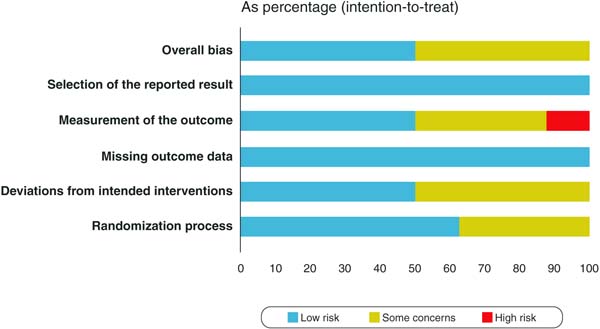
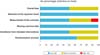
The two authors independently evaluated the risk of bias through the Cochrane Handbook for Systematic Reviews of Interventions to evaluate the methodological quality of the included literature.17 The quality of each trial was assessed as "low risk of bias (green)," "high risk of bias (red)," or "some concern (yellow)" for each of the following evaluation items: randomization process (three questions), deviation from intended interventions (seven questions), missing outcome data (four questions), measurement of the outcome (five questions), selection of the reported result (three questions), and overall bias. All assessments were performed using the Risk of Bias 2 (RoB2) tool.18
Data synthesis
In the studies included in the meta-analysis, descriptive statistics were used to report the frequency and percentage for pooled gender, as well as the mean and SD for pooled age. These analyses were conducted using SPSS version 21.
The standard mean difference (SMD) with a 95%CI was calculated to represent the continuous outcomes, including both primary and secondary variables. The extent of heterogeneity was evaluated using the tau squared (t2) and I squared (I 2) statistics. A fixed-effects model was applied in cases of minor heterogeneity, indicated by an I 2 value below 50%. Conversely, a random-effects model was used for significant heterogeneity, identified by an I 2 value above 50%. Subgroup analyses were conducted separately for the short-term effects (immediate evaluation after CBT-I) and long-term effects (evaluations conducted 1 month or longer after CBT-I) of the primary and secondary outcome variables. This statistical analysis was performed in R version 4.2.2 (Supplementary Material S2).19,20
RESULTS
Literature search
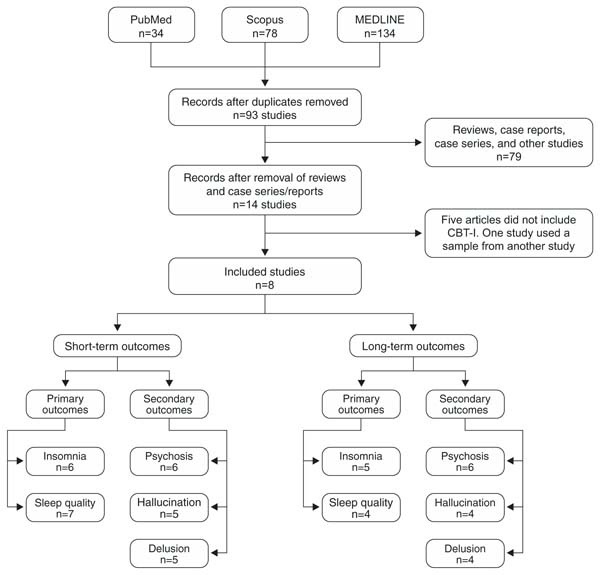
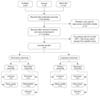
The initial search yielded a total of 246 studies. After removing duplicates, case reports, case series, and reviews, a total of 14 studies remained. Of these, five studies did not involve CBT-I and were excluded. Additionally, one study was excluded as it utilized data from another study already included in the meta-analysis. Thus, eight studies ultimately met all inclusion criteria and were included in the meta-analysis (Figure 1).21-28
Characteristics of included studies
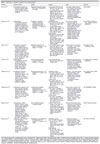
Eight studies were included in this meta-analysis. Four of these were RCTs. The total number of patients receiving CBT-I was 203. Of these, 119 (58.6%) were male and 84 (41.4%) were female. The mean age of the participants in this group was 41.19 ± 3.65 years. In the control groups, there were 90 participants, of whom 70 (77.8%) were men and 20 (22.2%) were women. The mean age of the control group was 41.35 ± 2.32 years. Since patients with psychotic disorders were evaluated separately in three different clusters in the study of Chiu et al.,21 and results were not given for the whole sample, each subsample was included in the meta-analysis separately.
Studies included patients with schizophrenia, schizoaffective disorder, psychotic disorders not otherwise specified, delusional disorder, and bipolar and unipolar depression with psychotic features. Patients were clinically "stable" in all of the selected studies, i.e., had "no changes in their drug treatments in the last month and no changes were considered." Seven of the eight studies analyzed outpatient populations, while the other focused specifically on inpatients. In terms of gender distribution, all participants in one study were male, while the remaining studies included patients of both sexes.
CBT-I was used in all studies. The number of sessions ranged from four to eight, the session duration from 45 to 90 minutes, and the total duration from 2 to 12 weeks. One study was conducted face-to-face individually, and one was conducted via a telephone application. In some studies, CBT-I was supported by various communication channels (such as text messages, e-mail, or telephone). Each CBT-I session generally included goal setting, sleep hygiene, relaxation, stimulus control, evaluation of triggers and maintenance factors, and cognitive restructuring.
The outcome variables were categorized into primary and secondary measures. The primary outcomes focused on insomnia and sleep problems, while the secondary outcomes included psychotic symptoms, the severity of delusions, the severity of hallucinations, and well-being. These assessments were conducted using self-report scales or semi-structured interviews. The primary outcome variables focused on assessing sleep quality and insomnia, utilizing measures such as the Insomnia Severity Index (ISI) and Pittsburgh Sleep Quality Index (PSQI). Secondary outcome variables included delusions, hallucinations, overall psychotic symptoms, and well-being, assessed through measures like the Psychotic Symptoms Rating Scale (PSYRATS), Revised Green et al. Paranoid Thoughts Scale (R-GPTS), Specific Psychotic Experiences Questionnaire-Hallucinations subscale (SPEQ-H), Positive and Negative Syndromes Scale (PANSS), Cardiff Anomalous Perception Scale (CAPS), Adapted Mini International Neuropsychiatric Interview- Psychosis section (MINI-p), and Warwick-Edinburgh Mental Well-Being Scale (WEMWBS).
The first evaluation immediately after CBT-I was conducted at 2 to 12 weeks, depending on the duration of the CBT-I intervention, with a median time point of 4 weeks. The first follow-up evaluation conducted 1 month or more after completing CBT-I took place at 8 to 24 weeks, with a median time point of 8 weeks (Table 1).
| Study ID | Inclusion criteria | Design | Sample | CBT-I | Outcome |
|---|---|---|---|---|---|
| Chiu et al.21 | Schizophrenia spectrum or psychotic disorder; stable clinical condition; PSQI > 5; age 18 years and older; outpatient. | Repeated measures design. No control; T0 baseline; T1 4-6 weeks | n=40 patients (20 male, 20 female); mean age 41.68 (11) years; mean chlorpromazine equivalent dose for AP: 510.18 (460.83) mg/day; drugs used: 64 (86.5%) AP, 41 (55.4) AD, 4 (5.4%) MS, 28 (37.8) AC, 21 (28.4%) BDZ, 12 (16.2%) sedative-hypnotics. | 4-6 weeks, weekly face-to-face sessions; goal setting, psychoeducation, sleep hygiene, winding down, stimulus control, exploring reasons for tiredness, developing energy-generating strategies, reforming unhelpful beliefs about sleep. | PSQI; MINI-P. |
| Freeman et al.22 | Schizophrenia, schizoaffective disorder, or delusional disorder; medication dosage been stable for at least the past month; sleep difficulties lasting 1 month or longer and a score of 15 or more on ISI; outpatient. | Prospective, assessor-blinded, randomized controlled pilot study. Repeated measures. T0 baseline; T1 12 weeks; T2 24 weeks. | Intervention group:n=24 patients (16 male, eight female); mean age: 39.6 (11.6) years; chlorpromazine doses: baseline 363.7 (266.5) mg/day, 12 weeks 359.8 (289.3) mg/day, 24 weeks 372.5 (302.9) mg/day.Control group:n=26 patients (18 male, eight female); mean age: 42.2 (13.5) years; chlorpromazine doses: baseline 495.8 (358.1) mg/day, 12 weeks 530.7 (366) mg/day, 24 weeks 531 (373.2) mg/day. | Face-to-face, flexible sessions (eight per protocol, minimum four), 12 weeks; supported by text and telephone contact; psychoeducation, assessment of the triggering and maintenance of sleep difficulties, goal setting, stimulus control, circadian rhythm, daily activity planning, sleep hygiene, relaxation, cognitive techniques. | ISI; PSYRATS; PSQI; G-PTS; PANSS; CHOICE; WEMWBS. |
| Myers et al.23 | Schizophrenia, psychotic disorder, psychosis, schizo-affective disorder, a delusional disorder with persecutory delusions; sleeping problems for 1 month or longer; treatment has not changed in the last month; clinically stable in the last month; age 18-65 years; outpatient. | Repeated measures. No control. T0 baseline; T1 4-8 weeks; T2 1 month. | n=15 (9 female and six male); mean age: 45.47 (11.28) years; six patients: low dose chlorpromazine (200 > mg/day), seven patients: medium dose 201-400 mg/day, one patient: 400 mg/day; seven patients were also taking AD. | Face-to-face, four sessions, 4-8 weeks, 1 hour each; psychoeducation, formulation, goal setting, sleep diary, sleep hygiene, stimulus control, observation, relapse prevention. | ISI; PSQI; G-PTS; PSYRATS; CAPS. |
| Taylor et al.24 | Schizophrenia, schizoaffective disorder, and first episode of psychosis; age 16-65 years; sleep difficulties present for at least 4 weeks; stable clinical condition; outpatient. | Non-controlled repeated measures design. T0 baseline; T1 6 weeks. | n=14 (9 male and five female); mean age: 35.57 (10.88) years. | Smartphone app intervention draws on CBT-I techniques adapted for individuals with psychosis; My Sleep Programme consisted of six weekly core modules; no sleep restriction; limiting time spent in bed. | ISI; PSQI; G-PTS; SPEQ-H; WEMWB.S. |
| Sheaves et al.25 | Nonaffective psychosis, reporting a current persecutory delusion; age 18-65 years; stable medication for at least 4 weeks; chronic problems with distressing nightmares, sleep problems; outpatient. | Parallel-group pilot RCT. T0 baseline; T1 4 weeks; T2 8 weeks. | Intervention group:n=12 (seven male, five female); mean age: 43 (12) years; DDD: AP 1.5 (0.6), MS 0.1 (0.2), Anx 0 (0.1), AD 1 (1.3).Control group:n=12 (seven male, five female); mean age: 39 (13) years; DDD: AP 1.5 (1.0), MS 0.1(0.3), Anx 0.1 (0.3), AD 2.5 (1.7) | 4 weeks, 1 hour, face-to-face; psychoeducation, input regarding, relaxation, limiting worry, increasing physical activity, alcohol stop, reducing oversleeping, relapse prevention | SCI; PSQI; GPTS; CAPS; WEMWBS. |
| Sheaves et al.26 | Schizophrenia spectrum and other psychotic disorders, bipolar affective disorder, depressive episode/disorder; self-reported symptoms of insomnia (a score of 8 on ISI), wanting help to improve sleep; ınpatient. | Parallel-group assessor-blinded pilot RCT. Repeated measures. T0 baseline; T1 2 weeks; T2 4 weeks; T3 12 weeks. | Intervention group:n=20 males, no females; mean age: 40 (12) years; DDD in baseline: AP 1.5 (1.9), MS 0.3 (0.1), Anx 0.1 (0.2), AD 0.6 (1.3).Control group:n=20 males, no females; mean age: 40 (14) years; DDD in baseline: AP 0.9 (0.7), MS 0.1 (0.2), Anx 0.1 (0.2), AD 0.9 (1.4). | Face-to-face, minimum five sessions, frequency and duration flexible depending on the patient's preference and clinical presentation; psychoeducation, assessment, goal setting, daily activity, circadian rhythm, relaxation, sleep hygiene, relapse prevention. | ISI; WEMWBS; PANSS. |
| Waters et al.27 | Schizophrenia, schizo-affective disorder, bipolar disorder, major depression with psychotic features, and psychosis not otherwise specified); ınsomnia symptoms (difficulties falling or staying asleep, or early waking, as well as daytime dysfunctions) confirmed on the PSQI; outpatient. | Non-controlled repeated measures design | n=50 (27 male and 23 female); mean age: 41.2 (10.9) years; mean chlorpromazine equivalent dose for AP: 517.7 (499.2) mg/day; drugs used: AP 50 (100%), AD 33 (66%), sedative-hypnotic 21 (42%). | Minimum three face-to-face sessions, 90 minutes each; psychoeducation, sleep hygiene, stimulus control, cognitive restructuring, behavioral activation, relaxation. | PSQI; Psychosis Screen. |
| Hwang et al.28 | Participants were recruited from 10 daytime rehabilitative facilities and residential care facilities; Schizophrenia, PYRATS > 2; for the past > 3 months, ISI > 15; age 18-65 years; no change in psychotropic medication dosage over the past month. | Single-blind, non-randomized controlled study. T0 baseline; T1 4 weeks; T2 8 weeks. | Intervention group:n=31 (16 male, 15 female); mean age: 45.7 (10.5) years; mean chlorpromazine equivalent dose for AP: 804.4 (769.1) mg/day.Control group:n=32 (25 male, seven female); mean age: 44.2 (11) years; mean chlorpromazine equivalent dose for AP: 876.4 (589.8) mg/day. | 4 weeks, 45 minutes; psychoeducation, sleep hygiene, stimulus control, sleep restriction, sleep diary; group session (two to nine patients). | ISI; PSQI; PSYRATS. |
AC = anticonvulsant; AD = antidepressants; Anx = anxiolytics; AP = antipsychotics; BDZ = benzodiazepine; CAPS = Cardiff Anomalous Perception Scale; CBT-I = cognitive behavioral therapy for insomnia; CHOICE = Choice of Outcome In CBT for Psychoses; DDD = defined daily dose; G-PTS = Revised Green et al. Paranoid Thoughts Scale; ISI = Insomnia Severity Index; MINI-P = Adapted Mini International Neuropsychiatric Interview - Psychosis Section; MS = mood stabilizers; PANSS = Positive and Negative Syndrome Scale; PSQI = Pittsburgh Sleep Quality Index; PSYRATS = Psychotic Symptoms Rating Scale; RCT = randomized control trial; SCI = sleep condition ındicator; SPEQ-H = Specific Psychotic Experiences Questionnaire-Hallucinations Subscale; WEMWBS = Warwick-Edinburgh Mental Well-Being Scale.
Methodological quality evaluation
The publication quality of the included studies was assessed using the RoB2 tool. Risk of bias ranged from low to high across the studies. The main concern identified in the studies included in the meta-analysis was potential bias in measuring the outcome variables, primarily due to the challenges in blinding the CBT-I interventions. However, no significant issues were observed in other areas assessed for bias. As a result, the findings of this meta-analysis demonstrate consistency, as indicated in Figure 2.
Results of meta-analysis
The outcomes were analyzed in two stages, based on the "time of assessment" and "outcome variables." First, outcomes were analyzed according to the time of assessment, distinguishing between short-term effects (measurements obtained immediately following completion of CBT-I) and long-term effects (assessments conducted at least 1 month after CBT-I completion). Second, outcomes were analyzed based on the nature of the variables (primary versus secondary).
Short-term effects of CBT-I
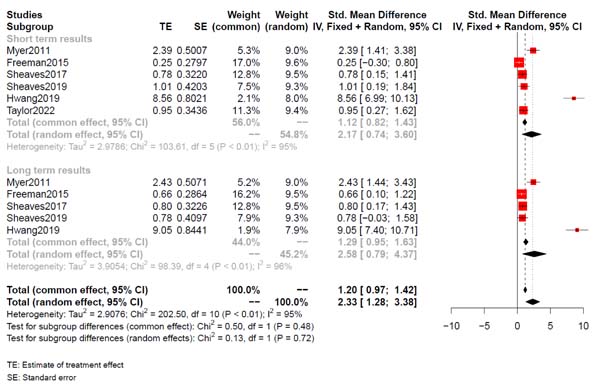
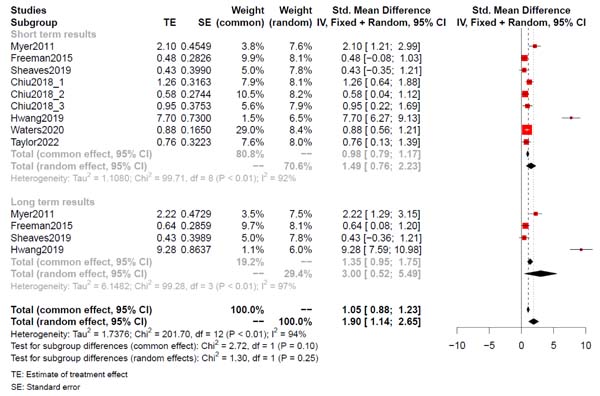
Sleep outcome measures - Sleep problems were handled in two stages: insomnia and sleep quality. Six studies (116 patients) were included in the meta-analysis to examine the short-term effect of CBT-I on insomnia and six studies (172 patients) for sleep quality. Analyses show that, in the short-term period, CBT-I had significant effects on insomnia (SMD 5.81, 95%CI 2.09-9.52, I 2 = 87.5%) and sleep quality (SMD 3.51, 95%CI 1.93-5.10, I 2 = 80.4%) (Figures 3 and 4).
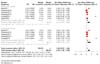
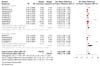
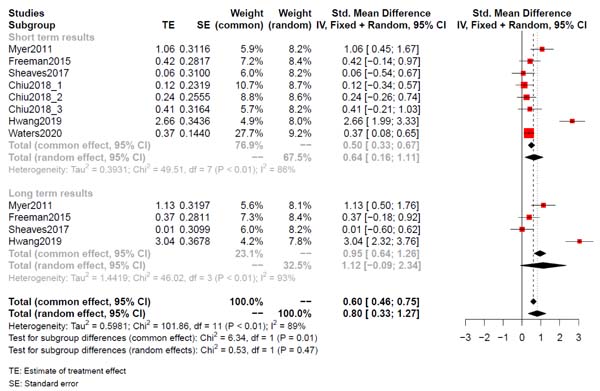
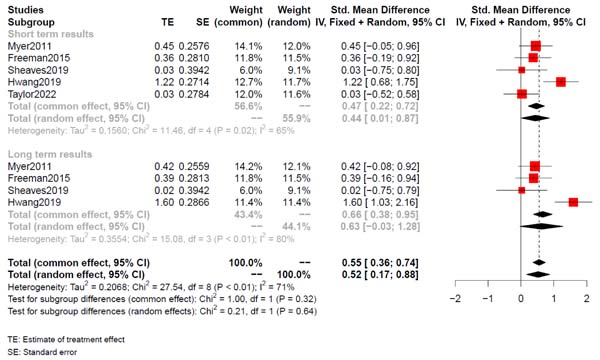
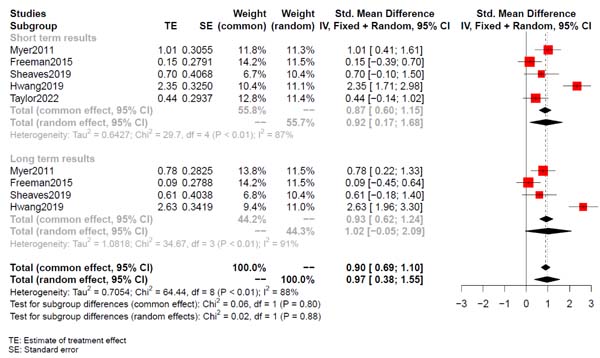
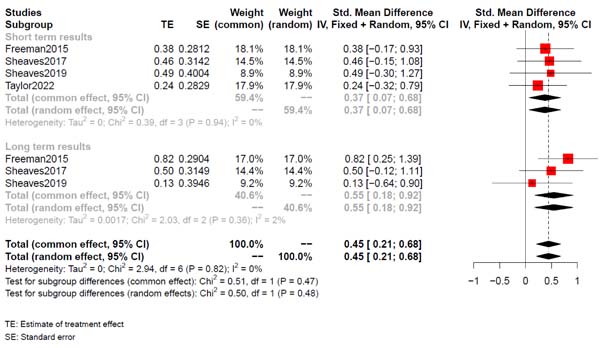
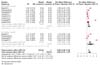
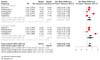
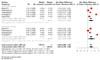
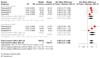
Secondary outcomes - CBT-I had significant short-term effects on general psychotic symptoms (six studies and 180 patients), delusions (five studies and 96 patients), and hallucinations (five studies and 96 patients) (SMD 0.64, 95%CI 0.07-1.21, I 2 = 85.9%; SMD 0.92, 95%CI 0.17-1.67, I 2 = 86.5%; SMD 0.44, 95%CI 0.01-0.87, I 2 = 65.1%, respectively) (Figures 5- 7), as well a significant impact on overall well-being (four studies and 70 patients) (SMD 0.37, 95%CI 0.07-0.67, I 2 = 0%) (Figure 8).
Long-term effects of CBT-I
Sleep outcome measures - To examine the long-term effects of CBT-I, five studies (102 patients) assessing insomnia and four studies (82 patients) assessing sleep quality were included in the meta-analysis. The analyses show that CBT-I had significant effects on insomnia and sleep quality in the follow-up period (SMD 2.57, 95%CI 0.79-4.36, I 2 = 95.9%; SMD 3.00, 95%CI 0.51-5.49, I 2 = 97% respectively) (Figures 3 and 4).
Secondary outcomes - The long-term effects of CBT-I on general psychotic symptoms (four studies and 90 patients), delusions (four studies and 82 patients), and hallucinations (four studies and 72 patients) were not significant (SMD 1.12, 95%CI -0.09-2.34, I 2 = 93.5%; SMD 1.02, 95%CI -0.04-2.09, I 2 = 91.3%); SMD 0.62, 95%CI -0.03-1.28, I 2 = 80.1%, respectively) (Figures 5- 7). However, CBT-I had a significant long-term effect on well-being (three studies and 56 patients) (SMD 0.71, 95%CI 0.22-1.21, I 2 = 0%) (Figure 8).
Publication bias
Due to the limited number of included studies (less than 10) for each outcome, it was not possible to construct an inverted funnel plot to assess the influence of publication bias of included studies.
DISCUSSION
Previous meta-analyses have investigated the efficacy of CBT-I in patients with psychiatric disorders.29,30 However, while these studies provided valuable insights into the effectiveness of CBT-I in psychiatric populations, there is a need for more specific information regarding the efficacy of CBT-I in patients with distinct diagnoses, particularly those with psychotic disorders. This present meta-analysis focuses exclusively on the effectiveness of CBT-I in patients with psychotic disorders. Our findings reveal that CBT-I has a significant, positive impact on insomnia and sleep quality in these individuals.
Several studies have provided support for the use of CBT as a valuable intervention in patients with psychotic disorders. It has been demonstrated that CBT is an effective method for improving various aspects of psychotic disorders, including hallucinations, delusions, insight, and treatment adherence.16,31,32 Considering the challenges and limitations associated with using CBT in patients with psychotic disorders, such as adherence and cooperation, as well as the limited efficacy of pharmacological treatments for sleep problems in individuals with schizophrenia, CBT-I emerges as a practical and essential tool. This meta-analysis further confirms the efficacy of CBT-I in addressing sleep problems specifically and reinforces the growing body of evidence that CBT-I is a "feasible" intervention for patients with psychotic disorders, including schizophrenia.
The results of this meta-analysis indicate that, although CBT-I resulted in significant improvements in hallucinations, delusions, and general psychotic symptoms in the post-intervention phase, these improvements tended to decrease over time. This trend can be attributed to two factors. While CBT-I may have a direct effect on psychotic symptoms, it may also have an indirect effect by providing improvement in sleep problems. Sleep problems negatively affect the emergence and course of hallucinations and delusions in individuals with psychotic disorders.4,33 The improvement in sleep problems achieved through CBT-I may coincide with a decrease in psychotic symptoms in the early period.
However, there is an aspect that challenges this theory. As noted above, despite the long-term effectiveness of CBT-I for sleep problems, its impact on psychotic symptoms seems to diminish over time. The answer to this question may lie partly in the broader effects of CBT-I in patients with psychotic disorders. Although CBT-I primarily targets sleep disorders, it incorporates the core principles of CBT, such as formulation, goal setting, and cognitive restructuring. In addition, other interventions have been adapted to be more appropriate for people with psychotic disorders and are largely aimed at changing sleep-related behaviors. While these techniques may initially have a positive impact on psychotic symptoms, absent reinforcement, their effectiveness may diminish over time.
This meta-analysis underscores the significance of CBT-I not only in symptom reduction but also in promoting mental well-being among patients with psychotic disorders, both in the short and long term. The concept of health, as defined by the World Health Organization (WHO), encompasses not only the absence of disease or infirmity but also complete physical, mental, and social well-being.34 Therefore, when treating patients with psychotic disorders, it is crucial to consider not only the impact of treatments on symptoms but also their effects on overall well-being. While many treatments may effectively target symptoms, they may not necessarily improve overall well-being, which encompasses various dimensions, including negative and positive affect, life satisfaction, positive relationships, a sense of purpose, autonomy, self-acceptance, and personal growth.35,36 Considering these aspects, the direct or indirect contribution of CBT-I to mental well-being further highlights the importance of this intervention in patients with psychotic disorders.
This study represents the first meta-analysis examining the effect of CBT-I in addressing sleep problems and psychotic symptoms in patients with psychotic disorders. It provides comprehensive findings on both primary and secondary outcomes of CBT-I. The studies included in the meta-analysis had well-defined samples and reported CBT-I procedures in detail, leading to a low risk of bias and a high level of evidence. Therefore, it seems feasible to generalize the results of this study to the broader population of patients with psychotic disorders.
However, certain limitations of this study must be addressed. This includes the limited number of trials, some of which were pilot studies with relatively small sample sizes, with a primary focus is on the feasibility and acceptability of the treatment rather than its effects. Additionally, there is variability in the designs of the studies included in the meta-analysis. Some had no control group; others included patients taking sedative-hypnotics or who did not require additional medication.
CBT-I appears to be an effective intervention for insomnia and sleep problems in patients with psychotic disorders. Moreover, its effect on psychotic symptoms and sleep problems is likely to occur rapidly. These findings suggest that the use of CBT-I in clinical practice for patients with psychotic disorders experiencing sleep problems should be expanded. Nevertheless, longitudinal studies investigating the long-term effects of CBT-I on psychotic symptoms in these patients are warranted.
 PDF
 Print
 Send this article by email
 How to cite this article
 Submit a comment
 Mendeley
 Pocket
 Share on Facebook
 Share on Twitter



