



ABSTRACT:
In higher education, reasonable accommodations are increasingly made for students
with a wide range of disabilities. However, rigorous assessment is paramount to ensure
these students are supported while preventing ineligible students from gaining unfair
advantages. In this context, we sought to identify under which circumstances a university
student should be allowed academic accommodation for attention-deficit/hyperactivity
disorder (ADHD) and to outline an evidence-based policy for use in Brazil based on
the global experience. We reviewed the literature to acquire information on what documents
are commonly required by disability services before accommodations for ADHD are provided
(including detection of malingering) and scrutinized the eligibility criteria of leading
universities worldwide. Finally, renowned experts in the field and national stakeholders
were consulted. Despite an exhaustive search, we found no international standard for
the assessment of students with ADHD who request academic accommodation; even renowned
institutions worldwide differ in their approaches to granting accommodations on the
grounds of ADHD. Therefore, we propose a unified set of nationwide criteria for Brazilian
universities, which could be generalized internationally. Higher education institutions
in Brazil and beyond may benefit from adoption of such criteria.
Keywords: ADHD; academic accommodation; eligibility criteria.
| Received: December 10 2022; Accepted: April 10 2023 |
INTRODUCTION
Attention-deficit/hyperactivity disorder (ADHD) is a common neurodevelopmental condition characterized by a persistent pattern of inattention and/or hyperactivity-impulsivity that interferes with overall functioning.1 Around 5% of children and adolescents and 2.5% of adults in the general population are affected, experiencing social and occupational functional impairments that span several domains in life.2 The prevalence of ADHD on university campuses has grown dramatically, with approximately 6% of university freshmen reporting a diagnosis of the disorder in the United States alone.3 Youth with the disorder achieve lower grades than their peers in all years, as well as lower rates of postsecondary schooling; in those who do progress to higher education, ADHD is consistently associated with higher rates of dropout.4 Although school support might be helpful, it is seldom available even in well-resourced settings.5
A recently enacted law in Brazil6 aims to ensure that university students with learning disabilities receive specific support and are entitled to appropriate accommodations to counterbalance their difficulties, possibly increasing the likelihood that these students will achieve their full academic potential. ADHD is one of most prevalent sources of such disabilities. For instance, it represents a significant and growing proportion of requests for special services and accommodations in postsecondary education in the United States.7 However, in Brazil, neither the content nor the scope of the legal documentation required from the student to become eligible for these accommodations is defined by law, leaving each institution to decide for itself. Previous work from other settings has found wide variability in what universities require from their students before granting access to support services.8
Defining appropriate, legally binding eligibility criteria based on reliable measures is essential if accommodations are to achieve their maximum potential while still adhering to principles of fairness in their execution. False negatives would prevent eligible students with real disability from receiving the support to which they are entitled by law. False positives, on the other hand, would provide unwarranted advantages to neurotypical students, who have been shown to benefit even more from proposed accommodations (particularly extended testing time) than their peers with documented disabilities.8,9 Also, students diagnosed with ADHD who have high intelligence and are on optimized treatment might perform very similarly to - or even outperform - average neurotypical peers on standardized measures, with undetectable impairments in executive function, working memory, and other ADHD-related traits. In such cases, accommodations might also be considered controversial. Although optimal eligibility strategies have been a source of controversy in other countries, Brazil is at a crucial moment to advance this discussion, avoiding arbitrary decentralized decisions that are uninformed by evidence. To facilitate this process, we reviewed the literature, considered the worldwide experience, and consulted renowned international experts to outline a nationwide consensus for legal documental requirements of eligibility for ADHD support services in higher education. Once outlined, these proposed criteria were extensively discussed with a range of key stakeholders in Brazil and a final set of consensus criteria was endorsed.
METHODS
First, we conducted a narrative review of the literature using multiple search queries aimed at identifying (i) reports describing common documentation requirements (i.e., documents required before a university student was deemed eligible for access to ADHD support services) and (ii) evidence supporting the accuracy, sensitivity, and specificity of measures proposed to distinguish true ADHD cases from neurotypical students and cases of malingering. We then adopted a pre-specified protocol to guide the collection of detailed information from the 10 best universities worldwide (according to the 2022 Times Higher Education Ranking),10 weighted by continent to increase representativeness (i.e., applying a rule to ensure that at least one university from each continent would be included). We scrutinized and tabulated these universities criteria and documentation requirements for providing access to ADHD services and accommodations. When the university could not be reached after multiple attempts via different means of contact, or when we found that the institution had neither relevant specifications nor a defined program, we skipped to the next university on our list (see Table S1, available as online-only supplementary material, for a list of skipped universities). We also sought information from the College Board, the institution responsible for university admissions in the United States. Finally, we consulted internationally renowned experts in the field to collect their opinions and feedback on the first draft of a proposed form and documentation requirement for Brazil. This proposal was further discussed extensively, and validated by iterative revisions, with five important stakeholders in the country: Associação Brasileira de Déficit de Atenção (ABDA), representing patients with ADHD and their families; and associations of mental health professionals dealing with ADHD accommodations, namely Associação Brasileira de Psiquiatria, (ABP), Academia Brasileira de Neurologia (ABN), Sociedade Brasileira de Neuropsicologia (SBNp), and Associação Brasileira de Psicopedagogia (ABPp). In addition, the proposal was discussed and revised by professionals from one university in Brazil (Escola Superior de Propaganda e Marketing [ESPM]), in order to gain input from those who face issues regarding accommodation from the education side.
RESULTS
Common documentation requirements for ADHD support eligibility
Our literature review revealed high heterogeneity in the procedures for establishing whether ADHD accommodations are warranted in postsecondary education worldwide. Furthermore, we found no proposal for the standardization of ADHD assessments in such settings. For instance, Nelson et al.7 examined 100 psychological reports submitted in support of eligibility for academic accommodations in the United States and found that only 1% documented that full criteria for the ADHD diagnosis were met. Furthermore, this issue appears to go beyond a simple lack of documentation, as less than 25% of clinicians assessing university students for ADHD report assessing full DSM criteria.11 Beyond confirming a systematic lack of information, other systematic analyses have revealed that healthcare professionals have discrepant methods in examining the same documents.12 Even more concerningly, Harrison et al.13 surveyed 119 psychological advisors who performed disability assessments to determine the need for academic accommodations in a postsecondary setting and found that a significant proportion of them perceive their role as advocates, rather than as objective evaluators of the need for accommodation.
A comprehensive review examined the documentation requirements set forth in 78 guidelines proposed by U.S. universities prior to granting access to ADHD support services.8 Criteria required by the majority of the institutions included specific expertise of the professional involved in the assessment (endorsed by 83.3%), description of current and past medication use (80.8%), recommended accommodations and their rationale (80.8 and 59%, respectively), and a statement of the diagnosis (96.2%) with description of current (74.4%) and childhood (60.3%) symptoms and impairment (96.2%). Of note, only one-fifth (21%) of the institutions required some type of standardized assessment. In most cases, assessments were required to have taken place no more than 3 years before entering university.
Accuracy of objective measures to distinguish true ADHD from neurotypical controls and malingerers
A promising field of study relates to the development of instruments that are able to differentiate individuals who have true ADHD from those that might be exaggerating their symptoms and impairment to gain an unfair advantage.14,15 Indeed, failure on these types of measures (i.e., performance validity tests) among college students undergoing ADHD evaluations ranges from 8.3 to 47.6%, with most studies showing a failure rate of approximately 20%.16 Performance validity tests have been shown to be effective at detecting noncredible performance during ADHD evaluations of college students17; however, none have been validated for the Brazilian population. Furthermore, less than 5% of clinicians actually use such measures during ADHD evaluations,7,11 and universities in other countries have not yet required their use in documenting ADHD for disability purposes.8 For these reasons, in our Proposed Standard National Criteria, we have not included any of these features. Still, as research advances in this area, this matter will need to be re-evaluated in future updates.
Experience of leading universities worldwide
Ten renowned universities and the U.S. College Board were included in our survey and had their eligibility criteria carefully examined (Table 1). As expected, we observed significant discrepancies between the core criteria for access to accommodation, the extent to which criteria were required to be met (i.e., mandatory, optional, or not required at all), and the source of information (i.e., medical doctor, psychologist, or educator).
| University or institution | World ranking | Medical diagnosis | Professional responsible for assessment | Field experience | Objective measures |
|---|---|---|---|---|---|
| Oxford University | 1 | Recommended | MD, Psy, Ed | Required | Recommended |
| California Institute of Technology | 2 | Not required | MD, Psy, Ed | Required | Required |
| Harvard University | 3 | Required | MD | Required | Recommended |
| Stanford University | 4 | Not required | MD, Psy | Required | Recommended |
| University of Cambridge | 5 | Recommended | MD, Psy, Ed | Required | Not required |
| Imperial College London | 12 | Recommended | MD, Psy | Required | Not required |
| National University of Singapore | 21 | Required | MD, Psy, Ed | Required | Recommended |
| University of Melbourne | 33 | Not required | MD, Psy | Not required | Not required |
| University of Cape Town | 183 | Not required | MD, Psy | Not required | Required |
| Pontifical Catholic University of Chile | 401-500 | Required | MD | Not required | Not required |
Medical diagnosis refers to the requirement of an established diagnosis from a medical doctor. Field experience indicates whether the institution requires the professional to have a minimum declared expertise in diagnosing and working with individuals with attention-deficit/hyperactivity disorder (ADHD). Objective measures refers to the requirement of including neuropsychological measures in the submitted documentation.
Ed = educator; MD = medical doctor; Psy = psychologist.
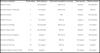
For instance, all the selected universities require a formal diagnosis of ADHD, and only four do not require or recommend the diagnosis to be made by a licensed medical doctor. Seven of the 10 universities required the professional responsible for the assessment to have experience in ADHD, even including a specific qualification to conduct such evaluation.
Two universities required that objective tests be used to supplement symptomatic assessments. Another four recommended their use to support accommodation, while the remaining universities did not mention neuropsychological tests at all. The College Board stated that specific measures were required for each requested accommodation, probably due to the importance of preserving fair academic competition. For example, if the candidate requested extra time for an exam, timed academics tests administered by a qualified professional were required before this accommodation could be granted.
Collateral information and objective neuropsychological measures
Whenever possible, corroboration of self-reported ADHD symptoms is recommended, either by way of a collateral informant or objective neuropsychological measures. A review of the literature indicates that self-reported ADHD symptoms are easily feigned.16 Furthermore, self-reports of ADHD symptoms tend to be less reliable and more prone to symptom exaggeration than are collateral reports.18 Even when there is no incentive to feign or exaggerate symptoms, university students are inclined to self-report high levels of ADHD symptoms.19 For these reasons, evidence that a collateral informant (e.g., parent or roommate) was used in the decision-making process to determine the presence of ADHD and need for academic accommodations might be helpful.
Based on our comprehensive assessment of the literature and worldwide experience, we recommend supplementing clinical evaluation with neuropsychological tests, validated in Brazil, to assess specific areas of functioning whenever possible and whenever they are needed to document the necessity of a specific strategy for accommodation. The main domains to be assessed are sustained attention for visual and written and auditory stimuli, speed processing or cognitive efficiency, academic achievement (particularly using timed academic measures, given that extended testing time is the most frequent request of university students with ADHD), academic functional impairment, and executive functions. Moreover, as ADHD is a highly comorbid disorder and some of these comorbidities (e.g., learning disorders and intellectual developmental disorder) strongly impact academic outcomes, the need for supplemental assessment is even greater. Table S2, available as online-only supplementary material, contains a list of neuropsychological tests and the respective areas assessed.
Proposed Standard National Criteria
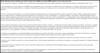
After a thorough review of the literature and the experience of renowned institutions worldwide, we devised a proposed set of standardized criteria to determine eligibility for ADHD accommodation programs in Brazilian universities (Box 1). Importantly, these criteria have qualitative differences from what is required for a clinical diagnosis. For instance, they focus more on school-related impairment (as opposed to a broad range of impairments that might support a clinical diagnosis) that persists despite optimal treatment (when available and possible). The rationale here is to avoid unfair eligibility for accommodations, particularly for exams; this approach does not exclude other accommodations at the university to mitigate ADHD-related impairments in other areas. Therefore, ADHD is a necessary but not sufficient condition for entering special programs within the university. In other words, it is not the ADHD label itself that should confer disability status and the need for disability-related academic accommodations, but the degree to which ADHD actually interferes within the academic environment. Furthermore, we suggest that the professional responsible for the legal documentation should provide a recommendation as to which specific accommodations are warranted for the applying student. We also suggest that such professionals provide a rationale for their recommendations and support these recommendations using objective data whenever possible. The feasibility and adequacy of the proposals should be analyzed in the context of the scarcity of scientific evidence for the efficacy and/or specificity of any ADHD accommodation strategy.
| All the following criteria should be met for the student to be eligible for special ADHD support services in the university |
|---|
| A. The student has a diagnosis of ADHD with associated functional impairment persisting despite appropriate evidence-based treatment, as indicated by items 1 to 4: |
| 1. The individual has a current diagnosis of ADHD from an appropriate source. Assessment: a statement of the current diagnosis, according to ICD criteria, along with a brief description of the developmental history of symptoms, demonstrating persistence of symptoms across assessments, and the criteria met by the individual that justify the diagnosis. |
| 2. There is evidence that the diagnosis is associated with functional impairment in an academic domain that is likely to impact the student's ability to appropriately learn and thrive in higher education, and that the functional impairment is not entirely caused by comorbidities (i.e., learning disabilities). Assessment: a detailed description of each specific academic limitation experienced by the student, with special emphasis on previous evidence of impairment (i.e., during primary and secondary education), along with accommodations offered to address these in the past. Severity, despite correlating with impairment, should not be considered sufficient evidence of disability. Whenever possible, objective neuropsychological measures should supplement the evidence. |
| 3. The symptoms and limitations persist despite evidence-based first-line treatments, or there is a sensible reason for the student not being in treatment. Assessment: a detailed description of current and past treatments, including medication and dosing, psychosocial therapies, and other non-pharmacological approaches, along with observed adverse events and an objective estimate of response to treatment. Description of the degree of symptoms and limitations that persist despite treatment, and why treatment or its optimization (i.e., dose adjustment, switching or combining treatment) were not possible (if this was the case). |
| 4. Academic accommodations are potentially helpful for the limitations presented by the student. Assessment: a proposal matching specific observed limitations to possible accommodations offered by the university, indicating how that approach might aid the learning and executive capacity of the student. |
| B. The information acquired in criterion A is provided by a healthcare professional with qualifications and experience suitable for assessment of the items, as follows: |
| 1. Items A1 and A3 should be reported by a licensed medical doctor with recognized specialization in psychiatry or neurology, or documented expertise in working with patients with ADHD.┼ |
| 2. The neuropsychological measures cited in item A2 should be administered by a professional with documented expertise in neuropsychological assessment and legal certification to conduct it. |
| 3. Items A2 and A4 should be reported by a healthcare professional (psychologist or medical doctor) or educational professional (educational psychologist or educational counselor) with documented expertise in working with patients with ADHD. |
ADHD = attention-deficit/hyperactivity disorder.
┼ As per Brazilian legislation, only medical doctors are allowed to assign a formal diagnosis with legal validity. This is not the case in some countries, where other professionals, such as clinical psychologists, can give a diagnosis of ADHD.
DISCUSSION
A thorough assessment of the level of disability experienced by students applying for academic accommodation for ADHD is essential to ensure that students in true need are assisted while avoiding unfair benefits to their neurotypical peers.9 However, in our review of both the evidence in the literature and reports on policies of leading universities across five continents, we found that assessment procedures are highly heterogeneous, largely subjective, and examiner-dependent.
In this context, we propose a set of eligibility criteria for ADHD accommodation programs across universities in Brazil. This is a unique, timely opportunity, considering the recent legislation6 and the emergence of special programs across several private and public higher education institutions nationwide. The detailed set of criteria proposed herein support a key concept: ADHD diagnosis is a condition sine qua non for granting accommodations, but certainly not sufficient. It is important to highlight that the current work is not an endorsement for the implementation of any curricular adaptation programs, considering the scarcity of data to support their effectiveness. Rather, we encourage universities that do choose to implement adaptations to follow a standardized set of criteria for student eligibility as a first step to ensure their fair application. Although we recognize that some level of subjectivity is inevitable (for instance, in the operationalization of impairment), we are confident that, by adopting a standardized eligibility assessment procedure, we will be closer to achieving equality of opportunities in higher education in our country. Finally, adoption of such standardized criteria might provide a framework for future studies to investigate the efficacy and specificity of academic accommodations for ADHD among college students.
ACKNOWLEDGEMENTS
This study was funded by Escola Superior de Propaganda e Marketing (ESPM).
 PDF
 Print
 Send this article by email
 How to cite this article
 Submit a comment
 Mendeley
 Pocket
 Share on Facebook
 Share on Twitter