



ABSTRACT:
OBJECTIVE: Mortality rate is a general indicator which can be used to measure care and management
of schizophrenia. This cohort study evaluated the standardized mortality ratios (SMRs)
of all-cause mortality and life-years lost (LYLs) in patients with schizophrenia under
a community care program in China.
METHODS: Data were obtained from the National Community Care Program System for Severe Mental
Disorders. A total of 99,214 patients diagnosed with schizophrenia were enrolled before
December 2014 and followed between 2015 and 2019. A total of 9,483 patients died.
Crude mortality rates (CMRs) and SMRs were then stratified by natural vs. unnatural
causes, and major groups of death were standardized according to the 2010 National
Population SMRs. The corresponding LYLs at birth were also calculated by gender and
age.
RESULTS: The SMRs of patients with schizophrenia were significantly elevated during the study
period, with an overall SMR of 4.98 (95%CI 2.67-7.32). Neoplasms, cardiovascular diseases,
cerebrovascular diseases, external injuries, and poisonings were the most significant
causes of death among patients with schizophrenia compared to the general population.
The mean LYLs of patients with schizophrenia were 15.28 (95%CI 13.26-17.30). Males
with schizophrenia lost 15.82 life-years (95%CI 13.48-18.16), and females lost 14.59
life-years (95%CI 13.12-16.06).
CONCLUSIONS: Patients with schizophrenia under community care had a high mortality rate in our
study, even though mental health services have been integrated into the general healthcare
system in China to narrow treatment gaps in mental health for > 10 years. In terms
of mortality outcome indicators, effective and quality mental health services still
have a long way to go. The current study demonstrates the potential for improved prevention
and treatment of individuals with schizophrenia under community care.
Keywords: Schizophrenia; standardized mortality ratio; life-years lost; community.
FIGURES
| Received: October 20 2022; Accepted: January 16 2023 |
INTRODUCTION
Schizophrenia is a chronic mental illness with a range of symptoms that include delusions, depression, conceptual disorganization, and hallucinations,1,2 which subsequently leads to a deterioration of cognitive and social functions.3 The weighted lifetime prevalence of schizophrenia is 0.6% (95%CI 0.1-1.0).4 In China, the prevalence of schizophrenia-related disability is 0.41%.5 Schizophrenia accounted for 3.57 million disability-adjusted life years (DALYs) and 0.94% of the total disease burden in China during 2019.6 Moreover, schizophrenia increases the direct and indirect household economic burden.7 All-cause mortality rates adjusted for age are two to three times higher among patients with schizophrenia compared to the general population.8,9 Other reviews on mortality in schizophrenia and psychotic disorders have reported a standardized mortality ratio (SMR) of 2-4.10- 13 Oakley et al.14 conducted a meta-analysis and found a gender-pooled SMR of 3.08 for schizophrenia and psychotic disorders in the community. Cardiovascular diseases (CVDs), respiratory diseases, and other physical comorbidities such as cancer are major natural causes of death among people with schizophrenia.15- 19 Among the unnatural causes of death in this population, suicide is the most common.18,20 Both natural and unnatural causes could increase the risk of premature death among patients with schizophrenia. It is known that people with schizophrenia have a reduced life expectancy by 15-20 years.21,22 Similarly, a recent systematic review reported 14.5 life-years lost (LYLs) associated with schizophrenia, with an overall weighted average life expectancy of 64.7 years (males, 59.9 years; females, 67.6 years).23 Another study calculated 14.6 and 9.8 LYLs for male and female patients with schizophrenia, respectively, in the United Kingdom.22
Patients with schizophrenia in China receive community care that includes follow-up evaluations, medications, and individualized care plans24,25; however, there is a lack of large-scale studies on mortality in our community care program. It is difficult to assess the longitudinal trajectory of mortality in patients with schizophrenia and identify the different sociodemographic and etiologic factors that influence the mortality gap. Thus, the outcomes of the present study could be valuable to inform community care of schizophrenia. To assess mortality in patients with schizophrenia, we analyzed data from the National Community Care System for Severe Mental Disorders, which was developed in 2011. Hence, the purpose of the present study was to present mortality data in a cohort of patients with schizophrenia. Specifically, the all-cause crude mortality, SMRs, LYLs, and excess LYLs were determined.
METHODS
Study cohort and death identification
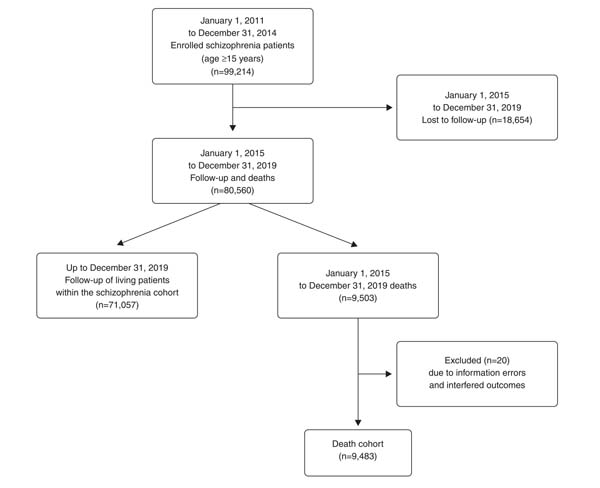
The cohort comprised patients with schizophrenia who were enrolled in the National Community Care System for Severe Mental Disorders between 1 January 2011 and 31 December 2014. Our data were obtained from the National Community Care System, but referred specifically to a northeast region of China. Among patients enrolled in this system, gender, diagnosis, date of diagnosis (to calculate life expectancy), date of birth, date of inclusion in management, and date of death were recorded. All patients met criteria for an ICD-10 diagnosis of schizophrenia (https://icd.who.int/browse10/2019/en; F20.0-F20.9) and were = 15 years of age.26 Patients who were lost to follow-up between 1 January 2015 and 31 December 2019 were excluded from the study. Cross-checking of data with the National Cause of Death Registry Information System was performed in circumstances in which the data were uncertain. The cohort was followed forward until the date of death or 31 December 2019, whichever came first. Accordingly, 80,560 patients were included in the total sample and 9,483 patients were included in the mortality sample. Figure 1 summarizes the data retrieval process and the number of deaths in each cohort of interest.
Outcomes
The primary outcomes were SMRs and cause-specific standardized mortality based on year of follow-up, gender, and geographic location. The secondary outcomes were LYLs and excess LYLs by gender and age group.
The cause of death was identified from death certificates and characterized as follows: infectious diseases, excluding tuberculosis; genitourinary diseases; neoplasms; endocrinopathies; nutritional and metabolic diseases, including diabetes mellitus; diseases of the nervous system; CVDs; cerebrovascular diseases; respiratory diseases; digestive diseases; renal failure; unknown diagnoses; other diseases; external injuries; and poisoning. Each category of disease was sub-categorized, e.g., CVDs included hypertensive CVDs, coronary artery disease, atherosclerotic CVDs, coronary vessel disease, and coronary occlusion. Unnatural causes of mortality were categorized as suicides, accidents, and other causes. Of note, external injuries and poisoning were standardized unnatural causes of mortality. This was a limitation in this study due to the registration system.
Statistical analysis
Statistical analyses were carried out using SPSS 26.0 for demographic and baseline characteristics. As mortality indicators, the SMRs for all-cause and cause-specific deaths were calculated. For each calendar year (2015-2019), gender, and age group (16-84 years and 85+ years in 5-year increments), age was defined as the difference between the specific date of death and the date of birth, the number of observed deaths, and the number of follow-up years for schizophrenia. Person-years at risk contributed by persons who moved from one age band to the next during follow-up was assigned to the respective gender, age group, and calendar year bands. To calculate the expected number of fatalities over the observation period, each weight was multiplied by the number of deaths reported within each corresponding range for the standardized population.27 By dividing the observed fatalities by the anticipated deaths, the SMR was calculated. This calculation implicitly standardizes the overall mortality rate by age, gender, and year. Standardized data for the general population were obtained from the China population in 2010 as the standard (2010 Yearbook of Demography Cause of Disease Mortality File). Cause-specific mortality rates and SMRs with 95%CIs were calculated for the entire schizophrenia cohort and stratified by gender and geographic location. A previous review and study have described how to measure excess early mortality, including mortality rate ratios and SMRs.18,28
The secondary outcomes (LYLs and excess LYLs) were then calculated. Based on the statistical method used in earlier research29,30 to calculate excess LYLs for schizophrenia, we computed the average life expectancy at the time of diagnosis subtracted from a set reference age, which we chose to be 95 years. The life expectancy of a patient at each age was weighted by the number of people that age. Average life expectancy takes into account the differential figures for age at diagnosis, thereby avoiding the problem of basing it on only one age. This approach has been described elsewhere.29 LYLs were separated into loss attributable to a specific cause of death using a decomposition model. We refer to the difference in excess LYLs between the two groups (the general population and the schizophrenia group) as the number of years that people with schizophrenia lose in excess of what is typical for the population.29,31
Ethical statement
The study was approved by the Third People's Hospital of Liaoning Province ethics committee and was conducted in line with the principles of the Declaration of Helsinki.
RESULTS
Cohort characteristics
Table 1 presents the demographic information of patients with schizophrenia. After the study inclusion and exclusion criteria were applied, a total of 80,560 eligible patients were included in the cohort analysis (males, 40,951; females, 39,589; urban, 38,940, rural, 41,600), with 388,746.5 person-years of follow-up. The mean age at the time of enrollment was 49.71 years (SD = 15.87). The 45-to-64-year age group had the largest number of patients (n=46,404).
| Observed cohort | Deaths | CMR | SMR (95%CI) | |
|---|---|---|---|---|
| Total | 80,560 | 9,483 | 2,439.38 | 4.98 (2.67-7.32) |
| Gender | ||||
| Male | 40,951 | 4,330 | 2,183.30 | 6.12 (3.11-9.07) |
| Female | 39,589 | 5,153 | 2,706.08 | 4.33 (2.53-6.21) |
| Age (years) | ||||
| 16-24 | 593 | 39 | 1,347.38 | 2.64 (1.37-3.81) |
| 25-44 | 17,436 | 1,089 | 1,275.90 | 5.56 (2.48-8.69) |
| 45-64 | 46,404 | 5,049 | 2,250.52 | 4.33 (2.13-6.56) |
| 65-84 | 14,651 | 2,999 | 4,333.91 | 2.20 (1.02-3.44) |
| 85+ | 1,456 | 307 | 4,414.73 | 1.01 (0.55-1.50) |
| Location | ||||
| Urban | 38,940 | 4,111 | 2,175.75 | 4.14 (1.73-6.59) |
| Rural | 41,600 | 5,372 | 2,688.68 | 5.88 (2.86-8.90) |
| Highest completed education | ||||
| Illiteracy and primary school | 29,056 | 2,685 | 1,903.22 | 3.04 (1.63-4.46) |
| Middle and high school | 49,177 | 6,521 | 2,756.55 | 6.87 (3.84-9.87) |
| College and bachelor or higher | 2,307 | 277 | 2,492.91 | 2.48 (1.56-3.49) |
CMR = crude mortality rate; SMR = standardized mortality ratio (for age, gender, location, and highest level of completed education).
CMRs are expressed as the number of deaths per 100,000 person-years.
A total of 9,483 deaths occurred (males: 4,330; females: 5,153), of which 7,629 and 1,854 had known and unknown causes of death, respectively. The mean duration of follow-up for all deaths was 4.93 years (SD = 1.73), and the mean age at the time of death was 60.05 years (SD = 13.34).
All-cause crude mortality rates (CMRs) and SMRs
The SMRs were calculated by dividing the mortality rate in the group of persons with schizophrenia by the rate in the general population. The SMRs for people with schizophrenia were fivefold greater than in the general population (SMR = 4.98). The SMR was significantly higher in males (6.12; 95%CI 3.11-9.07) than in females (4.33; 95%CI 2.53-6.21). The SMR was especially increased in the middle age ranges: 5.56 for 25-44 years and 4.33 for 45-64 years (Figure 1). The SMR was significantly higher in rural locations (5.88; 95%CI 2.86-8.90) that in urban locations (4.14; 95%CI 1.73-6.59) (Table 1).
The SMRs at each year of follow-up, compared to the rate of the general population, ranged from 4.62 (95%CI 2.64-6.65) in 2015 to 5.48 (95%CI 2.52-8.34) in 2019. The SMR did not increase year-on-year when compared to that of the general population by gender and location (Table 2).
| 2015 | 2016 | 2017 | 2018 | 2019 | |||||||||||
|---|---|---|---|---|---|---|---|---|---|---|---|---|---|---|---|
| Deaths | CMR | SMR (95%CI) | Deaths | CMR | SMR (95%CI) | Deaths | CMR | SMR (95%CI) | Deaths | CMR | SMR (95%CI) | Deaths | CMR | SMR (95%CI) | |
| Total | 1,516 | 1,882.29 | 4.62 (2.64-6.65) | 1,839 | 2,305.03 | 5.23 (2.83-7.63) | 1,907 | 2,441.60 | 5.44 (2.71-8.14) | 2,379 | 2,106.86 | 4.76 (2.02-7.12) | 1,842 | 2,486.22 | 5.48 (2.52-8.34) |
| Gender | |||||||||||||||
| Male | 808 | 2,040.97 | 5.64 (2.32-8.94) | 978 | 2,495.85 | 5.78 (2.31-8.93) | 1,067 | 2,786.48 | 6.01 (2.42-9.91) | 1,297 | 2,353.73 | 5.66 (2.47-8.86) | 1,003 | 2,779.36 | 6.02 (2.56-9.58) |
| Female | 708 | 1,728.90 | 4.11 (2.45-5.80) | 861 | 2,120.85 | 4.27 (2.43-6.15) | 840 | 2,109.89 | 4.26 (2.82-5.84) | 1,082 | 1,871.55 | 4.19 (2.18-6.22) | 839 | 2,207.84 | 4.32 (2.78-5.80) |
| Location | |||||||||||||||
| Rural | 928 | 2,230.77 | 6.01 (3.59-8.55) | 1,090 | 2,649.75 | 6.00 (3.68-8.34) | 1,031 | 2,569.34 | 5.94 (3.56-8.42) | 1,360 | 2,351.86 | 5.88 (2.78-8.64) | 963 | 2,542.84 | 5.98 (2.52-9.36) |
| Urban | 588 | 1,510.02 | 4.17 (2.36-5.78) | 749 | 1,938.10 | 4.06 (2.35-5.77) | 876 | 2,306.63 | 4.25 (2.37-6.23) | 1,019 | 1,849.68 | 4.19 (2.48-6.02) | 879 | 2,427.00 | 4.32,(2.31-6.73) |
CMR = crude mortality rate; SMR = standardized mortality ratio (for years).
CMRs are expressed as the number of deaths per 100,000 person-years.
Cause-specific SMRs
Of the excess mortality, 65.78% was due to natural causes and 14.67% to external injuries and poisoning, including suicides, homicides, and accidents (usually classified as unnatural causes); 19.55% of deaths were undetermined.
The SMRs were calculated by dividing the mortality rate in the group of persons with schizophrenia by the cause-specific SMRs in the general population.
With respect to cause-specific deaths, the overall SMR was 4.96 (95%CI 2.44-7.68), the SMR in males was 6.25 (95%CI 3.19-9.30), and the SMR in females was 4.23 (95%CI 2.18-6.29). The SMRs by gender and location for causes of death are given in Table 3.
| Gender | Location | ||||||||||
|---|---|---|---|---|---|---|---|---|---|---|---|
| Total | Male | Female | Urban | Rural | |||||||
| Causes of deaths | Deaths | CMR | SMR (95%CI) | CMR | SMR (95%CI) | CMR | SMR (95%CI) | CMR | SMR (95%CI) | CMR | SMR (95%CI) |
| Total | 7,629 | 1,659.52 | 4.96 (2.44-7.68) | 1,515.20 | 6.25 (3.19-9.30) | 2,175.16 | 4.23 (2.18-6.29) | 2,159.15 | 4.51 (2.37-6.75) | 1,754.47 | 5.68 (3.54-7.80) |
| Infectious diseases (excluding tuberculosis) | 165 | 18.93 | 4.60 (3.58-5.64) | 19.83 | 6.45 (3.16-9.76) | 15.16 | 3.27 (1.04-5.31) | 19.05 | 4.16 (3.01-5.32) | 16.52 | 4.58 (2.24-6.94) |
| Genitourinary diseases | 5 | 1.35 | 8.12 (5.69-11.55) | 1.51 | 10.81 (6.80-14.52) | 1.05 | 6.67 (5.67-7.87) | 2.00 | 12.75 (11.23-13.75) | 0.53 | 3.75 (2.75-4.75) |
| Neoplasms | 1,523 | 867.45 | 1.76 (0.75-2.78) | 962.03 | 2.19 (1.15-3.23) | 722.74 | 1.09 (0.81-1.97) | 903.40 | 2.38 (2.34-2.42) | 779.47 | 1.24 (1.01-1.51) |
| Endocrine, nutritional, and metabolic diseases (diabetes mellitus) | 201 | 78.18 | 2.57 (1.53-3.63) | 60.34 | 1.49 (1.08-1.93) | 83.54 | 3.16 (2.05-4.28) | 96.05 | 3.57 (2.51-4.64) | 57.69 | 1.85 (1.17-2.53) |
| Diseases of the nervous system | 87 | 27.68 | 3.14 (2.10-4.19) | 28.66 | 2.96 (1.42-4.52) | 36.26 | 3.29 (1.64-4.74) | 24.52 | 2.89 (1.81-4.97) | 29.29 | 3.37 (3.32-3.42) |
| Cardiovascular disease | 1,397 | 700.17 | 2.00 (0.95-3.06) | 738.34 | 2.12 (1.48-2.78) | 681.26 | 1.63 (1.04-2.20) | 774.37 | 2.09 (1.15-3.05) | 643.48 | 1.92 (1.08-2.77) |
| Cerebrovascular diseases | 1,450 | 799.07 | 1.81 (1.16-2.64) | 826.23 | 2.05 (1.30-2.78) | 721.69 | 1.34 (0.98-1.81) | 829.43 | 1.83 (1.06-2.76) | 713.32 | 1.79 (1.08-2.68) |
| Respiratory diseases | 662 | 525.86 | 1.26 (0.75-1.79) | 574.46 | 1.36 (1.11-1.61) | 465.95 | 1.23 (1.07-1.52) | 485.69 | 1.35 (1.19-1.52) | 554.01 | 1.79 (1.41-2.18) |
| Digestive diseases | 267 | 82.49 | 3.24 (2.21-4.29) | 92.61 | 4.73 (3.68-5.78) | 64.59 | 2.04 (1.00-3.10) | 91.07 | 3.86 (2.77-4.96) | 66.16 | 2.55 (1.41-3.71) |
| Renal failure | 36 | 35.96 | 1.00 (0.68-1.35) | 39.08 | 1.41 (1.33-1.49) | 29.45 | 1.02 (0.99-1.05) | 30.01 | 1.30 (1.24-1.63) | 38.47 | 1.08 (1.01-1.15) |
| Unknown diagnosis | 253 | 21.85 | 8.58 (5.47-11.66) | 16.05 | 6.90 (4.14-8.68) | 24.07 | 11.40 (6.76-14.06) | 22.57 | 10.87 (6.78-14.98) | 17.16 | 11.60 (8.21-14.99) |
| Other diseases | 192 | 46.14 | 4.16 (2.09-6.13) | 52.44 | 43.32 (2.13-5.52) | 36.21 | 3.89 (2.66-5.12) | 61.06 | 3.80 (2.31-5.49) | 37.05 | 4.42 (2.28-6.53) |
| External injury and poisoning | 1,391 | 253.93 | 5.48 (3.32-8.66) | 216.65 | 5.18 (3.15-7.21) | 263.18 | 6.09 (3.99-8.19) | 333.93 | 4.23 (3.08-5.38) | 177.33 | 5.93 (3.86-8.00) |
CMR = crude mortality rates; SMR = standardized mortality ratio (for gender and location).
CMRs are expressed as the number of deaths per 100,000 person-years.
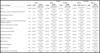
Approximately two-thirds of all known-cause deaths were attributed to CVDs, neoplasms, and cerebrovascular diseases. The cause of unknown diagnoses had the highest SMRs in schizophrenia (8.58; 95%CI 5.47-11.66) due to many deaths that were not attributed to specific causes. Although deaths from infectious diseases, nervous system diseases, and digestive diseases were rare, the SMRs were higher than for other causes (Table 3).
Excess life-years lost (LYLs)
LYLs denote the difference between the average life expectancy of patients with schizophrenia at the age of death and the set reference age (i.e., 95 years). The LYLs in the current study exceeded 30 years (males, 32.21 years; females, 28.45 years).
The excess LYLs at birth were > 15 years shorter compared to the general population (60.04 vs. 74.83 years). The difference in life expectancy between the cohort and the general population was higher in males (> 15 years less; 57.79 vs. 72.38 years) than in females (> 14 years less; 61.55 vs. 77.37 years).
DISCUSSION
Several large samples of patients with schizophrenia have been studied in the United States,15 Canada,32 Denmark,33 Hong Kong,28 and Taiwan.34 This is the first large-scale study to investigate crude mortality rates, cause-specific SMRs, and LYLs for patients diagnosed with schizophrenia in mainland China. The major finding of our study was that hundreds of thousands of patients with schizophrenia received community care, the gold standard for care outcomes. The SMR was higher than in the general population during a median follow-up duration of 5 years. Our findings suggest that the CMR (2,439.38) and SMR (4.98; 95%C 2.67-7.32) were comparatively higher than in the other studies mentioned above. The SMR in this study, particularly, was higher than the reported 3.19 in Malaga, Spain35 and 3.7 in Turkey.36 A previous study by Ran et al.37 on the mortality rate of schizophrenia in rural China had a small sample, and the results were close to treated individuals (6.5; 95%CI 5.2-8.5) regarding our SMR, and lower than in never-treated individuals (10.4; 95%CI 7.2-15.2), which was probably determined by the sample size and observation time. The SMR in our study was significantly higher in males (6.12; 95%CI 3.11-9.07) than in females (4.33; 95%CI 2.53-6.21). The discrepancy between males and females in SMRs is nearly universal. The reason is not entirely clear, but may be because life expectancy in males is shorter and the LYLs are greater. Sommer et al.38 concluded that this large gender difference in mortality may partly result from a healthier lifestyle among females (lower nicotine and other substance abuse) and partly from a lower mortality rate due to suicide.
Natural causes of mortality accounted for most deaths of known cause, which is consistent with a previous study.18,39 Specifically, we found a disproportionately larger number of people dying from neoplasms, cardiovascular illnesses, cerebrovascular disorders, respiratory diseases, and other natural causes of death, which were the leading contributors to natural-cause fatalities among patients with schizophrenia. The SMRs for genitourinary disorders, infectious diseases (except tuberculosis), digestive diseases, and other diseases were lower. In comparison to the general population, the number of fatalities due to genitourinary causes was lower, and the SMR was higher, notably in the female and urban groups. The determinants for this finding are unclear, but might be related to statistical bias produced by the limited sample size.40 People with schizophrenia likely have a higher SMR than the general population due to a lack of identification and treatment of somatic problems.
Previous studies have shown increased mortality associated with CVDs in patients with schizophrenia.41,42 CVDs are responsible for one of every three illness-related fatalities, with ischemic heart disease accounting for greater than one-half of these deaths.15 CVDs, including stroke43 and ischemic heart disease, are major contributors to premature mortality in schizophrenia. Recent meta-analytic reviews have shown that schizophrenia is associated with an increased incidence of stroke and ischemic heart disease,28,44,45 and a Chinese study reported that individuals with schizophrenia have a considerably greater 10-year CVD risk than healthy controls.46 Patients with schizophrenia also have a higher risk of death following acute coronary syndrome than the general population. Systemic inflammation may be substantially linked to early circulatory death.47 For people with schizophrenia, systemic inflammation may be substantially linked to early circulatory death.48,49 Studies have found that patients with severe mental disorders have a higher rate of undiagnosed cardiovascular death,50 as well as less frequent use of acute cardiovascular interventions in patients with schizophrenia when admitted with a myocardial infarction.51- 53
Respiratory disorders are also more common among people with schizophrenia than in the general population. We did not collect data on cigarette smoking, which is associated with higher mortality from respiratory diseases.15 In the study by Dickerson et al.,54 the effect of smoking was synergistic with having a respiratory disorder at baseline. For persons with baseline respiratory disease and smoking, the risk of natural-cause mortality was nearly five times that of participants without a respiratory disease who did not smoke cigarettes. These data add even more urgency to smoking cessation treatment for patients with mental illnesses. Addressing these combinations of risk factors may lead to a reduction in premature mortality.54 The high prevalence of chronic obstructive pulmonary disease in patients with schizophrenia is probably related to high rates of cigarette smoking.55
Deaths in schizophrenia due to endocrinopathies have been distinguished by more studies involving specific etiologies, such as diabetes and diabetes complications. There is some evidence suggesting that the prevalence of undiagnosed diabetes is higher in patients with schizophrenia than in the general population.56 Importantly, patients with pre-existing schizophrenia and co-occurring diabetes have a significantly elevated mortality rate relative to patients with diabetes alone; the increased risk of death may be due to diabetes complications.57,58
The collective results of studies involving overall mortality among patients with schizophrenia and malignancy indicate that they are 2-2.5 times more likely to die of their cancer than the general population17,59- 61; however, our cancer-specific mortality rate might be underestimated because of unknown diagnosis-related causes of death. According to a review by Zhou et al, there are a number of factors that are linked to higher cancer mortality in this population, such as access to treatment facilities, lower quality of care, physical-health multimorbidity, smoking, and antipsychotic medications.62
Comorbid physical disorders increase all- and specific-cause mortality in patients with schizophrenia. In fact, the mortality rate among patients with more than one physical disease is more than twofold that of patients without physical diseases.63 We assumed that there was such a model for schizophrenia patients with organic comorbidities as a result of disease disturbance, lifestyle, antipsychotic drugs, other medications for physical diseases, and suicide.64,65 As a result, physical diseases in patients with schizophrenia are less likely to be cured or more likely to progress to a chronic state; physical illnesses in patients with schizophrenia are less likely to be detected; and patients are less likely to access community-based palliative care,66- 69 resulting in higher death rates. A vicious downward spiral appears to exist between schizophrenia and physical illness, in which multiple factors sustain progression.
Unnatural causes of death usually include suicides, homicides, and accidents. Due to the limitations of a nationally standardized database, all unnatural causes of death were classified as external injuries or poisoning. The SMR was 5.48 (95%CI 3.32-8.66), which was lower than in one previous study (6.97; 95%CI 6.47-7.49)70 and higher than another study (3.3; 95%CI 3.3-3.3).15 Among unnatural causes of mortality, suicide still accounts for a major part of the excess mortality in schizophrenia.71 Studies have reported different suicide SMRs in patients with schizophrenia: 8.4 in South Korea,72 32.0 in rural China,73 16.2 in France (mortality due to suicide was especially high during the first 4 years of follow-up),74 and 2.91 in Canada (95%CI 2.37-3.54).32 In this study, there were 263 suicide deaths (0.32%, 263 of 80,560), which was 2.77% of all deaths and is similar to the reported suicide mortality rate of 2.6% over 10 years,75 but lower than the reported 13.09% in another study.35 Due to the study limitations, we were unable to clarify the mortality risk of suicide. As in many other studies, a percentage of suicide rates is provided.76,77 We found that the suicide rate among persons with schizophrenia was far higher than the general population. Furthermore, research has revealed that suicide in schizophrenia is linked to age.78 The Higher age, the lower suicide rates. Gender (males higher than females),79 first episode,80 mental health status before suicide,81 social aspects (including the lack of social support and stable relationships), social drift after the first episode, and social impairment82 are all risk factors associated with suicide. In addition antipsychotic medication treatment78,83 and long-acting injectable antipsychotics84 are protective factors. Two studies showed that interventions and keeping contact with specialist mental health services could decrease suicide risks in people with early-stage psychosis.85,86 Another study in a 10-year follow-up of people with schizophrenia and other psychoses indicated that family involvement at early stages might also reduce the risk of unnatural causes of mortality.87 There is a clear tendency of a shift from unnatural toward natural causes of death.79 When compared to general-population estimates, suicide rates in patients with schizophrenia were up to 80 times higher and non-suicidal fatalities were roughly 10 times higher for the relevant age categories according to an examination of mortality data in Asia. Because this is a distinction that we have not observed in schizophrenia, interpretation of this differential rate of death attributable to suicidal and non-suicidal reasons is limited in the absence of cause-specific SMRs.88
LYLs at birth were > 15 years shorter compared to that of the general population of China (59.55 vs. 74.83 years). Hjorthøj et al.23 recently conducted a systematic review involving 11 studies that found 14.5 potential years of life lost associated with schizophrenia. In a sample with schizophrenia, another study found LYLs to be higher at 22.80 years.35 In Taiwan, Pan et al.89 reported 14.97-15.50 and 15.15-15.48 LYLs for males and females with schizophrenia, respectively. Two recent studies showed that LYLs were < 10 years. In the first, small-sample study, when compared to the general population, the deficit in life expectancy in schizophrenia patients was approximately 9 years (11 years for males and 8 years for females).36 In Hong Kong, a large-sample study reported males and females with schizophrenia had 9.53 and 8.07 excess LYLs, respectively.28 Our study showed a gender discrepancy in life expectancy, with males living shorter lives than women, which is consistent with previous findings.17,21 This disparity in life expectancy has been viewed as evidence of health inequality, implying that those with mental diseases did not benefit equally from social and healthcare advancements enjoyed by the general population. Risk factors must be evaluated more thoroughly, and policies and interventions to narrow existing gaps should be encouraged.
There were several limitations in the current study. Data were lacking on antipsychotic treatment, physical comorbidities, more detailed causes of death, other risk factors (e.g., cigarette smoking and physical activity levels), obesity, and family history related to death. Therefore, we could not analyze the above conditions. We intend to address this limitation to achieve better research outcomes in future research. Further limitations were due to the lack of basic demographic data to standardize mortality rates. In public demographic data, the total population mortality was standardized only by gender, age, level of education, and geographic location. Disease-related causes of death were standardized only by gender and geographic location, with no subdivision of natural and unnatural mortality rates, especially suicides, homicides, and accidents. These causes have been divided into external causes and poisoning causes of death. There is no way to calculate SMRs more accurately. More detailed databases may not be operational at the public health level because this involves country-specific confidentiality issues. Thus, to interpret some of these data further, additional data will be required. Finally, in the first few years of the community care system in China, more middle-aged patients with schizophrenia in the community were included, which introduced registration bias. As the registry system stabilizes, the database may at some point avoid this bias.
Drew90 initially identified mortality as an indicator of the potential clinical outcome of schizophrenia, which represents a crucial variable with which to compare the impact of various forms of treatment; it was recently described as the critical standard of clinical outcomes.20 There is no doubt that patients treated in community care had a higher mortality rate than the general population in our study. Mental health services have been integrated into the general healthcare system in China to close treatment gaps in mental health for > 10 years. In terms of mortality outcome indicators, effective and high-quality mental health services still have a long way to go. Other indicators and studies have shown a similar pattern. Li et al.91 and Li & Yang92 found that 32-97.4% of inpatients in psychiatric hospitals have physical comorbidities, particularly older adult inpatients. Zhou93 found that patients with mental illness have higher mortality rates in all age groups than the general population, resulting in a 9-year gap in life expectancy in the Pudong New Area of Shanghai. As Di Liang et al.25 suggested, mental health services in China still have many challenges and urgent problems to address.
 PDF
 Print
 Send this article by email
 How to cite this article
 Submit a comment
 Mendeley
 Pocket
 Share on Facebook
 Share on Twitter



