



| Received: October 18 2022; Accepted: November 16 2022 |
The interest of researchers and clinicians in the food addiction (FA) construct is growing worldwide. The Yale Food Addiction Scale (YFAS) and its versions are currently the main FA assessment tools in use, and the scale has been translated and validated into several languages, including Korean, Spanish, and German.1 One of these versions, the modified YFAS 2.0 (mYFAS 2.0), which is based on DSM-5 diagnostic criteria for substance use disorders, is a shortened version suitable for population studies.2 Nunes-Neto et al.'s3 translation of the mYFAS 2.0 into Brazilian Portuguese, including validation with a large sample (n=7,639), was an excellent initiative.
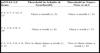
Nevertheless, their translation has some inconsistencies that could impair respondent understanding, as well as the tool's diagnostic capacity. First, in the original version of the mYFAS 2.0, item 13 says "My friends or family were worried about how much I overate." In the Brazilian version, this item was translated to "My friends or family were worried about how much I ate" (in Portuguese: "Meus amigos ou familiares estavam preocupados com o quanto eu comia"), disregarding the meaning of "overate." This mistranslation may lead to confusion and lead to inaccurate answers, since the respondents' social circles may be concerned with both low and high food intake. Hence, someone who eats less than expected (due to anorexia or food insecurity, for example) could score points for this item. The second inconsistency refers to the instructions for scoring the scale. Each item is assigned a number according to the frequency of occurrence (0 = never to 7 = every day). Points are scored for each item if the reported frequency is above the given threshold for each item. The frequency values assigned by Nunes-Neto et al.3 are all higher than those of Schulte & Gearhardt's2 original version (Table 1). We emphasize that although the numerical values are incorrect, the verbal transcriptions are correct (e.g., "once a month"). Nevertheless, the higher and incorrect numerical values required to reach the threshold for each item in the Brazilian Portuguese version3 could lead to confusion and underestimate the prevalence and number of FA symptoms in respondents. This could explain the lower prevalence of FA (4.31%) they observed compared to the weighted mean prevalence observed in the general population (20%) in a meta-analysis that included 272 studies,4 as well as in a representative sample (n=5,368) of Brazilian university students (19.1%).5
Given these inconsistencies, perhaps the adequacy and validity of the translated version of this scale should be reassessed, since its use may lead to inaccurate results in Brazilian research on FA.
 PDF
 Print
 Send this article by email
 How to cite this article
 Submit a comment
 Mendeley
 Pocket
 Share on Facebook
 Share on Twitter



