



ABSTRACT:
OBJECTIVE: To review the most common mental health strategies aimed at alleviating and/or preventing
mental health problems in individuals during the coronavirus disease 2019 (COVID-19)
and other coronavirus pandemics.
METHODS: We conducted a systematic review of the literature assessing three databases (PubMed,
SCOPUS, and PsycINFO). A meta-analysis was performed with data from randomized controlled
trials (RCTs). For non-RCT studies, a critical description of recommendations was
performed.
RESULTS: From a total of 2,825 articles, 125 were included. Of those, three RCTs were included
in the meta-analysis. The meta-analysis revealed that the interventions promoted better
overall mental health outcomes as compared to control groups (standardized mean difference
[SMD] = 0.87 [95%CI 0.33-1.41], p < 0.001, I2 = 69.2%), but did not specifically improve anxiety (SMD = 0.98 [95%CI -0.17 to 2.13],
p > 0.05; I2 = 36.8%). Concerning the systematic review, we found a large body of scientific literature
proposing recommendations involving psychological/psychiatric interventions, self-care,
education, governmental programs, and the use of technology and media.
CONCLUSIONS: We found a large body of expert recommendations that may help health practitioners,
institutional and governmental leaders, and the general population cope with mental
health issues during a pandemic or a crisis period. However, most articles had a low
level of evidence, stressing the need for more studies with better design (especially
RCTs) investigating potential mental health interventions during COVID-19.
PROSPERO REGISTRATION: CRD42020190212.
Keywords: Community mental health; prevention; management; coronavirus; COVID-19; pandemic.
FIGURES
| Received: October 20 2020; Accepted: December 7 2020 |
INTRODUCTION
Pandemics have historically been more destructive and devastating in terms of morbidity and mortality than any other type of world disaster, rivaled only by human-made disasters of war and genocidal murder. Nevertheless, empirical data on mental health impacts of pandemics has been meager in comparison to what has been reported for natural or human-made disasters. Though disaster-related mental health research has increased in recent years, most pandemics in the last century have generated limited study.1
In early March 2020, the World Health Organization (WHO) declared the coronavirus disease 2019 (COVID-19) outbreak a pandemic with unpredictable consequences.2 Almost 1 year later, more than 112 million individuals have been infected, with almost 2.5 million deaths worldwide caused by the new severe acute respiratory syndrome coronavirus 2 (SARS-CoV-2) virus.3 Furthermore, even though COVID-19 was initially described mainly as a respiratory disease, accumulating evidence suggests that several other systems are affected, and neuropsychiatric complications may play an important role in the overall disease burden.4,5
A recent meta-analysis has shown that, similar to other coronaviruses (severe acute respiratory syndrome coronavirus 1 [SARS-CoV-1] and Middle East respiratory syndrome [MERS]), SARS-CoV-2 may affect the central nervous system (CNS) in many different ways, including acute, subacute, and chronic neurological and psychiatric impairments.6 Many acute neuropsychiatric events have been described, such as encephalopathy, delirium, anosmia, and ageusia7; the former two presumably relate to systemic/indirect insults to the brain, whereas the latter may reflect a specific mechanism through which the virus would directly affect nerve cells and/or damage support cells in the neuroepithelium.8-11 Higher rates of depression, anxiety, suicidal behavior, and post-traumatic stress disorder (PTSD) have been associated with prior viral pandemics including SARS and MERS, suggesting similar patterns may emerge with COVID-19.6,12,13 A recent study14 investigating a clinical sample of COVID-19 survivors 1-month after hospital discharge reported high rates of mental health symptoms, such as depression, anxiety, PTSD, insomnia, and obsessive-compulsive symptoms, which were directly related to baseline immune inflammation of exposed individuals during hospitalization.14
There are several processes through which a coronavirus can cause neuropsychiatric diseases. Potential neuropathological mechanisms include acute injury to nasal and gustative cells with trans-synaptic flow into the brain, as well direct viral injury to brain tissue via blood-brain barrier (BBB) diapedesis, which generates a glial neuroinflammatory response. Even without viral transfer into the brain itself, there may be indirect CNS effects when cytokine storm results from breaches in the BBB, particularly via fenestrated endothelium and endotheliitis. This neuroinflammatory cascade can promote a hypercoagulability state leading to CNS thrombotic events and further injury to the BBB.6,7,15 Moreover, there are also possible environmental reasons for psychiatric morbidity. For example, individuals may develop stress due to social isolation, loneliness, economic burden, and unemployment following the pandemic, stigma, and several others.16-22
Given the fact that more than 20 million individuals have been infected, many of whom will develop psychiatric symptoms, it is possible that we might face a wave of neuropsychiatric diseases in the upcoming months and years.7 Within this context, experts around the world have proposed preventive and therapeutic strategies to manage mental health sequelae, largely based on their personal experiences and on the knowledge derived from other pandemics.23-26
Understanding the current evidence obtained through randomized controlled trials (RCTs) is crucial to guide mental health and other health practitioners. Likewise, understanding the opinions of mental health experts could potentially help in the development of future guidelines and in the design of clinical trials in order to minimize the mental health burden in this and future pandemic crises. However, at the present moment, there is a lack of systematic evidence and a scarcity of evidence-based practice recommendations regarding mental health preventive and management strategies in the COVID-19 pandemic, both individually and at a population level. Such evidence could possibly guide clinicians and health managers worldwide, helping to mitigate the mental health consequences of this and other pandemics.
Thus, the goal of this study was to review the current scientific literature regarding the most common mental health strategies available with the aim of alleviating and/or preventing mental health problems (e.g., depression, anxiety, PTSD, and suicidal behavior) in individuals during COVID-19 and other coronaviruses pandemics. Moreover, we investigated the possible effectiveness of mental health interventions, as compared to control groups, based on a meta-analysis of randomized controlled clinical trials.
METHODS
The present study was based on Preferred Reporting Items for Systematic Reviews and Meta-Analyses (PRISMA) recommendations.27,28 A meta-analysis was performed with RCT results, and for non-RCT studies a critical description of recommendations was performed with all included articles. The study was registered on the PROSPERO29 platform under registration CRD42020190212.
Eligibility criteria
The following criteria were applied for inclusion of studies in this review: articles addressing preventive and/or management strategies to handle mental health issues in laypersons and health professionals during the COVID-19, SARS, or MERS pandemics. For the meta-analysis, only RCTs reporting effect sizes and/or full data on means, standard deviations (SD), and sample sizes for each group were included; whereas for the descriptive analysis, all articles (letters to the editor, editorials, opinion essays, guidelines, observational studies) were included. No language or date restrictions were applied.
Exclusion criteria were non-coronavirus-related articles and articles that did not describe interventions or provide recommendations for the prevention or management of mental health concerns.
Search strategy
The literature search was conducted in three databases (PubMed, SCOPUS, and PsycINFO) from inception to June 3, 2020. Moreover, a hand search was performed on three pre-print databases (medRxiv, bioRxiv, PsyArXiv) in order to find additional articles. Key words were derived from meetings of the researchers and based on literature reviews, including a recent literature review on the prevalence of mental health problems due to COVID-19 infections.6 Keywords were grouped using the following Boolean operators and adjusted according to each database: "(mania OR manic OR dysthymia OR dysthymic OR anxiety OR anxious OR suicidal OR euphoria OR suicide OR affective OR depression OR depressive OR bipolar OR post-traumatic stress disorder OR PTSD OR mood OR mental health) AND (covid-19 OR coronavirus OR SARS-Cov-2 OR SARS OR MERS OR severe acute respiratory syndrome OR SARS-Cov OR middle east respiratory syndrome)."
Study selection
The selection of studies was conducted in three stages.
Stage 1
Two independent authors (RFD and TDS) screened simultaneously all references in the three databases using the search strategies described earlier. Duplicates were excluded using the Endnote software. Both authors determined eligibility based on title and/or abstract. Any article suggesting or recommending mental health interventions or presenting original data regarding any kind of interventions that might help mental health practitioners, governmental leaders, and educators around the world deal with the emergent mental health crisis were considered and included. Any disagreements between researchers were discussed with a third party (GL), and a final decision was made. All included articles on stage 1 were available to stage 2.
Stage 2
The selected articles were read in full by the same independent researchers (RFD and TDS). Both authors independently analyzed the data focusing on the eligibility criteria and extracted the following variables: authors, first author, year of publication, journal, language, type of study, type of intervention (preventive or management), targeted population (health care workers, laypersons, etc.), and category of recommendation. Articles that did not meet eligibility criteria in stage 2 were excluded. In the descriptive analysis, the authors grouped the most common mental health interventions and recommendations and, based on this information, they determined the following groups: psychological/psychiatric interventions, complementary and alternative therapies, self-care, technology and media, education, governmental programs, general recommendations, spirituality and religiousness, health care institutions, and physical intervention. Each article could have more than one category of recommendation, and any disagreement between researchers was again discussed with a third party (GL).
Stage 3
All information was compiled, and an expert summary provided. RCTs meeting the inclusion criteria were included for meta-analysis. Practical recommendations for laypersons, mental health care workers, and agencies were summarized.
Quality assessment
Each RCT was assessed using the Cochrane Back Review Group Criteria List for Methodological Quality Assessment30 by two independent authors (RFD and TDS). This assessment covers the following methodological items: A = randomization method; B = allocation concealed; C = similar baseline; D = patient blinded; E = provider blinded; F = assessor blinded; G = cointervention avoided; H = acceptable compliance; I = acceptable drop out; J = timing of outcome of assessment similar; and K = intention to treat analysis. A score ranging from 0 to 11 was used.
Meta-analysis
The software Meta-Essentials was employed for the meta-analysis. All outcomes provided by each article were included. For studies that had more than one outcome group (e.g., anxiety, depression, somatization), analyses were carried out separately for each group, with studies labeled with a letter in parentheses (e.g., "b") for each of these comparisons.
Effect size was based on the mean, SD and sample size of the intervention and control groups for each comparison. For the meta-analyses that compiled different scales, effect size was calculated as the standardized mean difference (SMD = Cohen d) with its 95% confidence interval (95%CI). This approach enabled inclusion of different outcome measures in the same synthesis.
Random effects model meta-analyses were conducted for all studies that had full data assessing mental health in general, and a sub-analysis was carried out for anxiety. A p-value < 0.05 was adopted as significant and heterogeneity was determined using I2.
RESULTS
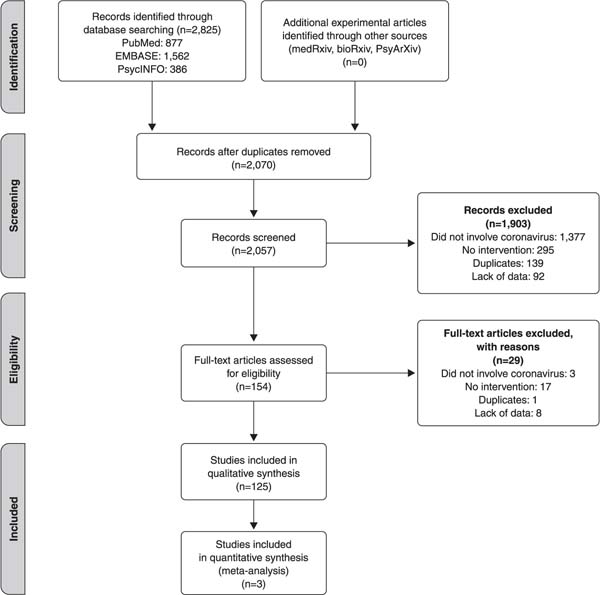
Figure 1 summarizes the steps of the systematic review. We found 2,825 articles through database searching: 877 from PubMed, 1,562 from EMBASE, and 386 from PsycINFO. No other studies were found in additional databases (i.e., medRxiv, bioRxiv, PsyArXiv). After excluding duplicates, a total of 2,070 articles remained for the first screening. From those, 13 were automatically excluded due to the lack of title.
From 2,057 references screened, 154 were accepted for full-text reading. After full-text reading, 29 additional articles were excluded, leaving a total of 125 articles that were included in the final analysis. Of these, four were RCTs.31-34 However, only three were included in the meta-analysis,32-34 because one provided only absolute numbers and percentages rather than means and standard deviation.31
Descriptive analysis of the articles included in the systematic review
A total of 125 articles published from 2003 (first article) to 2020 regarding mental health interventions for COVID-19 and other coronaviruses (SARS and MERS) were found.
Table 1 summarizes our results. More than 90% of the articles were published in 2020 and were about COVID-19, while the remaining minority included SARS-CoV-1 (6.4%), MERS (0.8%), and more than one coronavirus (0.8%). The majority of studies were conducted in China (28.8%), the United States (14.4%), and the United Kingdom (12%), followed by Italy (5.6%), India (4.8%), and Australia (3.2%). Most of these publications were letters to the editors (33.6%) and review articles (28%), followed by original research articles, largely cross-sectional in design (9.6%). The remaining articles (28.8%) included editorials, reports, experimental studies, cohort studies, consensus statements, meta-analyses, opinion, and quasi-experimental studies. Almost 70% included recommendations for the lay public and 20.8% for health care professionals.
| No. articles (%) | |
|---|---|
| Year | |
| 202012,25,31,32,34,35-145 | 116 (92.8) |
| 2003-201933,146-153 | 9 (7.2) |
| Journal | |
| Asian Journal of Psychiatry38,64,71,75,81,97,106,109,114,119,125 | 11 (8.8) |
| Lancet Psychiatry12,55,67,73,88,95,140 | 7 (5.6) |
| Psychiatry Research47,83,104,116,126,141,144 | 7 (5.6) |
| Clinical Neuropsychiatry65,99,112,131 | 4 (3.2) |
| Other | 96 (76.8) |
| Type of study/article | |
| Letter to the editor12,25,36,37,41,43-45,47,50,53-55,61,62,65-67,71-73,75,77-79,81,85,88,92,95,103-105,109,114,122,123,126,130,140,141,144 | 42(33.6) |
| Review40,42,46,58,60,64,69,70,90,91,93,94,96-98,100,101,107,108,111-113,115-119,121,124,125,134,136,137,142,148 | 35 (28.0) |
| Cross-sectional38,49,52,102,106,110,128,135,138,146,150,151 | 12(9.6) |
| Editoria35,48,51,84,89,99,127,129,139,145 | 10 (8.0) |
| Report39,57,59,63,68,76,80,83,131,152 | 10 (8.0) |
| Experimental32-34,132 | 4 (3.2) |
| Quasi-experimental31,147,153 | 3 (2.4) |
| Cohort143,149 | 2 (1.6) |
| Consensus82,86 | 2 (1.6) |
| Meta-analysis87,120 | 2 (1.6) |
| Opinion74,133 | 2 (1.6) |
| Protocol56 | 1(0.8) |
| Country of the corresponding author | |
| China32-34,38,43,47,52,55-57,67,77,78,80,83,92-95,120,125-127,132,134-136,138,142-144,148-151,153 | 36 (28.8) |
| United States25,39,50,51,54,69,79,86,91,101,107,108,114,121,123,124,140,141 | 18 (14.4) |
| United Kingdom12,42,48,49,59,62,70,73,74,89,96,102,122,129,137 | 15 (12.0) |
| Italy53,63,65,99,112,116,139 | 7 (5.6) |
| India64,71,75,97,98,119 | 6 (4.8) |
| Australia85,87,111,145 | 4 (3.2) |
| Others | 39 (31.2) |
| Coronavirus | |
| SARS-Cov-212,25,31,32,34-57,59-145 | 115 (92.0) |
| SARS-Cov-133,146-151,153 | 8 (6.4) |
| MERS152 | 1 (0.8) |
| More than one coronavirus58 | 1 (0.8) |
| Population included or targeted for recommendations | |
| General population12,25,31,32-38,44-47,50,51,53,54,58,60-71,73,75,76,78-81,84-86,88-95,97,98,100-112,114,116-120,125-128,130,131,140-145,148-153 | 88 (70.4) |
| Health care workers39,41-43,48,49,52,55,57,59,72,74,87,96,121,122,124,132,133,135-139,146,147 | 26 (20.8) |
| General population and health care workers40,77,82,83,99,113,115,123,129,134 | 10 (8.0) |
| Children/adolescents56 | 1 (0.8) |
COVID-19 = coronavirus disease 2019; MERS = Middle East respiratory syndrome; SARS-CoV = severe acute respiratory syndrome coronavirus.
Mental health interventions
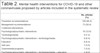
Table 2 summarizes the descriptive analysis of the 125 articles addressing preventive or interventional strategies for mental health symptoms in individuals during coronavirus pandemics. Recommendations regarding any kind of preventive and/or management interventions were made by 86.4 and 58.4% of all included articles respectively. More than one intervention was proposed in 69.6% of these articles, with 21.6% proposing more than five different interventions. The most common combined interventions were psychological and psychiatric (12.8%), technology and media (7.2%), and the combination of both (6.4%). Regarding each intervention, psychiatric and psychological were the most frequently reported, followed by self-care and educational interventions.
| No. articles (%) | |
|---|---|
| Preventive recommendations | 109 (86.4) |
| Management recommendations | 73 (58.4) |
| Combined interventions | |
| Psychological/psychiatric interventions | 16 (12.8) |
| Technology/media | 9 (7.2) |
| Psychological/psychiatric interventions + technology/media | 8 (6.4) |
| Education | 8 (6.4) |
| Self-care | 7 (5.6) |
| Governmental programs | 7 (5.6) |
| Psychological/psychiatric interventions + technology/media + education | 5 (4.0) |
| Psychological/psychiatric interventions + governmental programs | 5 (4.0) |
| Psychological/psychiatric interventions + education | 4 (3.2) |
| Others | 56 (44.8) |
| Number of recommendations proposed per article | |
| 1 | 38 (30.4) |
| 2 | 28 (22.4) |
| 3 | 11 (8.8) |
| 4 | 11 (8.8) |
| 5 | 10 (8.0) |
| More than 5 | 27 (21.6) |
| Psychological/psychiatric interventions | |
| Individual psychotherapies33,36-38,52,55,56,59,80,82,87,99,100,108,118-121,125,127,136,137,139,142,148,153 | 26 (20.8) |
| Hotline12,36,37,42,43,45,55,72,75,81,84,102,109,113,114,125,133,136,137,139,142,144,145,153 | 24 (19.2) |
| Support groups35,38,39,42,48,55,57,59,63,72,74,76,88,96,119,126,127,129,139,146,148 | 21 (16.8) |
| Psychological first aid59,70,72,83,92,118,119,131,136 | 9 (7.2) |
| Art therapy50,60,61 | 3 (2.4) |
| Enhancing optimism intervention33,148 | 2 (1.6) |
| Post-COVID-19 support73,150 | 2 (1.6) |
| Home brain stimulation54 | 1 (0.8) |
| Music therapy57 | 1 (0.8) |
| Psychopharmacology127 | 1 (0.8) |
| Home care68 | 1 (0.8) |
| Prisoner mental health care89 | 1 (0.8) |
| Complementary and alternative therapy | |
| Mindfulness34,42,44,46,51,57,65,75,80,86,118,121,139 | 13 (10.4) |
| Breathing techniques34,40,51,121 | 4 (3.2) |
| Yoga40,51,60 | 3 (2.4) |
| Qigong69 | 1 (0.8) |
| Self-care | |
| Sleep hygiene40,42,44,48,57,58,66,86,96,97,101,117,119,121,126,128,135,138,143 | 19 (15.2) |
| Time with family/friends25,40,42,44,58,75,78,86,97,101,117,119,126,128,133 | 15 (12.0) |
| Exercise25,75,86,97,101,110,117-119,121,126,128,132,143 | 14 (11.2) |
| Eating40,42,57,58,75,86,96,97,101,110,117,119,128 | 13 (10.4) |
| Leisure time40,42,44,51,52,58,66,75,86,97,119,126,128 | 13 (10.4) |
| Health preventive measures12,66,86,106,117,119,123,128 | 8 (6.4) |
| Establishing a routine25,66,75,86,97,105 | 6 (4.8) |
| Listening to music42,128 | 2 (1.6) |
| Altruism/helping others121,133 | 2 (1.6) |
| Technology and media | |
| Telehealth12,31,60,63,68,71,72,77-79,81-83,91-93,98,102,104,108,109,111,113,114,119,125 | 26 (20.8) |
| Time of exposure in media25,38,40,42,51,70,75,86 | 8 (6.4) |
| WhatsApp/chat support groups57,78,81,95,119,125,126 | 7 (5.6) |
| Specific media recommendations47,64,84,145 | 4 (3.2) |
| Education | |
| Accurate dissemination of COVID-19 info62,63,76,84,87,99,102,112,113,116,123,125,126,129,133,134,144,148 | 18 (14.4) |
| Stress management courses87,99,101,102,106,112,113,117-119,121,123,137-139,142 | 16 (12.8) |
| Keeping scientifically updated42,48,52,59,63,82,87,116,123,124,129 | 11 (8.8) |
| Web courses34,44,49,55,63,94,113,129,142,145 | 10 (8.0) |
| Recommendations to school/universities85,140,141 | 3 (2.4) |
| Governmental programs | |
| Social and economic support12,25,64,67,76,88,90,92,96,99,103,117,119,127,133,135,148,150,151 | 19 (15.2) |
| Increased mental health services12,25,41,43,53,64,65,67,76,82,92,99,107,127,136,148,152 | 17 (13.6) |
| Supporting victims of domestic violence12,25,107,113 | 4 (3.2) |
| General recommendations | |
| Avoid the term "social distancing"90,99,101,130 | 4 (3.2) |
| Clinical tips70,77,90,93 | 4 (3.2) |
| Spirituality and religiousness | |
| Pray42,128 | 2 (1.6) |
| Religious practices94 | 1 (0.8) |
| Health care institutions | |
| Safe environment/protective equipment12,42,48,52,59,76,82,87,96,121,122,124,147 | 13 (10.4) |
| Balanced shift rotations12,42,48,76,82,87,96,122,129 | 9 (7.2) |
| Place to rest42,48,76,87,96,122,124 | 7 (5.6) |
| Avoiding moral injury74,89,122,129 | 4 (3.2) |
| Role models48,122 | 2 (1.6) |
| Provide housing96,124 | 2 (1.6) |
| Physical intervention | |
| Muscle relaxation32 | 1 (0.8) |
COVID-19 = coronavirus disease 2019.
Meta-analysis
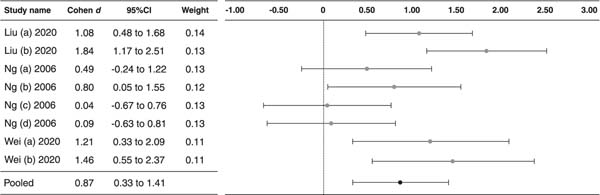
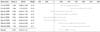
For the meta-analysis, three RCTs were included,32-34 for a total of 128 participants. The meta-analysis revealed improved mental health in intervention groups as compared to control groups for a combination of outcomes analyzed together (improved anxiety,32-34 depressive symptoms,33,34 sleep quality,32 hostility,33 and somatization33) (SMD = 0.87 [95%CI 0.33-1.41], p < 0.001, I2 = 69.2%) (three studies included, with eight comparisons) (Figure 2). Due to the limited number of studies, an individual meta-analysis was only possible for anxiety, without any differences detected between the intervention and control groups (SMD = 0.98 [95%CI -0.17 to 2.13], p > 0.05; I2 = 36.8%) (three studies included, with three comparisons). Other comparisons were not possible due to the lack of data.
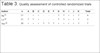
Moreover, a quality assessment of clinical trials was carried out for the three included articles (Table 3). In general, the articles were of low quality, with a general score ranging from 3 to 7 (Table 1).
| Author | n | A | B | C | D | E | F | G | H | I | J | K | Total |
|---|---|---|---|---|---|---|---|---|---|---|---|---|---|
| Ng33 | 51 | - | + | + | - | - | - | ? | ? | + | + | ? | 4 |
| Liu32 | 51 | ? | ? | + | - | - | - | ? | ? | + | + | ? | 3 |
| Wei34 | 26 | + | + | + | ? | ? | ? | + | + | + | + | ? | 7 |
n = number of participants; A = randomization method; B = allocation concealed;
C = similar baseline; D = patient blinded; E = provider blinded; F = assessor blinded;
G = cointervention avoided; H = acceptable compliance; I = acceptable drop out;
J = timing of outcome of assessment similar and; K = intention to treat analysis.
+ indicates information provided; - indicates information not provided; ? indicates not possible to determine.
The first clinical trial was a 2006 study of a 1-day group debriefing technique, Strength-Focused and Meaning-Oriented Approach for Resilience and Transformation (SMART), based on Asian philosophies and traditional Chinese medicine33 applied for people with chronic diseases 1 month after the SARS pandemic. The authors found that the intervention group reported improved depressive symptoms, but no difference was detected in anxiety, hostility, and somatization symptoms. Two other intervention studies were administered to patients with COVID-19. Liu et al.32 evaluated the effects of progressive muscle relaxation, 30 min daily for 5 days, for patients with COVID-19 in an isolation ward. Subjects who received the intervention improved significantly in anxiety and sleep quality measures. Another Chinese group investigated the impact of an internet-based intervention for depressive and anxiety symptoms in COVID-19 patients.34 This 2-week trial consisted of daily 50-minute practices of breath relaxation techniques, mindfulness, "refuge skill," and a "butterfly hug." The authors found a significant improvement in mild depressive symptoms and anxiety symptoms after the 1st and 2nd weeks of the intervention.
DISCUSSION AND CLINICAL RECOMMENDATIONS
To the best of our knowledge, this is the first study to systematically evaluate interventions designed to improve mental health outcomes during and after coronaviruses infections. In the meta-analysis, interventions were effective in improving the general mental health outcomes (anxiety, depressive symptoms, sleep problems, hostility, and somatization) of individuals, but only when aggregated. When analyzing interventions for impact specifically on anxiety symptoms, the results were not significant.
Concerning the descriptive systematic review, we found a large body of scientific literature proposing mental health interventions, mostly based on low-quality levels of evidence (i.e., expert opinions or cross-sectional studies). Most articles were from China and the United States and focused on the novel SARS-CoV-2 infection. Below, we will discuss the most important findings from these studies for each intervention group, as well as propose future interventions for mental health practitioners, general clinicians, educators, and governmental leaders.
Psychological/psychiatric interventions
Psychiatric and psychological interventions were, by far, the most common strategies recommended. Most recommendations were aimed at preventing the development of PTSD,154-156 given the increased risk of PTSD reported in other coronaviruses6 and the H1N1 epidemic.157 Notably, most experts recommended individual psychotherapies,55,87 but also stressed the importance of hotlines24,158 and peer support groups.59,148 Certain individual interventions have more evidence for people facing acute stress,159,160 such as Trauma-Focused Cognitive Behavioral Therapy161 and Prolonged Exposure Therapy.162,163 Psychological First Aid (i.e., initial crisis interventions with the aim to stabilize survivors from disasters) is a subset of interventions that requires more investigation. Ng et al.33 found a negative association of a debriefing technique with depressive symptoms 1 month after stress exposure. However, several other studies and expert consensus guidelines suggest that debriefing interventions following an acute stressor may be contraindicated, highlighting a greater risk of developing PTSD.164
Early psychopharmacological interventions were also recommended in some articles.127 While there is a lack of studies investigating pharmacological interventions specifically for acute stress,160 it is important to underscore the importance of avoiding iatrogenic contributors. For example, several studies have pointed out an increase of PTSD symptoms following the use of benzodiazepines for acute stress.165,166 Thus, experts suggest that clinicians avoid using benzodiazepines to treat mild symptoms (e.g., mild anxiety, insomnia) of acute stress and adjustment disorders,167 but more studies should be done to investigate these controversies.
Complementary and alternative therapies
Meditation, especially mindfulness,34,46 yoga,40,51 and breathing techniques,34,121 were the most recommended complementary practices. There is a large body of evidence of the positive effects of these practices in mental health.168 Mindfulness meditation has been used and validated for acute stress situations,169 including those related to COVID-19.34 It has been shown to have an effect on mood and anxiety, inducing neurobiological changes, even after 8-week meditation programs.170,171 A recent systematic-review172 did highlight possible adverse effects from meditation practices and meditation-based therapies, however, such as the emergence of depressive and anxiety symptoms, cognitive anomalies, and suicidal behavior. Based on these studies, we suggest that complementary and alternative practices (especially mindfulness) should be encouraged as a good and low-cost practice to alleviate and/or prevent mental health issues following traumatic periods/experiences. However, attention should be paid especially to moderate and severe cases, where these practices could be detrimental if not enhanced with specialized mental health care.
Self-care
Engaging in self-care practices is essential in promoting positive mental health. Several authors have pointed out the importance of exercise, eating habits, leisure time, sleep hygiene, establishing a routine, reducing alcohol intake, and spending more time with family and friends.25,35 There is a large body of evidence that self-care behaviors can decrease the development of mental health issues and stimulate positive mental health in the general population, but also in in mental health practitioners.173-175 Interestingly, two authors stressed the importance of altruistic behaviors in promoting mental health.121,133 Previous articles have shown a positive relationship between altruistic behaviors and mental health outcomes,176 though a recent cross-sectional study investigating the effect of altruism on mental health showed a negative relationship between high levels of altruism and negative affect during the COVID-19 pandemic.177 This finding was corroborated by a large population-based study,178 which can be explained due to the fact that highly altruistic people might engage less in self-care practices.
Institutions
It is critical that institutions provide a safe and healthy environment in order to foster personal growth and positive mental health outcomes among health care workers. Several experts recommended the importance of protecting health care workers from exposures to coronavirus, providing adequate personal protective equipment, setting balanced shift rotations, creating a comfortable place to rest, providing housing when needed, and providing positive role models for personal growth.74,124,129 We suggest that institutions and governments should pay attention to and stimulate self-care behaviors of their professionals in order to alleviate their distress and promote better mental health. Special attention should be paid to low- and middle-income countries (LMIC) countries, where health professionals have an extremely high workload and are underpaid. Considerations may include increasing wages, reducing workloads, and affording professionals time to engage in self-care activities.20
Technology and media
In the midst of the "technology era" in health care services,179 many online programs have been utilized to support mental health during the COVID-19 pandemic, and some of them may become standard practices once the pandemic ends. Telehealth services,145 including online psychological crisis intervention,142 telephone support services,102 online mental health services,95 television-based interventions,31 smartphone-based e-consults,71 and the use of social media for psychological interventions57 are some examples of successful programs developed this year. Leveraging such technologies has the potential to increase access to mental health care, create mentorship between mental health specialists and general practitioners in distant communities, and facilitate dissemination of general mental health recommendations.
Despite the important benefits of technology with regards to mental wellness, there are also some potential downsides. In LMICs, as well as for low-income individuals from developed nations, the lack of access to internet may create larger social and economic disparities. The increased exposure to internet and social media has already been associated with mental health issues, including decline in subjective well-being180 and increased depressive symptoms.181 Interestingly, Bessière et al.,182 in a longitudinal study, found that using the internet for health purposes might be associated with increased depressive symptoms, while using it to communicate with family and friends might be associated with decreased symptoms of depression. The authors suggest that their results could be explained by an increase in rumination, unnecessary alarm, or over-attention to health problems. More studies are needed to explore the potential deleterious effects of telehealth and technology systems in psychiatric and psychological care. Mental health providers should be aware of these problems while evaluating individuals during pandemic situations.
Educational
The use of programs to educate laypersons and health care workers about stress management137 and to disseminate reliable and scientifically updated information about the disease63 might be an important strategy to reduce anxiety and increase self-confidence. Furthermore, the importance of maintaining online school and university classes and other web courses was also addressed by many experts49,141 and seems to be associated with a sense of well-being and accomplishment. However, some concerns emerge in low income countries and low-income areas of other countries, where citizens might face serious economic issues during critical periods, and might not have access to internet or electronic devices.183 Governments should work to increase access to the internet in low income and vulnerable populations, and mental health professionals are encouraged to develop educational programs for these patients.
Governmental programs
The negative mental health impact of economic crises19,184 and previous pandemic outbreaks6 has already been studied by many authors. It is crucial that during crises, government, especially from LMICs,64 lead initiatives to prevent and address mental health issues, including suicidal behavior,12 that might arise from distressing situations. Several mental health experts pointed out the importance of governments in lending social and economic support to individuals,119,151 increasing mental health services,53 and supporting victims of domestic violence.25 During the COVID-19 pandemic, countries have developed many different economic interventions in order to ameliorate its impact on health.185 More studies should be done to understand the exact impact of these initiatives in public health.
Spirituality and religiousness
There is a growing body of evidence highlighting the positive role of spirituality and religiousness in mental health.186,187 However, few experts recommended spiritual or religious practices as a possible coping mechanism during any coronavirus epidemic. Notably, several groups around the world are developing strategies to deal with the growing spiritual struggle that people might face during a crisis, such as the development of hotlines focused in promoting spiritual care and fulfill the lack of religious support during quarantine.158,188 However, more empirical studies should be done in order to investigate the exact impact of these religious/spiritual intervention strategies in mental health. Moreover, mental health providers should be aware of the spiritual needs of their patients, identifying if the use of religiousness and spirituality is functional or dysfunctional, and referring to religious leaders or chaplains if appropriate.
Physical interventions
Physical interventions, such as muscle relaxation techniques and yoga exercises, have also been reported by some experts as a tool to curtail anxiety and sleep disturbances during the COVID-19 pandemic. Liu et al.32 found a positive effect on both anxiety and sleep quality for patients with COVID-19. This finding is consistent with a previous study that used the same technique with pregnant women189 and breast cancer patients.190 The underlying mechanism might be the balance between the anterior and hypothalamic nucleus and the reduction of sympathetic nervous system activity,32 though further studies are needed.
General recommendations
Finally, several general recommendations with clinical tips for mental health practitioners were also published during the COVID-19 and other pandemics.90,93 Interestingly, many experts recommended the avoidance of the term "social distancing," preferring "physical distancing" in order to reduce feelings of rejection among psychiatric patients.90,130 To our knowledge, no study has empirically investigated the effect of this recommendation in clinical practice.
Limitations
This study has several limitations. First, we only included three databases, and articles published in other databases might not have been included. Second, our search strategy is limited to only few mental health issues, potentially limiting generalization. Third, most articles included had a low level of evidence, with a great number of letters to the editor, opinions, editorials, recommendations, and case reports. Forth, due to the dynamic and continuous process of publications during COVID-19 pandemic, new articles may have been published in the months after this review. Fifth, our meta-analysis included only three articles, which could limit our findings. More RCTs are needed in order to overcome this limitation. Finally, we found a high heterogeneity among RCTs, including different intervention populations, different types of interventions, and different outcome measures. Such heterogeneity may have impacted the findings and interpretation of our meta-analysis.
CONCLUSIONS
The present review found that there are few clinical trials assessing the effectiveness of interventions to improve the mental health of individuals during coronavirus pandemics. Although the results were superior for the intervention groups as compared to the control groups for general mental health, these results relied on only three studies with limited quality. When analyzing individual outcomes, such as anxiety, the pooled results were not significant. However, in the systematic review, we found a large body of expert recommendations that can help health practitioners, institutional and governmental leaders, and laypersons cope with mental health issues during a pandemic, as well as during periods of social and economic crises. Furthermore, despite the low level of evidence, many of these recommendations can be generalized to routine daily practice in order to improve mental health and wellbeing. This is essential given that in many countries, and especially in developing countries, citizens will face years of social and economic adversity that will have a direct impact on the mental health of populations.
Disclosure
The authors report no conflicts of interest.
 PDF
 Print
 Send this article by email
 How to cite this article
 Submit a comment
 Mendeley
 Pocket
 Share on Facebook
 Share on Twitter



