


| Received: November 24 2019; Accepted: December 21 2019 |
Physicians have a higher prevalence of mental health problems compared to the general population. The prevalence of burnout in residents has been reported to range between 25 and 75%, and burnout has been associated with increased medical errors, suboptimal care of patients, and reduced empathy.1,2 Despite current knowledge about the problem and several interventions implemented to date, rates are still rising, with some authors now talking of a burnout epidemic.3
The aim of this cross-sectional study was to evaluate the association between burnout and perceived relations with preceptors, peers, and the institution. Approval was obtained from the local ethics committee (protocol 70231617.6.0000.5327). All psychiatry residents from a city in the South of Brazil were invited (n=87), and 66 (76%) agreed to participate. A sociodemographic questionnaire was administered, burnout symptoms were evaluated by means of the Maslach Burnout Inventory (MBI), and relations by means of the Work Environment Evaluation Instrument (WEEI).4,5
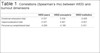
The mean age of the participants was 28.3±3.1 years, and 53% were male. According to the cutoff point most frequently used in the literature, 55 participants (83.3%) would be classified as meeting the burnout criteria: 47% were positive for emotional exhaustion (EE), 62.1% for depersonalization (DP), and 69.7% for personal accomplishment (PA). Relations with preceptors, the institution, and peers all correlated with EE and DP (Table 1). The items most correlated with EE were "I feel that I am always short of what the preceptors expect of me" (rs = 0.53; p < 0.001), "I feel more pressured than helped by my preceptors" (rs = 0.43; p < 0.001), and "I feel a collaborative climate in my institution" (rs = -0.39; p = 0.001). DP correlated more with the items "I feel a collaborative climate in my institution" (rs = -0.47; p < 0.001), "I feel like I belong to my institution" (rs = -0.46; p < 0.001), and "I feel more pressured than helped by my preceptors" (rs = 0.43; p < 0.001). PA correlated with the relationship with peers and the institution (Table 1). The items most correlated with PA were "I feel like I belong to my institution" (rs = 0.33; p = 0.007), "I feel a collaborative climate in my institution" (rs = 0.32; p = 0.008), and "My colleagues are not my friends" (rs = -0.28; p = 0.024).
These findings highlight potentially modifiable institutional factors as a way to face the rising rates of burnout among health professionals and emphasize the need for further investigations on the subject. Interventions aimed at improving the quality of relations within institutions may have great potential for reducing burnout rates and mental health problems in physicians and other health professionals, as well as improving their well-being.
Disclosure
The authors report no conflicts of interest.
How to cite this article: Carneiro Monteiro GM, Passos IC, Baeza FLC, Hauck S. Burnout in psychiatry residents: the role of relations with peers, preceptors, and the institution. Braz J Psychiatry. 2020;42:226-227. http://dx.doi.org/10.1590/1516-4446-2019-0797
 PDF
 Print
 Send this article by email
 How to cite this article
 Submit a comment
 Mendeley
 Pocket
 Share on Facebook
 Share on Twitter