



ABSTRACT:
OBJECTIVE: Opioid use disorder has become a major global public health concern, yet its epidemiological
and clinical profile in Brazil remains insufficiently characterized. This systematic
review aimed to synthesize the available evidence on opioid use disorder in the national
context.
METHODS: Following a protocol registered in the International Prospective Register of Systematic
Reviews, we searched PubMed, Biblioteca Virtual em Saúde/LILACS, Scopus, and Web of
Science from inception to April 30, 2025. Studies conducted in Brazil that involved
individuals with opioid use disorder were eligible. Methodological quality was assessed
using standardized critical appraisal tools.
RESULTS: Twelve studies met the inclusion criteria, with 58% rated as high methodological quality.
Most studies reported low absolute numbers of opioid users. Illicit opioid use was
rare (< 0.5%), whereas non-medical use of prescription opioids was considerably more
prevalent. Health care professionals showed a higher risk. No randomized controlled
trials were identified.
CONCLUSION: Brazil faces a distinct opioid landscape characterized by a low prevalence of illicit
opioid use but notable misuse of prescription opioids. The absence of randomized controlled
trials evaluating treatment effectiveness represents a significant evidence gap. Urgent
research is needed to assess the feasibility and effectiveness of medication for opioid
use disorder in the Brazilian Unified Health System.
SYSTEMATIC REVIEW REGISTRATION: PROSPERO, CRD420250656485
Keywords: Opioid use disorder; Brazil; systematic review; prescription opioids; public health.
FIGURES
| Note: How to cite this article: de Oliveira MC, Bezerra HA, Palmeira CCA, Negrão AB, Malbergier A, Castaldelli-Maia JM. Emerging patterns, critical gaps, and implications for public health policy regarding opioid use disorder in Brazil: a systematic review. Braz J Psychiatry. 2026;48:e20254750. Epub 2026 Apr 15. http://doi.org/10.47626/1516-4446-2025-4750 |
| Received: December 6 2025; Accepted: March 18 2026 |
INTRODUCTION
Opioid use disorder (OUD), a chronic and relapsing condition, is a severe global public health crisis.1 Defined by the persistent and harmful use of opioids, OUD leads to clinically significant impairment and is associated with high rates of morbidity and mortality.2 Currently, OUD is responsible for more than 120,000 deaths annually and affects over 26 million people worldwide, ranking as the third most commonly used substance globally.3-5 The epidemic is most pronounced in the United States, which alone accounted for nearly half of these overdose deaths in 2024.5 This trend has been linked to a marked increase in opioid prescriptions for chronic pain in the late 1990s triggered widespread misuse, OUD, and a subsequent wave of overdose deaths fueled by illicitly manufactured fentanyl.6-8 Although less intense, a related pattern has also emerged in parts of Europe. This has evolved into a major public health emergency, since opioids are now the leading cause of accidental death in high-income countries.7,9-11
In contrast, the landscape of opioid use and related harms in Brazil had been characterized by limited access to prescription opioids and low rates of illicit opioid consumption.12 However, evidence suggests a significant epidemiological shift is underway. Echoing the early stages of the North American crisis, Brazil has witnessed a marked increase in the prescription and consumption of pharmaceutical opioids.13 Between 2009 and 2020, opioid prescriptions grew nearly 500%, driven predominantly by codeine. A 2015 national survey found that approximately 3% of the population had engaged in the non-medical use of prescription opioids - a prevalence higher than that of crack cocaine.13,14 According to data from the third national alcohol and drug survey (Terceiro Levantamento Nacional de Álcool e Drogas III [LENAD III]), released in advance by the Brazilian Ministry of Justice and Public Security, the lifetime use of opioid analgesics in Brazil increased ninefold over the past decade, from 0.8% in 2012 to 7.6% in 2023. This increase was even greater among women, rising from 1.0% to 8.8% over the same period.15 This pattern suggests that Brazil's primary opioid-related challenge may not be the interdiction of illicit supply, but rather the regulation, prescription monitoring, and management of pharmaceutical opioids, representing a "silent epidemic" that demands urgent attention.
Medication for OUD - including agonists such as methadone and buprenorphine - remains the gold-standard treatment, which have been proven to reduce opioid use, prevent overdose, and improve quality of life.16,17 Nevertheless, global access to these treatments remains critically limited, and in Brazil, structural, regulatory, and training barriers continue to restrict their implementation and availability. In addition, buprenorphine is primarily available in transdermal formulations, and physician training in the use of methadone and buprenorphine for OUD treatment remains limited.12 Evidence from high-income countries shows that untreated OUD is associated with substantial health care costs,18 reinforcing concerns that Brazil may face similar pressures. This treatment gap, combined with rising prevalence, signals a likely future strain on the Unified Health System (Sistema Único de Saúde) if corrective actions are not implemented.
Despite growing awareness, a major knowledge gap persists regarding the epidemiology, clinical characteristics, and treatment outcomes for OUD in low- and middle-income countries (LMICs) such as Brazil. While isolated studies and consumption data highlight the magnitude of the problem, there has been no comprehensive synthesis of the national literature.12 Therefore, it is essential to map the current state of research, identify key vulnerabilities and care gaps, promote awareness and effective public health policies, and develop updated, context-specific clinical guidelines for Brazil.
In this context, the present systematic review analyzed and synthesized the Brazilian scientific literature on OUD, focusing on its epidemiological, clinical, and therapeutic aspects, in an effort to comprehensively overview OUD in the national context.
METHODS
This systematic review was conducted and reported in accordance with the Preferred Reporting Items for Systematic Reviews and Meta-Analyses (PRISMA) 2020 statement.19 The review protocol was registered in the International Prospective Register of Systematic Reviews (PROSPERO 2025 CRD420250656485).
Research question and Population, Intervention/Exposure, Comparator, and Outcomes (PICO) framework
This review was guided by the following research question: "What is the epidemiological profile and clinical characteristics of OUD in Brazil?" To operationalize this question, we used the Population, Intervention/Exposure, Comparator, and Outcomes (PICO) framework: Population - individuals residing in Brazil with a diagnosis or evidence of OUD, opioid misuse, abuse, or dependence, according to established diagnostic criteria, such as the DSM, ICD, or validated screening tools (no age restrictions were applied); Intervention/Exposure - not applicable as a strict inclusion criterion (we included studies assessing prevalence, incidence, risk factors, clinical characteristics, treatment outcomes, and OUD-related health effects); Comparators - not required for inclusion (when present [e.g., non-users, placebo, and standard care] but were included in the analysis); and Outcomes - the primary outcomes were the prevalence and incidence of OUD, while secondary outcomes included mortality, health care service use, treatment efficacy, quality of life, and associated harms.
Information sources and search strategy
A comprehensive literature search was conducted in four electronic databases: PubMed/MEDLINE, Scopus, Web of Science, and the Biblioteca Virtual em Saúde, which includes LILACS. All databases were searched from inception to April 30, 2025, and the search was conducted on that date. No publication date limits were applied, and studies in Portuguese, English, or Spanish were eligible for inclusion.
The search strategy combined controlled vocabulary (i.e., MeSH and DeCS terms) with free-text keywords. The core concepts were "opioids," "opioid-related disorders," and "Brazil." The full search strategy is presented in Table 1.
| Source (n) | Query |
|---|---|
| PubMed (n=108) | ((("analgesics, opioid" [MeSH Terms] OR "opioid" [All Fields] OR "opioids" [All Fields]) OR ("opiate alkaloids" [MeSH Terms] OR "opiate" [All Fields] OR "opiates" [All Fields]) OR ("opium" [MeSH Terms] OR "opium" [All Fields])) AND (("behavior, addictive" [MeSH Terms] OR "addiction" [All Fields]) OR ("dependency, psychological" [MeSH Terms] OR "dependence" [All Fields]) OR ("substance related disorders" [MeSH Terms] OR "abuse" [All Fields]) OR "misuse" [All Fields] OR "disorder" [All Fields] OR "prescription" [All Fields])) AND ("brazil" [MeSH Terms] OR "brazil" [All Fields] OR "Brasil" [All Fields]) |
| Scopus (n=133) | (TITLE-ABS-KEY (opioids OR opioid OR opiate OR opium) AND TITLE-ABS-KEY (addiction OR addictions OR dependence OR dependences OR abuse OR abuses OR misuse OR disorder OR disorders OR prescription) AND TITLE-ABS-KEY (brazil OR brasil)) AND (LIMIT-TO (DOCTYPE, "ar")) |
| Web of Science (n=65) | Opioids OR Opioid OR Opiate OR Opium (Topic) and Addiction OR Addictions OR Dependence OR Dependences OR Abuse OR Abuses OR Misuse OR Disorder OR Disorders OR Prescription (Topic) and Brazil OR Brasil (Topic) |
| Biblioteca Virtual em Saúde (n=76) | (opioids OR opioid OR opiate OR opium) AND (addiction OR addictions OR dependence OR dependences OR abuse OR abuses OR misuse OR disorder OR disorders OR prescription) AND (brazil OR brasil) AND type_of_study:("risk_factors_studies" OR "observational_studies" OR "prevalence_studies" OR "guideline" OR "diagnostic_studies" OR "etiology_studies" OR "clinical_trials" OR "qualitative_research" OR "prognostic_studies" OR "screening_studies" OR "evaluation_studies" OR "health_economic_evaluation" OR "incidence_studies" OR "health_technology_assessment") AND instance:"lilacsplus" |
Eligibility criteria and selection process
Eligible study designs included randomized controlled trials, non-randomized trials, and observational studies (cohort, case-control, and cross-sectional). We excluded non-original research (e.g., reviews, editorials, and commentaries), studies conducted outside of Brazil, and pre-clinical or animal studies. After the initial screening and quality assessment, studies were also excluded if they did not directly assess OUD.
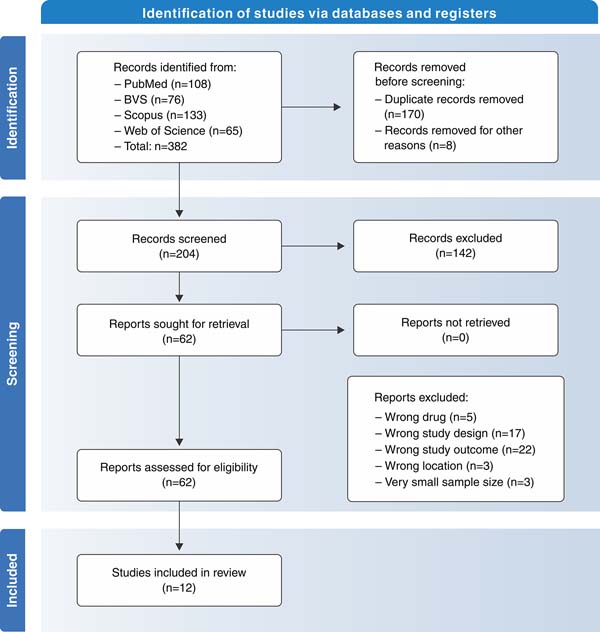
All records identified through the database searches were imported into Rayyan reference management software. We removed 170 duplicates, and eight more records were removed for other reasons (e.g., retracted articles), resulting in 204 unique articles. Subsequently, two reviewers (MCO and HAB) independently screened the titles and abstracts of all unique records for potential eligibility. The full texts of all potentially relevant articles were then retrieved and assessed independently by the same two reviewers according to the pre-defined eligibility criteria. Any disagreements at either the screening or full-text assessment stage were resolved through discussion and, if necessary, consultation with a third reviewer (JMCM).
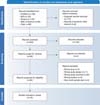
Prior to screening, five studies were excluded: two for not assessing OUD as a primary outcome, and three for very small sample sizes (n=1, n=3, and n=8, respectively), which would have limited their contribution to the synthesis. In the initial round of screening, a further 142 studies were excluded. Of the 62 studies retrieved for full-text assessment, twelve met all inclusion criteria and were included in the analysis. The results of the selection process are detailed in the PRISMA flow diagram (Figure 1).
Data collection process and data items
The extracted variables included study identification details (author/s and year of publication), study characteristics (design, setting, and location), participant characteristics (sample size, age, sex, and the diagnostic criteria used for OUD), and opioid-related data (investigated opioid types, prevalence or incidence estimates, measures of effect such as odds ratios or hazard ratios with 95%CIs, and the main findings reported by the authors).
Risk of bias assessment
The methodological quality and risk of bias of each included study were independently assessed by two reviewers using the appropriate Joanna Briggs Institute (JBI) critical appraisal tool for the study design: the JBI Critical Appraisal Checklist for Analytical Cross-Sectional Studies, the JBI Critical Appraisal Checklist for Studies Reporting Prevalence Data, the JBI Critical Appraisal Checklist for Cohort Studies, or the JBI Critical Appraisal Checklist for Case Series.20
Each study was rated as having high, moderate, or low methodological quality based on the proportion of criteria met. Disagreements were resolved through discussion. The results of the risk of bias assessment (Table 2) were used to inform the narrative synthesis and to assess the overall strength of the evidence.
| Sample | ||||||||
|---|---|---|---|---|---|---|---|---|
| Authors | Study design | n | Age, years (mean) | Males (%) | Setting | OUD (%) | Quality (JBI) | Key findings |
| Ribeiro et al.21 | Retrospective chart review | 109 | 37.5 | 90.0 | O | 36.7% heroin users | Moderate | There was a high prevalence of heroin use among non-Brazilian patients. |
| Castaldelli-Maia et al.22 | Ecological study (GBD 2019) | 365,800,000 | 30┼ | 49.3 | C | Brazil had the highest OUD DALY rates in South America in 2019 (82 per 100,000). | High | SUD substantially increased the GBD in South America from 1990 to 2019, with OUD emerging as the leading contributor. |
| Guimarães et al.23 | Prospective cohort | 1,228,784 | 23.5┼ | 64.7 | I | 1.41% of all suicides were from OUD | High | OUD is associated with the highest suicide risk (aHR 2.71), which is higher among females (aHR 4.04) than males (aHR 2.26). |
| Krawczyk et al.14 | National survey analysis | 16,273 | 38.5┼ | 48.5 | C | 2.9% non-medical lifetime use of opioids | High | There was a considerable prevalence of non-medical opioid use (2.9%, 95%CI 2.3-3.4), while heroin use remained low (0.3%, 95%CI 0.2-0.4). |
| Palhares-Alves et al.24 | Retrospective chart review | 57 | 36.1 | 77.2 | O | 59.6% | Low to moderate | OUD was highly prevalent among anesthesiologists seeking addiction treatment (59.6%). |
| De Boni et al.25 | Cross-sectional survey | 16,273 | 38.5┼ | 60.1 | C | OUD 1.7% (HIV-positive) vs. 1.4% (HIV-negative), p = 0.93 | High | Substance use patterns differed by HIV status. There was a higher prevalence of SUD among HIV-positive individuals. |
| Vellozo et al.26 | Cross-sectional survey | 1,460 | 13.2 | 49.0 | S | Opiate use 11.5% (11% experimental; 0.4% abusive; 0.1% OUD) | Moderate-high | There was a low prevalence of OUD among 1,460 public school students |
| Bianco et al.27 | Retrospective chart review | 21,410 | 38.9 | 61.5 | F | 5.36% opioids | High | 21,410 drug overdose deaths (2000-2020): 44.70% intentional, 76.72% lacked drug specification; significant increasing trend over time. |
| Sousa et al.28 | Cross-sectional survey | 1,295 | 38.1┼ | 50.0 | H | 67.05% | Moderate | High prevalence of OUD among Brazilian anesthesiologists. |
| Castaldelli-Maia et al.29 | Cross-sectional | 12,711 | 21.3╬ | 43.1 | S | Lifetime use prevalence was approximately 6% | High | Significant risk of transition from cannabis to OUD. |
| Da Silva Dal Pizzol et al.30 | Cross-sectional survey | 5,056 | 14.4 | 49.0 | S | 0.8% | High | Minimal opioid use in adolescent students; gender-specific substance use patterns identified. |
| de Oliveira et al.31 | Cross-sectional | 314 | 39.4 | 75.0 | O | 14.3% | Moderate | Health care professionals were overrepresented (26.7%), chronic pain was common (55.6%), as was increased service utilization. |
aHR = adjusted hazard ratio; C = community/household survey; DALY = disability-adjusted life years; F = forensic; GBD = Global Burden of Disease; H = hospital; I = inpatient; JBI = Joanna Briggs Institute; M = male; O = outpatient; OUD = opioid use disorder; S = school-based; SUD = substance use disorder; W = workplace-based.
┼ Estimated from reported age ranges using the midpoint of each age category.
╬ Mean age at first prescription opioid use.
Synthesis of the findings
Given the heterogeneity of the study designs, populations, and outcomes, a formal meta-analysis was infeasible. Instead, a structured narrative synthesis was conducted, since the epidemiological profile of OUD in Brazil is still being clarified. The findings were organized chronologically to illustrate the evolution of OUD research over time, and the results of the risk of bias assessment were incorporated to contextualize the strength and reliability of the evidence.
RESULTS
Study selection and characteristics
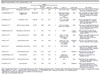
Sixty-two articles received full-text assessment for eligibility, of which 50 were excluded, resulting in twelve studies that met the inclusion criteria and were included in the narrative synthesis. The included studies were published between 2006 and 2025. Half were cross-sectional studies (n = 6; 50%), and the others were retrospective analyses of administrative data (n=3; 25%), a national survey analysis (n = 1; 8.3%), a prospective cohort study (n = 1; 8.3%), and an ecological study (n = 1; 8.3%) (Table 2).
Methodological quality
The studies' methodological quality was heterogeneous. Seven studies (58.3%) were rated as having high quality, four (33.3%) as moderate, and one (8.3%) as low-to-moderate. The main methodological limitations were the use of non-probabilistic convenience samples and the potential for selection bias in several studies.
Synthesis of the findings: a chronological perspective
Early insights (2006-2012)
Early research into opioid use in Brazil was sparse and focused on specific subpopulations. A 2006 school-based survey in southern Brazil found a lifetime prevalence of opiate use of 0.8% among 5,006 adolescents, providing one of the first quantitative estimates in this demographic.30 A decade later, a study of 57 treatment-seeking anesthesiologists reported that 59.6% abused opioids.24 This high prevalence, however, should be interpreted with caution, as the study's use of a convenience sample of treatment-seeking individuals likely resulted in a significant overestimation due to selection bias.
The rise of national data (2015-2021)
A new phase of research emerged with the availability of large-scale national data. The 2015 Brazilian Household Survey on Substance Use has provided the most robust national prevalence estimates to date.32 Krawczyk et al.14 analyzed this data, reporting a 2.9% (95%CI 2.3-3.4) lifetime prevalence of non-medical use of opioid analgesics and a much lower lifetime prevalence of heroin use (0.3%; 95%CI 0.2-0.4). The study also highlighted significant demographic and socioeconomic disparities: past-year non-medical use was significantly higher among females (prevalence ratio: 0.54 for males), individuals aged 25-44 years, and those in lower income brackets. Specifically, the prevalence was lower among males, youth (12-24 years), and those with higher family incomes (> BRL 1,501 per month). These findings suggest a distinct epidemiological profile for non-medical opioid use in Brazil, with a notable concentration among women and middle-aged adults in lower socioeconomic strata.14
Another analysis of the 2015 Brazilian Household Survey on Substance Use found a 12-month opioid use prevalence of 1.7% among people living with HIV/AIDS, compared to 1.4% in HIV-negative individuals (p = 0.93).25 Despite the non-significant difference in opioid use, people living with HIV/AIDS had distinct demographic characteristics and higher rates of other substance use. They were more likely to identify as homosexual (16% vs. 0.8%, p < 0.01), had lower educational attainment (i.e., 57% among those with incomplete fundamental education vs. 36% among those with complete fundamental education, p < 0.01), and showed significantly higher 12-month prevalence of tobacco (45.3% vs. 15.3%, p < 0.01), crack cocaine (5.3% vs. 0.3%, p < 0.01), and inhalant use (3.6% vs. 0.2%, p = 0.03). People living with HIV/AIDS also reported substantially worse self-rated health (83.5% reporting poor or fair health vs. 16.5% reporting good or very good health, p < 0.01), highlighting the need for integrated HIV and substance use treatment services.25
During this period, research also began to examine other high-risk groups. A recent Internet-based survey of 1,295 anesthesiologists highlighted a notable pattern of opioid-related vulnerability: opioids accounted for 67% of the substances involved in abuse, 82% of respondents knew a colleague with a substance use disorder, and 4.4% reported illicit opioid use themselves. Despite this, only 1.3% worked in settings with routine drug testing.28 While this estimate is more reliable than the 2012 figure, its reliance on a non-probabilistic online sample warranted a moderate quality rating. Without evidence-based interventions, this burden is likely to continue rising, mirroring patterns observed in high-income countries.
Recent evidence on morbidity, mortality, and clinical profiles (2021-2025)
The most recent wave of research has leveraged large administrative databases and rigorous diagnostic methods to quantify the severe consequences of OUD. Two studies analyzed national mortality data over 2 decades (2000-2020). Bianco et al.27 identified 267 opioid-related deaths, accounting for 1.25% of all drug-related fatalities. This figure is likely a substantial underestimate, as 76.7% of overdose death records did not specify the drug involved.27 In a large prospective cohort of over 1.2 million psychiatric admissions, Guimarães et al.23 found a significantly elevated risk of suicide among patients with OUD (adjusted hazard ratio: 2.71; 95%CI 2.00-3.67), with this risk being particularly high among female patients (adjusted hazard ratio: 4.04; 95%CI 2.19-7.44).
The Global Burden of Disease study provided a comprehensive measure of disease burden, estimating that OUD accounted for 82 disability-adjusted life years (DALYs) per 100,000 people in Brazil in 2019. This reflects a concerning upward trajectory over the past 3 decades. From 1990 to 2019, the age-standardized DALY rate for OUD in Brazil increased by 53.8%, from 52 to 80 DALYs per 100,000 people. This increase was primarily driven by a substantial rise in years lived with disability, which increased by 53.8% over the same period. By 2019, Brazil had the highest rate of DALYs due to OUD in South America, surpassing Peru (70 DALYs per 100,000 people) and Argentina (52 DALYs per 100,000 people). Compared to other substance use disorders in Brazil, the burden of OUD is disproportionately high. The DALY rate for OUD (82 per 100,000 people) was nearly double that of cocaine use disorder (45 DALYs per 100,000 people) and more than four times higher than that of cannabis use disorder (19 DALYs per 100,000 people). This escalating burden, coupled with a 465% increase in prescription opioid consumption between 2009 and 2015, emphasizes the urgency of addressing non-medical opioid use as a growing public health challenge in Brazil.22
Finally, studies in clinical settings have begun to provide a clearer picture of patients with OUD. In a retrospective chart review, Ribeiro et al.21 characterized a cohort of 40 heroin users in São Paulo, highlighting their social vulnerability. The most recent included study (de Oliveira et al.31), which used the gold-standard SCID-5 diagnostic interview, found that 14.3% of a clinical sample of 314 adult patients met the criteria for OUD. Among these, 26.7% were health care professionals (p < 0.001; 95%CI 3.34-7.92), and there was a high incidence of chronic pain (55.6%; p < 0.001; 95%CI 2.60-4.13), emphasizing the importance of rigorous diagnostic assessment.
DISCUSSION
We analyzed twelve studies, offering the most comprehensive and methodologically rigorous overview of OUD research in Brazil to date. The evidence indicates a heterogeneous and uneven landscape. Illicit opioid use, particularly heroin, remains remarkably low in Brazil (approximately 0.3%), contrasting sharply with the scenarios observed in high-income countries. In contrast, non-medical prescription opioid use is a growing concern, affecting approximately 3% of Brazilians.14 Certain occupational groups, such as health care professionals, appear to bear a disproportionate burden, underscoring the need for targeted prevention and support strategies.31 Perhaps most importantly, the complete lack of randomized controlled trials assessing OUD treatment effectiveness in Brazil reveals a critical research gap.
These findings refine and expand upon previous integrative and narrative reviews.12,33 While earlier studies primarily described patterns of opioid consumption, the present review systematically evaluated OUD from an epidemiological perspective, incorporating quality assessment and addressing clinical and public health outcomes, including mortality and suicidality. This approach allows for a more nuanced understanding of Brazil's opioid landscape, situating it within global trends and highlighting areas requiring immediate policy and research attention.
Its persistently low prevalence of heroin use suggests that Brazil has, for now, been spared a large-scale epidemic driven by illicitly manufactured opioids.7,9 Unlike neighboring LMICs, such as Argentina and Chile, where illicit fentanyl use has emerged,34 Brazil has historically lacked an established illicit opioid market, largely because the drug trade has been dominated by cocaine. Against this backdrop, the rise in non-medical prescription opioid use demands attention, with prevalence comparable to early-2000s U.S. rates.2 However, the first reported seizure of street fentanyl in 2023 signals a potential shift in Brazil and raises concerns about the potential contamination of cocaine with fentanyl, a phenomenon already documented as a growing problem in the United States.35 Taken together, these trends highlight insufficient monitoring of pharmaceutical opioids and limited public and professional awareness of their addictive potential, suggesting that Brazil's opioid challenge remains driven primarily by medical prescribing practices rather than illicit supply.
Occupational vulnerability is another pressing issue. High rates of opioid misuse among anesthesiologists and other medical professionals demand the development of structured prevention programs, systematic screening, and access to confidential mental-health and addiction support.24,36,37 More broadly, the widespread availability of prescription opioids highlights the need for a national Prescription Drug Monitoring Program, as well as continuing medical education focused on rational prescribing and risk mitigation in chronic pain management.38
Despite the lack of Brazilian randomized controlled trials, the international evidence base on medication for OUD is robust and consistent.39,40 Expanding access to methadone and buprenorphine in the Unified Health System should be a national priority, accompanied by training for safe and evidence-based prescribing, as well as implementation research to assess feasibility, acceptability, and cost-effectiveness in local contexts.41 Additionally, the strong association between OUD and suicide risk highlights the importance of integrated care models that jointly address substance use and mental health, as medication for OUD has been found efficacious for reducing suicide-related mortality.42
Implications for public policy and practice
Addressing these challenges requires coordinated, multisectoral action. Brazil currently lacks sufficient specialized treatment centers and clinicians trained to manage OUD, underscoring the need to expand multidisciplinary outpatient and inpatient services equipped to deliver evidence-based addiction care. Developing specific clinical guidelines for Brazil and expanding access to OUD medication - particularly methadone and buprenorphine - through regulatory simplification and primary care provider training are also essential. Preventive strategies should prioritize high-risk groups, including health care professionals and individuals with chronic pain, through systematic screening, early intervention, and tailored educational programs. Enhancing epidemiological surveillance, improving toxicological reporting, expanding harm-reduction measures, and promoting public education to reduce stigma and encourage treatment seeking are equally important. Collectively, these measures would strengthen Brazil's capacity to anticipate and mitigate opioid-related harms through coordinated, evidence-informed interventions.
FINAL CONSIDERATIONS
This review has several limitations. There was substantial heterogeneity in the design, populations, and definitions of opioid use among the included studies, which prevented meta-analysis and limited a precise understanding of OUD in Brazil. Although the search was comprehensive and PRISMA-compliant, restricting inclusion to peer-reviewed publications and excluding grey literature may have introduced publication bias. The study quality was also uneven: while just over half were rated as high quality, many relied on convenience samples, reducing the generalizability of their findings. Interpretation is further complicated by marked underreporting of opioid-related mortality due to nonspecific substance classification, suggesting that the true burden of OUD is likely underestimated, not least because individuals using prescription opioids often fail to recognize themselves as being at risk for dependence. Finally, publication bias could not be formally assessed due to the small number of eligible studies, and the overall certainty of the evidence was not evaluated with frameworks such as Grading of Recommendations Assessment, Development and Evaluation, although individual study quality was appraised using JBI tools.
In conclusion, the current landscape of OUD in Brazil is characterized by low overall prevalence but significant and growing risk, driven mainly by the non-medical use of prescription opioids and a lack of evidence-based treatment research. While Brazil has not yet experienced an opioid crisis comparable to those in high-income countries, several warning signs suggest that the necessary conditions for one are already emerging. Preventive action is therefore imperative. Investment in rigorous treatment research - particularly randomized controlled trials evaluating medication for OUD - and the implementation of evidence-based public health and prescribing policies are urgently needed. Strengthening surveillance systems, attention to the risks faced by health care professionals, expanding access to multidisciplinary treatment, and improving professional training could prevent an escalation of opioid-related harms. Future research should include randomized controlled trials and longitudinal cohort studies to evaluate medication for OUD effectiveness, implementation, and long-term outcomes in Brazilian health settings. Improving surveillance and toxicological reporting is also essential to address persistent gaps in mortality data and to generate reliable estimates of opioid-related harms.
 PDF
 Print
 Send this article by email
 How to cite this article
 Submit a comment
 Mendeley
 Pocket
 Share on Facebook
 Share on Twitter