



FIGURES
| Note: How to cite this article: Junkes L, da Silva JAR, Nardi AE. Pioneering psychopharmacology in Brazil: Marcio Versiani and 40 years of the Anxiety and Depression Program at UFRJ. Braz J Psychiatry. 2026;48:e20254529. Epub 2025 Oct 5. http://doi.org/10.47626/1516-4446-2025-4529 |
| Received: August 27 2025; Accepted: September 4 2025 |
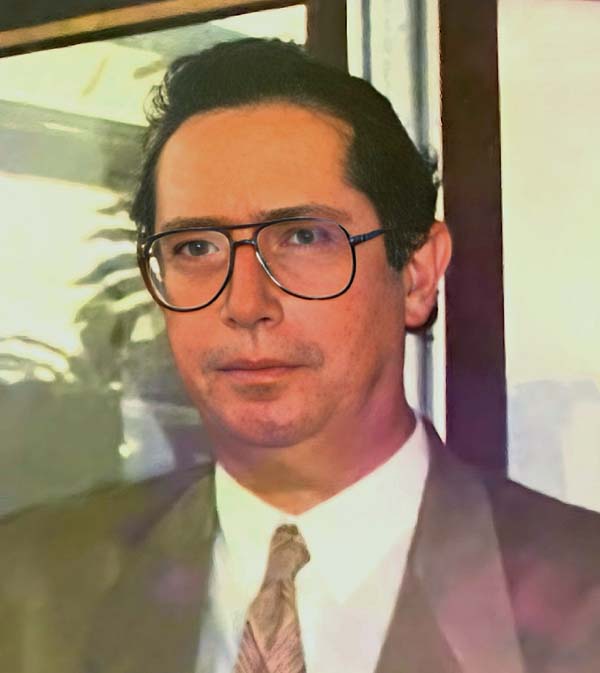
Marcio Valadares Versiani Caldeira (1947-2017) (Figure 1) was one of the most prominent researchers in the history of the Institute of Psychiatry at the Universidade Federal do Rio de Janeiro (IPUB/UFRJ), founded in 1938 under the direction of Henrique Roxo (1877-1969).
Born in Belo Horizonte, state of Minas Gerais, to a leading local family, Versiani was the nephew of Benedito Valadares (governor of Minas Gerais from 1933 to 1945, namesake of the city of Governador Valadares and later founder of the Brazilian Social Democratic Party). After studying Medicine at the Universidade Federal de Minas Gerais (UFMG), at the age of 24 he moved to Rio de Janeiro, like many physicians at that time who wished to pursue a psychiatric career. He settled into the UFRJ "students' house," a pavilion that previously housed the outpatient clinic of Hospício D. Pedro II - the first psychiatric hospital in Brazil and the second in Latin America, later renamed the Hospício Nacional de Alienados - and joined the first class of the IPUB postgraduate course in Psychiatry, the first such program in Brazil, then directed by Professor José Leme Lopes (1904-1990).1
Although known as a man of few words, Versiani was a polyglot; in addition to his native Portuguese, by the time he arrived in Rio he was already fluent in English, French, Spanish, and German. Many colleagues believed he resembled Charles, Prince of Wales, which earned him the nickname "Prince." A dedicated intellectual, he was, according to psychiatrist Jorge Adelino Rodrigues da Silva, a former director of IPUB and a close friend for over four decades, only the second physician to receive the titles of MSc and PhD in psychiatry in Brazil, with Professor João Romildo Bueno (1938-2019) as his advisor. In 2017, at the time of Versiani's passing, Bueno paid tribute to his mentee: "Leme Lopes chose you as the best candidate for 'master,' and the first class of the first postgraduate course recognized by CAPES began in [Brazil]: the IPUB course in April 1971."2
Versiani devoted his life's work to psychopharmacology. He was the founder - and coordinator for about 30 years - of the Anxiety and Depression Program at IPUB, a landmark for research and clinical trials on anxiety disorders in Brazil. This Program originated several other laboratories and research units, such as the Treatment-Resistant Depression Outpatient Clinic (Ambulatório de Depressão Resistente ao Tratamento, DeReTrat), the Research Laboratory on Bipolar Disorder (Laboratório de Pesquisa sobre o Transtorno Bipolar, BiPoLaB), the Panic and Respiration Laboratory (Laboratório de Pânico e Respiração, LabPR), and the Anxiety, Obsessions, and Compulsions Program (Programa de Ansiedade, Obsessões e Compulsões, LAOC), all currently in operation at IPUB. These initiatives serve as a foundation for research by undergraduate and graduate students, aiming at educational development and scientific production, with research findings applied to free treatment for inpatients and outpatients.3
At IPUB, he gave as much as he received. His mentors included such luminaries of Brazilian psychiatry as Leme Lopes, Eustachio Portella Nunes Filho (1929-2020), and João Romildo Bueno, while he himself left a rich lineage of mentees, many of whom have carried on his research heritage, such as psychiatrists Antonio Egidio Nardi, Leonardo Fontenelle, Ivan Figueira, Gabriela Bezerra de Menezes, and Marcio Amaral (who was deputy director of IPUB at the time of Versiani's retirement and took over management of the Institute after his mentor's departure).
The author of more than 170 scholarly articles, Versiani led important studies focused on pharmacotherapeutics in social phobia, panic disorder, and depressive disorders. He published papers with international impact which are among the most cited academic works from Brazil, not only in psychiatry but across all scientific disciplines.4 He contributed to important clinical guidelines and consensus statements, such as the Guidelines for Biological Treatment of Unipolar Depressive Disorders in Primary Care of the World Federation of Societies of Biological Psychiatry,5 which incorporates the results of a systematic review of the available scientific evidence related to the treatment of unipolar depressive disorders and provides recommendations for family physicians who care for patients with these conditions, and the Consensus Statement about Antidepressants and the Risk of Suicidality of the World Psychiatric Association.6 In 1998, he passed the competitive examination for a full professorship and became Chair of Psychiatry at the UFRJ Faculty of Medicine. He was editor-in-chief of the Jornal Brasileiro de Psiquiatria, director of IPUB (2002-2009), and a member of several national and international psychiatric societies, such as the World Psychiatry Association Section on Pharmacopsychiatry.7,8
Beyond the psychiatric world, Professor Versiani enjoyed exploring other territories, particularly traveling to New York. For some time, he had the hobby of photographing cemeteries, keeping a collection of slides with images of various tombs of celebrities, such as in Venice, Vienna, and Paris. He was married twice and had two children from his first marriage. Always elegant, he is remembered by friends as constantly having a cigarette in hand. A long-time, self-described "heavy smoker," he faced challenges on flights to the numerous conferences he attended, needing multiple nicotine patches to cope with the many hours of flying. Upon returning from one such scientific meeting in Peru in October 2009, while serving as director of IPUB, he suffered his first stroke, just a few days before his 62nd birthday. He was left with severe paralysis on the left side of his body, which confined him to a wheelchair, and multiple neurological impairments that prevented him even from reading. As a result, his last publications date back to 2012, consisting of articles started before the stroke, which marked the end of his brilliant academic and professional career. After a second stroke, he died on December 4, 2017, at the Samaritano Hospital in Rio de Janeiro.
Marcio Versiani was not only a dear and close friend but also a man of rare intelligence and kindness. His presence illuminated the lives of everyone around him, leaving deep marks of generosity, wisdom, and humanity. As a colleague, professor, physician, and companion, he touched countless lives with care and dedication, always offering guidance and friendship with an open heart. His absence leaves an immense void, but his memory will remain alive in the respect, admiration, and affection of his colleagues, students, patients, and friends. He will never be forgotten, as his legacy of goodness and brilliance continues to inspire and unite all who had the privilege of knowing him.
ACKNOWLEDGEMENTS
LJ receives funding from the Fundação Carlos Chagas Filho de Amparo à Pesquisa do Estado do Rio de Janeiro (FAPERJ) through Programa Bolsa Mestrado Nota 10.
DISCLOSURE
The authors report no conflicts of interest.
DATA AVAILABILITY STATEMENT
Not applicable.
AUTHOR CONTRIBUTIONS
LJ: Conceptualization, Data curation, Formal analysis, Investigation, Methodology, Project administration, Writing - original draft.
JARS: Investigation, Validation, Writing - review & editing.
AEN: Conceptualization, Data curation, Investigation, Project administration, Supervision, Validation, Writing - review & editing
All authors have read and approved of the final version to be published.
Handling Editor: Andre Brunoni
 PDF
 Print
 Send this article by email
 How to cite this article
 Submit a comment
 Mendeley
 Pocket
 Share on Facebook
 Share on Twitter