



ABSTRACT:
OBJECTIVE: Due to the uncertainty whether atypical and typical antipsychotics have a stronger
association with mortality among older people with schizophrenia, we examined the
rates and causes of mortality in older adults with schizophrenia who take atypical
or typical antipsychotics.
METHODS: In a 5-year prospective multicenter study of patients aged = 55 years with an ICD-10
diagnosis of schizophrenia, we used a multivariable logistic regression model to examine
the association between atypical vs. typical antipsychotics and mortality, adjusting
for sociodemographic and clinical characteristics.
RESULTS: Of 313 older adults with schizophrenia, the 5-year all-cause mortality rates in patients
who took atypical (n=192) and typical (n=167) antipsychotics were 36.4% and 24.3%,
respectively. Following adjustment, no significant differences were found in all-cause
mortality (AOR = 1.56; 95%CI 0.75-3.27; p = 0.24) or causes of mortality (all p >
0.05) between medication groups. Atypical antipsychotics were significantly associated
with lower overall mortality in the subpopulation with baseline Mini Mental State
Examination scores < 24 (AOR = 0.24; 95%CI 0.07-0.84; p = 0.025).
CONCLUSION: Although atypical antipsychotics may not be associated with lower odds of overall
mortality than typical antipsychotics in older people with schizophrenia, they might
be associated with lower mortality among those with substantial cognitive impairment.
Keywords: Schizophrenia; mortality; older adults; antipsychotics; typical; atypical.
FIGURES
| Note: How to cite this article: Haddad R, Sánchez-Rico M, Rezaei K, Abou Kassm S, Blanco C, Olfson M, et al. Association of typical and atypical antipsychotics with mortality in older adults with schizophrenia: a 5-year multicenter prospective study. Braz J Psychiatry. 2025;47:e20243954. http://doi.org/10.47626/1516-4446-2024-3954 |
| Received: October 2 2024; Accepted: December 2 2024 |
INTRODUCTION
Excess mortality among people with schizophrenia persists in late life,1 which is mainly explained by medical comorbidities, including cardiovascular diseases (CVD) and infections, suicide, non-suicidal injury, and/or intrinsic biological mechanisms, such as inflammation or oxidative stress.1,2 While prior research suggests that antipsychotic use is associated with lower overall mortality among adults with schizophrenia,3,4 particularly through reduced cardiovascular and suicide-related mortality,3,5 it remains unclear whether atypical and typical antipsychotics have differential effects on long-term mortality in this population, especially among older adults, who may be more prone to adverse effects related to these medications.6
Several prior studies among adults with schizophrenia suggest that atypical antipsychotics lead to a greater reduction of all-cause and cardiovascular mortality than typical antipsychotics, despite their stronger association with metabolic syndrome.4,7-9 However, prior research on older adults with major neurocognitive disorders reported higher overall mortality from atypical or typical antipsychotic use than no antipsychotic use, without a clear safety difference between these classes.10-13 Because older adults with schizophrenia generally present with substantial cognitive deficits and cardiovascular comorbidities14,15 and are more prone to adverse effects from antipsychotics due to age-related changes in medication pharmacokinetics and pharmacodynamics,16,17 it is important to determine whether atypical and typical antipsychotics are associated with similar mortality rates in this specific population. This knowledge could contribute to future treatment recommendations on antipsychotic selection among older adults with schizophrenia.
Most prior studies that investigated the effects of typical and atypical antipsychotics on mortality have included young and middle-aged patients with schizophrenia and have typically excluded older people.16,18 In addition, the few prior studies on older adults with schizophrenia have yielded conflicting results. For example, Osborn et al.19 and Tang et al.20 suggested that atypical antipsychotics had lower overall and cardiovascular mortality than typical antipsychotics. In contrast, Tiihonen et al.21 and Barak et al.22 found no significant differences in overall and cardiovascular mortality related to cumulative long- or short-term use of atypical or typical antipsychotics. These discrepant results may be explained by the inclusion of mixed populations with different psychiatric diagnoses in some studies (e.g., participants with mood disorders19,21 or major neurocognitive disorders21), the substantial variation in mean participant age across studies (ranging from about 40 years old20 to 73 years old21), and the inherent biases resulting from retrospective study designs.19-21 Therefore, prospective studies of older individuals with schizophrenia are needed to corroborate and extend these findings. This knowledge could be important since it could help guide prevention measures and improve treatment for older patients with schizophrenia.
In this report, we used data from the Cohort of individuals with Schizophrenia Aged 55 years or more (CSA), a 5-year prospective multicenter study of older people with schizophrenia conducted in France, to examine potential differences in mortality and causes of death among older adults with schizophrenia, according to typical or atypical antipsychotic use.
METHODS
Sample
Longitudinal data were drawn from the CSA study, a cohort of 353 patients aged 55 years or over with an ICD-10 diagnosis of schizophrenia (82.4%) or schizoaffective disorder (17.6%). A more detailed description of the study methodology can be found elsewhere.2,23-27 Participants were recruited between February 2010 and June 2013 from French state hospital psychiatric departments, covering 63 mutually independent catchment areas.28 Exclusion criteria included limited French proficiency, not being affiliated with the social security system, meeting ICD-10 criteria for any pervasive developmental disorder or major neurocognitive disorder, having any neurological disorder that affects the central nervous system, or any serious life-threatening medical or surgical condition requiring immediate treatment.
Antipsychotic prescription at baseline
Patients were categorized according to whether they received any typical29 (i.e., haloperidol, loxapine, fluphenazine, chlorpromazine, pimozide, cyamemazine, levomepromazine, flupentixol, pipotiazine, and zuclopenthixol) or atypical30 (i.e., risperidone, olanzapine, clozapine, aripiprazole, quetiapine, sulpride, amisulpride, and tiapride) antipsychotics prescribed at the time of the baseline interview. Those who were taking at least one antipsychotic from each category were classified as receiving both antipsychotics. Patients who took no antipsychotic medication during the year preceding the interview were categorized as the non-treated group.
Assessment of the rates and causes of mortality
The participants were followed-up annually until death. Deaths were confirmed by a mortality review committee, comprising FL and NH, using information from the treating psychiatrists, hospital records, death certificates, autopsy reports, obituaries, and interviews with physicians or next of kin. Cause of death was classified as CVD mortality (due to coronary heart disease, cerebrovascular disease, heart failure, or peripheral vascular disease), non-CVD mortality (e.g., infections), suicide, or non-suicidal injury. Disease-related mortality comprised both CVD and non-CVD related mortalities. Patients lost to follow-up before the end of the study were excluded from the sample.
Assessment of baseline confounders
Sociodemographic characteristics
Sociodemographic characteristics included sex, age (categorized by tertile: < 64 years, 64-68 years and > 68 years), marital status (married vs. not married), and living situation (unsupervised living, i.e., living alone, with family, a partner, or friends vs. supervised living, i.e., living in a dwelling that offers some form of formal supervision, including nursing homes, homes for the aged, hospital stays longer than 3 months, and chronic care beds).31
Schizophrenia severity
Schizophrenia severity was evaluated using the Brief Psychiatric Rating Scale,32,33 the Mini Mental State Examination (MMSE),34 and the Global Assessment of Functioning35 scale. The Brief Psychiatric Rating Scale, a well-validated 18-item instrument, was used to measure general psychiatric symptoms, including affective, positive, and negative symptoms.32,33 Each symptom is rated from 1 (absence) to 7 (severe). The MMSE was used to assess cognitive impairment34 and Global Assessment of Functioning was used to evaluate the overall social, occupational, and psychological functioning of the participants.35 The duration of the psychiatric disorder (categorized by tertile: < 33 years, 33-42 years, and > 42 years) and history of suicide attempts were also recorded.
General medical conditions
The investigators evaluated current smoking, at-risk alcohol consumption using the CAGE questionnaire,36,37 comorbid medical conditions, and body mass index, which was categorized into three groups (< 23 [malnutrition], 23-30 [normal weight], and > 30 [obesity]),38 and whether the patient visited a general practitioner during the year preceding the interview.
Psychotropic medications
For all participants, psychotropic medications prescribed at the time of the baseline interview were recorded, including antidepressants, benzodiazepines, mood stabilizers, and antiparkinsonian anticholinergic treatments. The method of antipsychotic administration (i.e., long-acting injectable formulation vs. per os) was also recorded and considered a potential confounder.
Statistical analysis
Percentages and means (SD) were estimated to provide descriptive information on sociodemographic and clinical characteristics, psychiatric and general comorbid medical conditions, and other psychotropic medications among older adults with schizophrenia receiving 1) typical antipsychotics, 2) atypical antipsychotics, 3) both classes, or 4) no antipsychotic medication. Between-group differences regarding individual factors were tested using standardized mean differences. Standardized mean differences are useful to evaluate between-group differences in baseline variables independently of their unit of measurement (i.e., for both continuous and categorical variables).39 We considered standardized mean differences > 0.1 to reflect significant differences, a threshold recommended for declaring imbalance.39
To compare the 5-year all-cause mortality rate among older adults with schizophrenia according to antipsychotic type (i.e., atypical vs. typical antipsychotic), we performed crude and multivariable logistic regression models. To reduce confounding effects, the multivariable model was adjusted for sociodemographic factors (sex, age, marital status, living situation), schizophrenia severity (Brief Psychiatric Rating Scale, Global Assessment of Functioning, and MMSE scores, disorder duration, and history of suicide attempts), general comorbid medical factors (number of medical conditions, obesity, malnutrition, current smoking, at-risk drinking, and general practitioner visit in the last year), and other psychotropic medications (antipsychotic formulation [long-acting injectable vs. oral], antidepressants, benzodiazepines, mood stabilizers, and antiparkinsonian anticholinergic treatments) (degrees of freedom = 24).
We performed three additional analyses. First, we examined the association between each antipsychotic class and each cause of death, including any disease (CVD or non-CVD), non-suicidal injury, and suicide. Second, we compared 5-year all-cause mortality between older participants with schizophrenia receiving the most frequently prescribed atypical antipsychotic (risperidone; n=77) and those who were prescribed the most commonly used typical antipsychotic (haloperidol; n=73). Finally, we determined whether the primary association differed among patients according to cognitive impairment level, considering those with a MMSE score < 24 as having substantial cognitive deficits.34
For all regression models, we performed collinearity diagnostics.40 Because our analyses were mostly exploratory in this understudied population, statistical significance was evaluated using a two-sided design with an a priori alpha risk of 0.05. Statistical analyses were performed in R 4.2.3 (R Project for Statistical Computing).
Ethics statement
The research protocol, including informed consent procedures, was conducted in accordance with the Declaration of Helsinki ethical guidelines and received full ethical review and approval from the local research ethics committee, the Advisory Committee on Information Processing in Material Research in the Field of Health, and the National Board on Computerized Information and Freedoms.
RESULTS
Sample characteristics
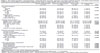
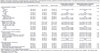
Of 353 older adults with schizophrenia, 21 (5.9%) were excluded due to loss of follow-up and 19 (5.7%) were excluded due to missing data for at least one covariate. Of the 313 remaining patients, 307 (98.1%) were taking an antipsychotic, including 140 (45.6%) who took only atypical antipsychotics, 115 (37.4%) who took only typical antipsychotics, and 52 (16.9%) who took both classes (Supplementary Figure S1). Table 1 shows the distribution of patient characteristics according to antipsychotic type. All baseline characteristics substantially differed across groups. Age and the number of medical conditions were significantly and independently associated with overall mortality (Table 2).
| Typical antipsychotics (n=115) | Atypical antipsychotics (n=140) | Both types (n=52) | No antipsychotic (n=6) | SMD | |
|---|---|---|---|---|---|
| Sociodemographic | |||||
| Sex | 0.480 | ||||
| Female | 52 (45.2) | 72 (51.4) | 30 (57.7) | 1 (16.7) | |
| Male | 63 (54.8) | 68 (48.6) | 22 (42.3) | 5 (83.3) | |
| Age, years | 0.153 | ||||
| < 64 | 43 (37.4) | 52 (37.1) | 21 (40.4) | 2 (33.3) | |
| 64-68 | 29 (25.2) | 43 (30.7) | 17 (32.7) | 2 (33.3) | |
| > 68 | 43 (37.4) | 45 (32.1) | 14 (26.9) | 2 (33.3) | |
| Marital status | 0.341 | ||||
| Married or cohabiting | 23 (20.0) | 16 (11.4) | 5 (9.6) | 2 (33.3) | |
| Not married | 92 (80.0) | 124 (88.6) | 47 (90.4) | 4 (66.7) | |
| Supervised living | 32 (27.8) | 51 (36.4) | 22 (42.3) | 2 (33.3) | 0.164 |
| Clinical characteristics | |||||
| BPRS score, mean (SD) | 42.90 (14.10) | 42.26 (14.41) | 44.77 (15.64) | 41.67 (11.86) | 0.117 |
| MMSE score, mean (SD) | 23.86 (4.73) | 23.56 (4.98) | 21.71 (5.51) | 24.83 (5.00) | 0.313 |
| GAF score, mean (SD) | 48.63 (16.20) | 49.31 (16.93) | 42.81 (15.80) | 55.50 (8.19) | 0.469 |
| Disorder duration, years | 0.364 | ||||
| < 33 | 32 (27.8) | 52 (37.1) | 15 (28.8) | 2 (33.3) | |
| 33-42 | 40 (34.8) | 49 (35.0) | 22 (42.3) | 1 (16.7) | |
| > 42 | 43 (37.4) | 39 (27.9) | 15 (28.8) | 3 (50.0) | |
| History of suicide attempts | 25 (21.7) | 39 (27.9) | 17 (32.7) | 6 (100.0) | |
| General comorbid medical conditions | |||||
| Current smoker | 37 (32.2) | 35 (25.0) | 13 (25.0) | 2 (33.3) | 0.119 |
| Current at-risk drinker | 11 (9.6) | 9 (6.4) | 3 (5.8) | 0 (0.0) | 0.244 |
| Number of medical conditions, mean (SD) | 1.92 (1.48) | 2.40 (1.69) | 1.92 (1.57) | 2.00 (1.67) | 0.155 |
| General practitioner visit in the last 12 months | 95 (82.6) | 119 (85.0) | 39 (75.0) | 5 (83.3) | 0.129 |
| Body mass index | 0.250 | ||||
| < 23 | 30 (26.1) | 39 (27.9) | 18 (34.6) | 1 (16.7) | |
| 23-30 | 51 (44.3) | 62 (44.3) | 17 (32.7) | 3 (50.0) | |
| = 30 | 34 (29.6) | 39 (27.9) | 17 (32.7) | 2 (33.3) | |
| Other psychotropic medications | |||||
| Antidepressants | 18 (15.7) | 34 (24.3) | 11 (21.2) | 5 (83.3) | 0.889 |
| Benzodiazepines | 21 (18.3) | 49 (35.0) | 21 (40.4) | 3 (50.0) | 0.368 |
| Mood stabilizers | 21 (18.3) | 33 (23.6) | 9 (17.3) | 4 (66.7) | 0.592 |
| Antiparkinsonian anticholinergic treatments | 60 (52.2) | 29 (20.7) | 15 (28.8) | 1 (16.7) | 0.429 |
| Long-acting injectable antipsychotics | 71 (61.7) | 21 (15.0) | 7 (13.5) | 1 (16.7) | 0.578 |
Data presented as n (%), unless otherwise specified.
Differences were considered substantial when standardized mean differences > 0.1 (in bold).
BPRS = Brief Psychiatric Rating Scale; GAF = Global Assessment of Functioning; MMSE = Mini Mental State Examination.
| Crude logistic regression | Multivariable logistic regression | |||||
|---|---|---|---|---|---|---|
| Full sample (n=313) | Dead (n=90) | Alive (n=223) | OR (95%CI; p-value) | AOR (95%CI; p-value) | GVIF | |
| Sociodemographic variables | ||||||
| Sex | 1.29 | |||||
| Female | 155 (49.5) | 51 (32.9) | 104 (67.1) | 1.50 (0.91-2.45; 0.109) | 1.60 (0.86-2.99; 0.140) | |
| Male | 158 (50.5) | 39 (24.7) | 119 (75.3) | Ref. | Ref. | |
| Age, years | 1.45 | |||||
| < 64 | 118 (37.7) | 19 (16.1) | 99 (83.9) | Ref. | Ref. | |
| 64-68 | 91 (29.1) | 24 (26.4) | 67 (73.6) | 1.87 (0.95-3.67; 0.071) | 2.18 (1.00-4.79; 0.051) | |
| = 69 | 104 (33.2) | 47 (45.2) | 57 (54.8) | 4.30 (2.3-8.02; < 0.001)* | 4.41 (2.04-9.53; < 0.001)* | |
| Marital status | 1.21 | |||||
| Never married | 267 (85.3) | 81 (30.3) | 186 (69.7) | Ref. | Ref. | |
| Married or cohabiting | 46 (14.7) | 9 (19.6) | 37 (80.4) | 0.56 (0.26-1.21; 0.140) | 0.72 (0.29-1.81; 0.486) | |
| Supervised living | 107 (34.2) | 41 (38.3) | 66 (61.7) | 1.99 (1.20-3.30; 0.008)* | 1.24 (0.65-2.36; 0.516) | 1.32 |
| Clinical characteristics | ||||||
| BPRS score, mean (SD) | 42.9 (14.4) | 45.2 (14.2) | 42.0 (14.5) | 1.25 (0.98-1.59; 0.072) | 1.01 (0.99-1.04; 0.232) | 1.39 |
| MMSE score, mean (SD) | 23.4 (5.0) | 21.9 (5.9) | 24.0 (4.5) | 0.66 (0.52-0.84; 0.001) | 0.95 (0.90-1.01; 0.110) | 1.27 |
| GAF score, mean (SD) | 48.1 (16.5) | 45.6 (15.7) | 49.1 (16.7) | 0.80 (0.63-1.03; 0.089) | 0.99 (0.97-1.01; 0.531) | 1.56 |
| Disorder duration, years | 1.23 | |||||
| < 33 | 101 (32.3) | 26 (25.7) | 75 (74.3) | Ref. | Ref. | |
| 33-42 | 112 (35.8) | 25 (22.3) | 87 (77.7) | 0.83 (0.44-1.56; 0.559) | 0.60 (0.29-1.25; 0.171) | |
| = 43 | 100 (31.9) | 39 (39.0) | 61 (61.0) | 1.84 (1.01-3.36; 0.046)* | 1.22 (0.60-2.47; 0.576) | |
| Lifetime history of suicide attempt | 87 (27.8) | 28 (32.2) | 59 (67.8) | 1.26 (0.73-2.15; 0.406) | 1.45 (0.75-2.83; 0.270) | 1.21 |
| General comorbid medical conditions | ||||||
| Current smoker | 87 (27.8) | 25 (28.7) | 62 (71.3) | 1.00 (0.58-1.72; 0.996) | 1.65 (0.82-3.29; 0.157) | 1.30 |
| Current at-risk drinking | 23 (7.35) | 4 (17.4) | 19 (82.6) | 0.50 (0.17-1.51; 0.219) | 0.49 (0.13-1.80; 0.280) | 1.19 |
| Number of medical conditions, mean (SD) | 2.14 (1.61) | 2.69 (1.72) | 1.91 (1.51) | 1.60 (1.25-2.05; < 0.001)* | 1.25 (1.05-1.49; 0.012)* | 1.10 |
| General practitioner visit in the last year | 258 (82.4) | 71 (27.5) | 187 (72.5) | 0.72 (0.39-1.34; 0.297) | 0.83 (0.40-1.74; 0.628) | 1.13 |
| Body mass index | 1.27 | |||||
| < 23 | 88 (28.1) | 28 (31.8) | 60 (68.2) | 0.94 (0.53-1.68; 0.844) | 1.28 (0.65-2.53; 0.470) | |
| 23-30 | 133 (42.5) | 44 (33.1) | 89 (66.9) | Ref. | Ref. | |
| = 30 | 92 (29.4) | 18 (19.6) | 74 (80.4) | 0.49 (0.26-0.92; 0.027)* | 0.60 (0.27-1.34; 0.210) | |
| Other psychotropic medications | ||||||
| Antidepressants | 68 (21.7) | 21 (30.9) | 47 (69.1) | 1.14 (0.63-2.05; 0.661) | 1.21 (0.59-2.47; 0.605) | 1.17 |
| Benzodiazepines | 94 (30.0) | 30 (31.9) | 64 (68.1) | 1.24 (0.73-2.10; 0.419) | 1.05 (0.55-2.01; 0.881) | 1.22 |
| Mood stabilizers | 67 (21.4) | 16 (23.9) | 51 (76.1) | 0.73 (0.39-1.36; 0.321) | 0.54 (0.26-1.13; 0.101) | 1.14 |
| Antiparkinsonian anticholinergic treatments | 105 (33.5) | 29 (27.6) | 76 (72.4) | 0.92 (0.55-1.55; 0.753) | 0.99 (0.53-1.84; 0.977) | 1.10 |
| Long-acting injectable antipsychotics | 100 (31.9) | 22 (22.0) | 78 (78.0) | 0.60 (0.35-1.05; 0.072) | 0.59 (0.31-1.13; 0.110) | 1.13 |
Data presented as n (%), unless otherwise specified.
AOR = adjusted odds ratio; BPRS = Brief Psychiatric Rating Scale; GAF = Global Assessment of Functioning; GVIF = generalized variance inflation factor; MMSE = Mini Mental State Examination; OR = odds ratio.
* Significant p-value (p < 0.05).
Typical and atypical antipsychotics and the rates and causes of mortality
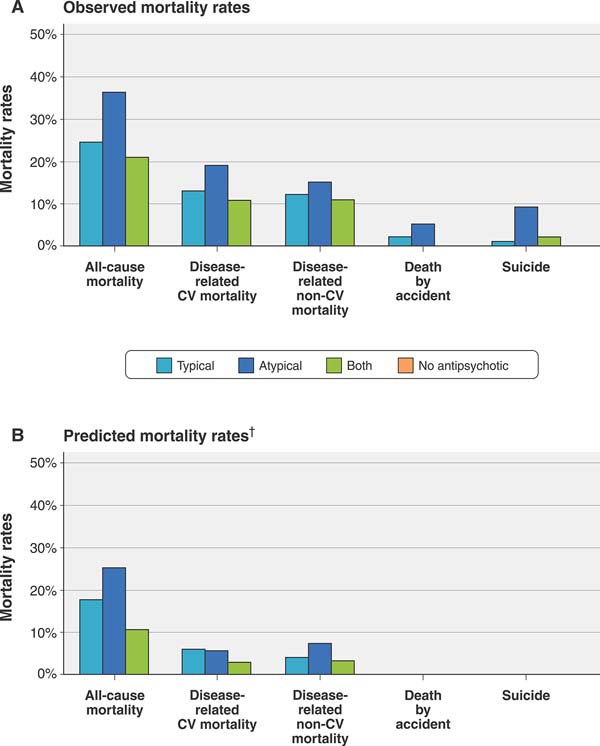
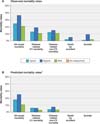
The 5-year all-cause mortality rates in each group were as follows: 24.3% in the typical antipsychotic group, 36.4% in the atypical group, and 21.2% in the combined treatment group. The mortality rates for cardiovascular and non-CVD diseases were 13% and 12.1%, respectively, in the typical antipsychotic group, 19.1% and 15.2%, respectively, in the atypical antipsychotic group, and 10.9% and 10.9%, respectively, in the combined treatment group. There were no deaths among the six non-treated patients (Figure 1).
Following adjustment, there were no significant differences in 5-year all-cause mortality between the typical and atypical groups (adjusted odds ratio [AOR] = 1.56; 95%CI 0.75-3.27; p = 0.237) or between the combined treatment group and the typical group (AOR = 0.55; 95%CI 0.20-1.49; p = 0.239) (Table 3). It was not possible to compare mortality rates between patients taking antipsychotics and those who did not due to the small size (n=6) and lack of mortality in the non-treated group (Table 3).
| Number of events/number of patients | Crude logistic regression | Multivariable logistic regression┼ | |
|---|---|---|---|
| n/n (%) | OR (95%CI; p-value) | AOR (95%CI; p-value) | |
| All-cause mortality (n=313) | |||
| Typical antipsychotics | 28/115 (24.3) | Ref. | Ref. |
| Atypical antipsychotics | 51/140 (36.4) | 1.78 (1.03-3.08; 0.039)* | 1.56 (0.75-3.27; 0.237) |
| Both classes | 11/52 (21.2) | 0.83 (0.38-1.84; 0.652) | 0.55 (0.20-1.49; 0.239) |
| No antipsychotic | 0/6 (0.0) | N/A | N/A |
| Cardiovascular mortality (n=262) | |||
| Typical antipsychotics | 13/100 (1.03) | Ref. | Ref. |
| Atypical antipsychotics | 21/110 (19.1) | 1.58 (0.74-3.35; 0.234) | 0.98 (0.34-2.81; 0.973) |
| Both classes | 5/46 (10.9) | 0.82 (0.27-2.44; 0.716) | 0.46 (0.12-1.78; 0.260) |
| No antipsychotic | 0/6 (0.0) | N/A | N/A |
| Disease-related non-cardiovascular mortality (n=256) | |||
| Typical antipsychotics | 12/99 (12.1) | Ref. | Ref. |
| Atypical antipsychotics | 16/105 (15.2) | 1.30 (0.58-2.91; 0.519) | 1.96 (0.62-6.20; 0.251) |
| Both classes | 5/46 (10.9) | 0.88 (0.29-2.68; 0.827) | 0.75 (0.16-3.59; 0.718) |
| No antipsychotic | 0/6 (0.0) | N/A | N/A |
| Non-suicidal injury (n=230) | |||
| Typical antipsychotics | 2/89 (2.2) | Ref. | Ref. |
| Atypical antipsychotics | 5/94 (5.3) | N/A | N/A |
| Both classes | 0/41 (0.0) | N/A | N/A |
| No antipsychotic | 0/6 (0.0) | N/A | N/A |
| Suicide (n=234) | |||
| Typical antipsychotics | 1/88 (1.1) | Ref. | Ref. |
| Atypical antipsychotics | 9/98 (9.2) | N/A | N/A |
| Both classes | 1/42 (2.4) | N/A | N/A |
| No antipsychotic | 0/6 (0.0) | N/A | N/A |
Variations in sample sizes across different causes of death can be attributed to the varying numbers of deaths associated with each cause (i.e., all-cause mortality [90]; cardiovascular mortality [39], disease-related non-cardiovascular mortality [33], non-suicidal injury [seven], and suicides [11]), alongside the consistent count of patients who remained alive at the end of the follow-up (n=223). In the analysis, individuals who succumbed to a cause other than the one being examined were excluded for each specific model.
AOR = adjusted odds ratio; N/A = not applicable; OR = odds ratio.
* No p-value was significant (all p > 0.05).
┼ Adjusted for sociodemographic characteristics (i.e., sex, age, marital status, living situation), schizophrenia severity (i.e., Brief Psychiatric Rating Scale, Global Assessment of Functioning, and Mini Mental State Examination scores, disorder duration, and history of suicide attempts), general comorbid medical factors (i.e., number of medical conditions, obesity, malnutrition, current smoking, at-risk drinking, and general practitioner visit in the last year), and other psychotropic medications (i.e., antipsychotic formulation [i.e., long-acting injectable vs. per os], antidepressants, benzodiazepines, mood stabilizers, and antiparkinsonian anticholinergic treatments) (degrees of freedom = 24, all generalized variance inflation factor < 2.5).
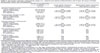
The crude (OR = 1.75; 95%CI 0.86-3.54; p = 0.122) and multivariable logistic regression models (AOR = 1.75; 95%CI 0.66-4.63; p = 0.263) showed no significant differences in 5-year all-cause mortality between patients receiving the atypical antipsychotic risperidone and those receiving the typical antipsychotic haloperidol (Supplementary Table S1).
Finally, additional exploratory analyses suggested that atypical antipsychotics were significantly associated with lower all-cause mortality than typical antipsychotics among those with substantial cognitive impairment (i.e., MMSE total score < 24) (AOR = 0.24; 95%CI 0.07-0.84; p = 0.025) (Supplementary Table S2). However, it was not possible to examine this association among participants with total MMSE scores = 24 due to insufficient mortality in this group.
DISCUSSION
In this multicenter 5-year prospective observational study involving 313 older patients with schizophrenia but no major neurocognitive disorders, there were no significant differences in the overall mortality rate or causes of mortality between the typical and atypical antipsychotic groups. In the subpopulation of patients with cognitive impairment (i.e., with a MMSE score < 24), atypical antipsychotics appear to have been associated with lower overall mortality.
Overall mortality and its causes did not significantly differ between the typical and atypical antipsychotic groups. This finding is in line with several prior studies21,22 and conflicts with others.19,20 The discrepancies in prior study results might be explained by the inclusion of mixed populations with different psychiatric diagnoses in some studies (e.g., participants with mood disorders19,21,22 or with major neurocognitive disorders21), substantial variation in the mean age of participants across studies, ranging from about 40 years old20 to 73 years old,21 and inherent biases resulting from retrospective study design.19-21 Our study addresses several of these limitations, given its prospective examination of the association of typical and atypical antipsychotics with mortality in a homogenous sample of older adults with schizophrenia, while accounting for a wide range of potentially confounding sociodemographic and clinical characteristics.
Our findings among older adults with schizophrenia contrast with those from a systematic review and meta-analysis of studies conducted among younger adults with schizophrenia, which suggested that lower overall mortality was associated with atypical antipsychotics than typical antipsychotics.4 One potential explanation for this discrepancy could be increased sensitivity to medication side effects with ageing. For example, older adults with schizophrenia might have a higher risk of developing atypical antipsychotic-related metabolic syndrome, which could increase the risk of cardiovascular mortality.41 However, future studies are required to formally test this hypothesis.
Our results suggest that atypical antipsychotics have a protective effect on all-cause mortality in patients with MMSE scores < 24. Although patients with an ICD-10 diagnosis of major neurocognitive disorders were excluded from the CSA study, symptoms of schizophrenia typically include cognitive deficits appearing early in the course of the disease,42 with heterogeneous cognitive trajectories.16 For example, a prior study43 with a 3.5 year follow-up conducted among community-dwelling middle-aged and older people with schizophrenia (aged 40-100 years) identified three trajectories: stable cognition in 50%, slight decline in 40%, and rapid decline in 10%. The effect of atypical or typical antipsychotics on mortality in older adults with major neurocognitive disorders is unclear, with heterogeneous results highlighted in a recent meta-analysis,11 which might be explained by differential effects depending on the type of major neurocognitive disorder.12 Thus, one potential explanation might be that people with major neurocognitive disorders may react differently to antipsychotics than those with schizophrenia due to specific structural and functional brain changes.42,44,45 Another explanation could be that cognitive deficits may reduce the patients' ability to tell others about the side effects,46 especially neurological side effects more commonly associated with typical antipsychotics, which could increase the risk of falls and aspiration pneumonia. Behavioral symptoms can also be observed in patients with cognitive deficits, who may be prescribed higher doses of antipsychotics, which might increase the risk of adverse events and, consequently, the risk of mortality.11,17
Our results are in line with current guidelines47-49 that atypical antipsychotics are preferable to typical antipsychotics among older adults with schizophrenia due to their better neurological tolerability. Our observation that atypical antipsychotics led to lower overall mortality than typical antipsychotics in the subpopulation with substantial cognitive deficits should encourage clinicians to avoid under-prescribing atypical antipsychotics in this population, which is also particularly prone to adverse neurological side effects, including acute dystonia, parkinsonism, akathisia, tardive dyskinesia, and tardive dystonia, which are more associated with to typical antipsychotics.50
The main strength of this study is the availability of clinical severity measures, which allows better confounder control than larger administrative database studies can generally achieve. Our study also has several limitations. First, the relatively small sample size may have led to lower statistical power. Given the relatively wide confidence intervals, these results cannot exclude small but potentially meaningful differences in mortality risk between atypical and typical antipsychotics. Second, the sample size also prevented us from testing associations between antipsychotic type and mortality due to non-suicidal injury and suicide, as well as between antipsychotic use and overall mortality, due to the low mortality and number of non-suicidal injury and suicide cases, respectively, in the non-treated group. Third, multiple testing may have led to type I error inflation, so the confidence intervals should be interpreted with caution. Fourth, were unable to evaluate potential error variance in the rating measurements because the participants were recruited from many centers (n=63) and each participant was interviewed by only one psychiatrist. Fifth, recruitment was only performed in public-sector psychiatric departments, decreasing the generalizability of our findings. Finally, the inability to measure other potential confounding variables, such as cumulative exposure to atypical and typical antipsychotics or treatment discontinuation in the follow-up period could also have affected the interpretation of results. However, adjustments such as clinical severity measurements with the Brief Psychiatric Rating Scale, MMSE, Global Assessment of Functioning, and disorder duration, general comorbid medical conditions, and psychiatric medications are study strengths, offering superior confounding control compared to large administrative dataset studies.
This multicenter prospective observational study involving 313 older adults with schizophrenia and no major neurocognitive disorders found no significant differences in 5-year overall mortality rate or its causes between patients taking atypical and typical antipsychotics. Atypical antipsychotics might be associated with lower overall mortality in older adults with schizophrenia who also have substantial cognitive impairment. Future prospective studies with greater statistical power would benefit by examining potential heterogeneity in this association across antipsychotics from each class in this population, as well as in the population of older adults with both schizophrenia and a major neurocognitive disorder.
SUPPLEMENTARY MATERIALS
ACKNOWLEDGEMENTS
This study was supported by a grant from the French Ministry of Health and Social Affairs (Programme Hospitalier de Recherche Clinique 2008-N11-01; http://solidarites-sante.gouv.fr/) and the French Psychiatric Congress (http://www.congresfrancaispsychiatrie.org). It was promoted by the University of Reims Champagne-Ardenne (http://www.univ-reims.fr/) and the University Paris-Descartes (https://www.univ-paris5.fr). The funders had no role in the study design, data collection and analysis, decision to publish, or preparation of the manuscript.
The authors would like to thank the Clinical Research Unit of Georges Pompidou European Hospital, particularly Pr Gilles Chatellier, Mr Yvann Frigout, Mrs Juliette Djadi-Prat, and Mrs Pascaline Aucouturier, and the Clinical Research Unit of Robert Debré Hospital, particularly Mrs Sarah Rubingher, Dr Bérengère Hubsch, Dr Eric Tran, Dr Fabien Gierski, and Mr David Da Rin. We warmly thank all the patients and the investigators who made this study possible.
 PDF
 Print
 Send this article by email
 How to cite this article
 Submit a comment
 Mendeley
 Pocket
 Share on Facebook
 Share on Twitter



