Recently made freely accessible by the J. Paul Getty Trust and Museum in Los Angeles, the famous "Annie" daguerreotype of Edgar Allan Poe (Figure 1) invites introspection about the author's personality and mental illnesses.
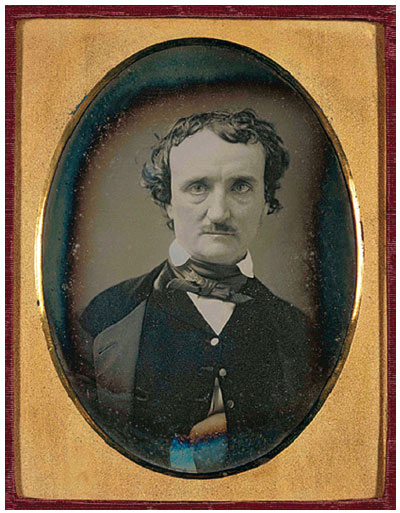
Figure 1 Allan Poe: the "Annie" daguerreotype.
Poe was an author, poet, editor, and literary critic, part of the American Romantic movement. Known for his tales of mystery and the macabre, he is considered the inventor of detective fiction.
1,2 However, he is also known for his troubled mind, beset by alcoholism and bipolar affective disorder.
1,2 A pioneering author who tried to earn a living through writing alone, Poe led a life of hardship and some professional unpleasantnesses.
1,2 This suffering always influenced his work and is present throughout his masterpieces, as he wrote in
The Fall of the House of Usher: "It was, he said, a constitutional and a family evil, and one for which he despaired to find a remedy."
Bipolar affective disorder is characterized by high rates of morbidity and disability and may be misdiagnosed as major depressive disorder in some settings.
3,4 Alcoholism is a chronic remitting and relapsing condition and remains a serious cause of morbidity and mortality, despite progress in identifying new pharmacological strategies for its treatment through neurobiological research.
5,6 The "Annie" daguerreotype was taken by Mrs. Anne Richmond, a friend of Poe, and shows him in plain, pedestrian attire, unkempt, with a vacant look, mixing surprise and untidiness, disclosing a depressive mood and suffering.
DISCLOSURE The authors report no conflicts of interest.
REFERENCES 1 Meyers J. Edgar Allan Poe, his life and legacy. New York: Cooper Square Press; 1992.
2 Quinn AH. Edgar Allan Poe, a critical biography. Baltimore: Johns Hopkins University Press; 1998.
3 Douglas J, Scott J. A systematic review of gender-specific rates of unipolar and bipolar disorders in community studies of pre-pubertal children. Bipolar Disord. Bipolar Disord. 2014;16:5-15.
4 Pacchiarotti I, Bond DJ, Baldessarini RJ, Nolen WA, Grunze H, Licht RW, et al. The International Society for Bipolar Disorders (ISBD) task force report on antidepressant use in bipolar disorders. Am J Psychiatry. 2013;170:1249-62.
5 Moussas G, Christodoulou C, Douzenis A. A short review on the aetiology and pathophysiology of alcoholism. Ann Gen Psychiatry. 2009 May 14;8:10.
6 Johnson BA. Medication treatment of different types of alcoholism. Am J Psychiatry. 2010;167:630-9.



 © 2026 All rights reserved


 PDF
 Print
 Send this article by email
 How to cite this article
 Submit a comment
 Mendeley
 Pocket
 Share on Facebook
 Share on Twitter