



ABSTRACT:
An integral part of Brazil's public health system, psychiatric emergency services
have been instrumental in improving qualified support for crisis situations involving
mental disorders in an equitable, universally accessible, and humanized way. The purpose
of this article is to present a systematic review and consensus on the infrastructure
and the ideal team for psychiatric emergencies services in Brazil. The authors searched
electronic databases including MEDLINE (PubMed), SciELO, and Cochrane, in addition
to documents from the World Health Organization, the Brazilian Ministry of Health,
and other authorities. Of the 6839 manuscripts found, 46 were included. The content
analysis summarized consensus statements through the Delphi method, and, after a series
of interactive versions, a final report was produced. Models for changing psychiatric
emergency services are assessed. It was determined that the emergency care network
must be supervised by qualified management, and all health equipment and units must
be effectively integrated. Psychiatric emergency services need adequate infrastructure,
qualified staff (including a psychiatrist), sufficient consultation and observation
space, tools and resources for differential diagnosis, training for all staff members,
and communication with the health care network to facilitate referrals following patient
discharge. Standardized models should be available to public health managers to guide
the development of new services and adjust existing ones, always seeking improvement.
The authors propose a model of psychiatric emergency services.
Keywords: Psychiatric emergency services; mental health services; mental disorders; first aid; emergency room; emergency unit.
FIGURES
| Received: January 27 2024; Accepted: March 18 2024 |
INTRODUCTION
Psychiatric emergencies, characterized as acute conditions or severe complications of mental disorders, can progress rapidly into devastating or life-threatening events, for which adequate resources and immediate intervention are required to prevent sequelae and death.1-3 An inadequate approach to these emergencies can have serious consequences, resulting in unsuccessful or conflicting community, family, or professional support.1-3
The societal impact of mental disorders is profound and continues to grow, while access to health care continues to decease. Most health services, including emergency services, are unprepared to deal with the acute complications of mental illness.1,4-6 Psychiatric emergency services (PES), a qualified and specialized model for treating psychiatric emergencies that involves scientific, ethical, and humanist domains, can be considered a benchmark of successful mental health care and can play a pivotal role in the evolution of modern mental health care.1,4-6
Although there is no single model of psychiatric emergency care, PES is the most widely discussed type in the literature. The present article presents a set of minimum requirements for the PES model regarding infrastructure, staff, and patient flow.
METHODS
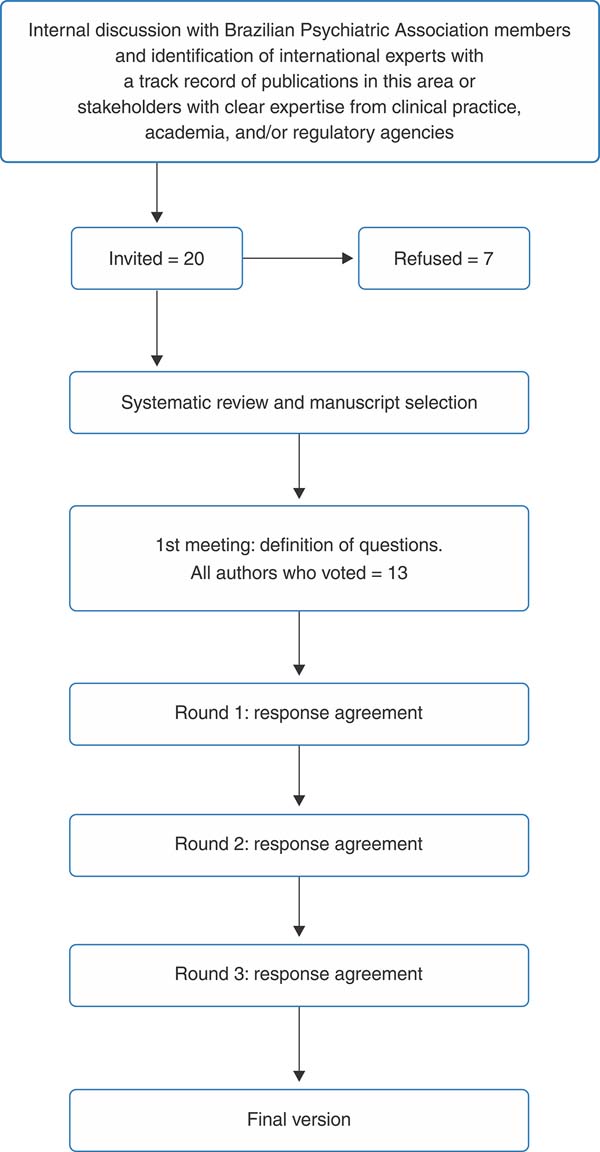
This study was the result of collaboration by 11 members of the Brazilian Psychiatric Association's Emergency Psychiatric Commission, all of whom have expertise in psychiatric emergencies, in addition to two psychiatry residents. The experts reached a consensus through digital resources (e-mail, online forms, and virtual meetings). Figure 1 details the steps involved in discussing and incorporating data from the included studies, which were then reviewed by experts in the field.
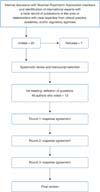
Team identification
Through internal discussion, Brazilian Psychiatric Association members identified international experts with a track record of publications in this area, in addition to stakeholders with clear expertise from clinical practice, academia, and regulatory agencies.
Systematic review
Eligibility criteria
The inclusion criteria for the literature review were studies published (or in press) between 2010 and 2021 on adults (aged = 18 years). The exclusion criteria were editorials, narrative reviews, case reports, animal or in vitro experiments, and letters to the editor. There were no language restrictions.
Information sources
The MEDLINE (via PubMed), SciELO, and Cochrane databases were searched for relevant literature, as were World Health Organization publications, and Brazilian Ministry of Health documents.
Search strategy
The search, which was restricted to research on human beings, was based on the terms "emergency services" and "psychiatric care."
Selection and data collection process
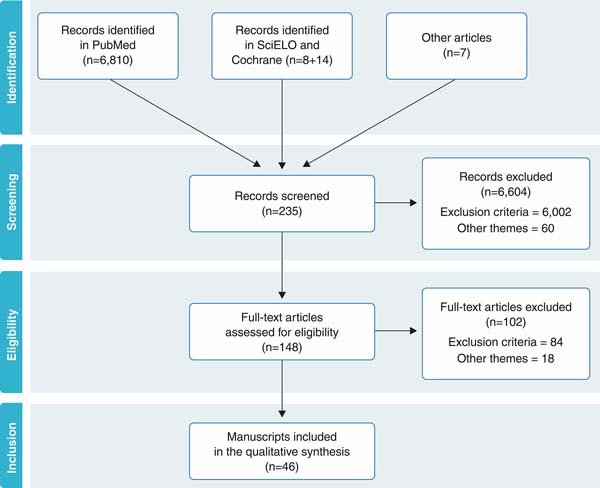
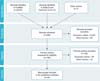
The authors (BFC, BPZ, and FVR) conducted a comprehensive literature search across all relevant areas of medicine. Of 6839 records found, 46 were selected for the qualitative synthesis. For further details of the selection process, see Figure 2.
Delphi method
Due to the paucity of randomized clinical trials, large high-quality naturalistic investigations, systematic reviews and meta-analyses, special reports, textbooks and chapters, agency reports, recommendations, and even government reviews were examined. The task force assessed these items for relevance and quality of evidence.
To develop a table of consensus recommendations at the conclusion of the systematic review, the authors conducted a survey using the Delphi technique.7 The questions included: "What is the best setting for psychiatric emergency care?"; "How should a psychiatric emergency service function?"; "What infrastructure does a psychiatric emergency service require?"; "What are the requirements for the consultation and observation rooms?"; "What are the minimum human resources required for a psychiatric emergency service?"; "What are the service processes of a psychiatric emergency service?"; and "How are crisis assessment requests managed and how is the psychiatric emergency service connected with the public health network?"
Three rounds of surveys were applied to reach an agreement. Because the experts were unable to meet to measure agreement, all communication was performed through an online questionnaire. The initial survey had open-ended questions at the conclusion of each segment, allowing respondents to comment and make recommendations. The remaining questionnaires were delivered to the Brazilian Psychiatric Association's agitation task force members for anonymous replies. They were instructed to rank the items on a scale from "should not be included" to "important." The results are determined by the percentage of respondents who rated each item. Survey replies were categorized as endorsed, re-rated, or rejected.
Responses based on the literature review were prepared by the three review authors, supervised by LB and voted on by all authors. The Delphi specialists (FI, DK, GAR, ELBC, DMP, RMS, RRG, TCT, and AGS) voted through agreement on a Likert scale. The authors could add comments if they disagreed with an item. Responses of "agree" and "strongly agree" by all respondents were considered satisfactory. Respondents could maintain or revise their prior ratings for controversial items. Items were only re-evaluated once if they did not meet the endorsement criteria.
What is the best setting for psychiatric emergency care?
Because situations identified as psychiatric emergencies can occur anywhere, care must be made available in several settings, some of which we will discuss below.
Medical facilities focusing on emergency medicine, the immediate care of people who have arrived unexpectedly (by their own means or in an ambulance) are known as emergency departments (EDs), emergency rooms, emergency wards, or casualty departments. Typically, a hospital or other institution or high complexity health equipment supports the ED.1,5,6
Some professionals argue that the best site for emergency evaluations would be in a general hospital in an area reserved for patients with mental health issues identified during triage.8 One benefit of general hospitals is the emergency physician's role as initial screener of acute clinical issues. Laboratory facilities and other assessments are also readily available. The emergency physician may triage patients without involving the psychiatric team if their conditions are not life-threatening.1,5,6
Regardless of whether the emergency service is freestanding or is associated with a hospital, it needs a sector with the appropriate infrastructure and a team specialized in psychiatric emergencies.1,5,6,8 Otherwise, psychiatric patients may be placed among the general population and may not receive the care they need for their improvement and protection. Patients having a psychiatric emergency may experience psychomotor agitation, catatonia, severe malnutrition, irritability, or dysphoria, which can require specialized care. Such states can distress or frighten other patients (e.g., an older adult hospitalized for angina) or affect their care if the ED does not have relevant protocols, organization, and/or sufficient staff to handle psychiatric emergencies. Thus, assertive communication between the clinical team and psychiatric professionals is essential to determine the most appropriate therapy.1,5,6,8
Care for psychiatric emergencies occurs in a variety of therapeutic settings, ranging from general or psychiatric hospitals to crisis clinics to mobile teams.1 Although many emergencies occur in the community and receive care in outpatient clinics or equivalent services, they are not appropriate places for treating critically ill patients.1,6
Freestanding EDs provide emergency medical treatment outside of acute care hospitals. Freestanding EDs must stabilize and transport patients with emergency medical conditions, including suicidality, to higher levels of care.9,10 To rule out organic disease, many mental patients in EDs need extra therapy and stabilization and can require a number of laboratory tests, which increases throughput time and may lead to ED boarding, which is harmful to patients and costly for EDs. Longer stays increase the risk of decompensation and worsening symptoms.9,10 Thus, for patients with severe mental disorders, freestanding EDs may be helpful.9,10
PES are health care units designed to provide immediate access to assessment and treatment, being able to handle the most severe psychiatric cases.1 PES include a wide range of outpatient mental health care services designed to assess and treat people in crisis when they cannot obtain treatment at a hospital. PES may be housed in a hospital or in the community. Rather than cold and clinical like hospital EDs, they are meant to be places of comfort and hope for those in need of medical attention. An adequate PES requires immediate access to other medical care, as well as observation beds for short stays.11 It has been hypothesized that if PES provided specialist treatment it might improve patient flow and lower hospitalization and boarding rates in EDs.11,12 The PES model also improves patient safety and could shorten emergency medication, seclusion, and restraint times.2,13-15
Rapid assessment, isolation, and referral are the three components of the "triage model," which is used by the majority of general ED. Due to the nature of ED care, psychiatric consultants often have no other treatment options than to discharge or admit the patient.4 In contrast, a freestanding PES adheres to the "treatment model," which includes the ability to treat patients on site. According to the findings of many studies, quick intervention can resolve most psychiatric emergencies in < 24 hours, eliminating the need for inpatient care. Patients experience less discomfort due to shortened hospital stays, and inpatient beds will remain available.2,4
Hence, the ideal place for treating psychiatric emergencies requires an appropriate environment, trained staff, and specific protocols. For this reason, this consensus proposed that specific environments for psychiatric emergencies (PES) should be created in general hospitals, specialized hospitals, and EDs.
How should a psychiatric emergency service function?
The functioning of a PES is, by its nature, unpredictable, including periods of greater and lesser demand, with varying numbers of patients waiting for assistance. Thus, ideally, the service's functionality should be ensured through a set of essential points, including infrastructure, human resources, and care protocols. It is essential to have a reception area and triage system for incoming patients to determine waiting time. How patients arrive at the ED must also be determined, e.g., spontaneously, through telephone contact with a regulation or transfer center, through pre-hospital services, etc. Each of these topics will be discussed from an ideal perspective; adaptations to specific situations will be necessary.
What infrastructure does a psychiatric emergency service require?
Several details about the infrastructure of PES should be described1,2,8,15-18:
- The space and equipment must be specifically dedicated to treating psychiatric patients in order to avoid mixing them with clinical or surgical patients. The floor plan should allow adequate assistance from a nursing team, including, for example, rooms with adequate ventilation and a bathroom.
- It would be useful for the entire space to be observable from a central location, mainly for patients who require greater supervision.
- Shatterproof mirrors and recessed shower heads improve patient comfort and cooperation in toilet and shower facilities. Patient monitoring must be weighed against privacy requirements.
- Adequate lighting and timekeeping tools, such as a clock and calendars, can help confused or disoriented patients. The lights must be dimmable to match the diurnal cycle but cannot be turned off completely.1,2,8,15-18
- The environment should be quiet and calm, with as little stimulation as possible to avoid exacerbating cases of psychomotor agitation.1,2,8,15-18
- In the event a room is not in use, it must be locked or secured in some manner.1,2,8,15-19
- Emergency instruments, such as glucometers, oximeters, oxygen cylinders, laryngeal masks, intubation material, secretion aspirators, vaporizers, nebulizers, and crash carts, must be readily available. If the PES is located near a clinical or surgical emergency center, these instruments can be dispensed within.1,2,8,15-18
- Appropriate material for physical restraints, such as straps and gurneys, must be available.1,2,8,15-18
- There must be access to a clinical analysis and imaging laboratory.1,2,8,15-18
Given the high incidence of clinical complications in patients with mental disorders, PES should ideally be close to clinical/surgical emergency facilities. This could also help reduce patient evasion.1,2,5,6,8,15-18,20
What are the requirements for the consultation room?
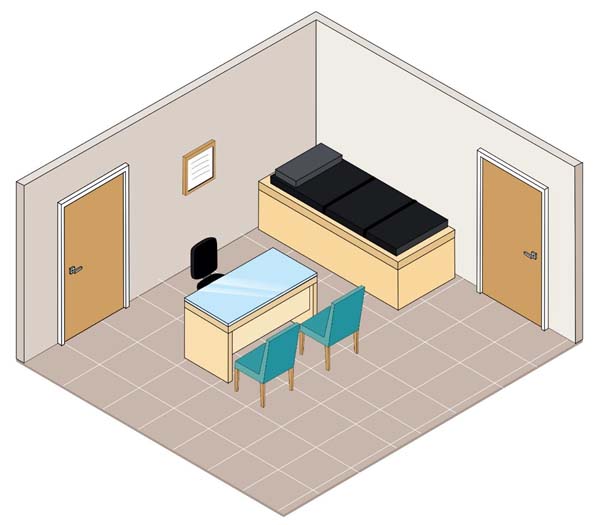
The furniture must be selected and arranged so as to prevent it from being used as weapons. In the consultation room, the furniture should be placed in a specific way, with the doctor's chair close to a door so that it cannot be blocked by an aggressive patient, and the patient's chair must also be positioned so as to prevent feelings of being cornered or threatened (Figure 3).1,2,5,6,8,15-18,20,21 Preferably, all furniture should be attached to the floor, including chair and tables. The office should be private but not isolated, including an escape route. The room must have resources that facilitate assistance without risk to patients or staff.1,2,5,6,8,15-18,20

It is inappropriate to refer patients with psychomotor agitation to a consultation room. In such cases, certain conditions must be met1-3,5,6,15,16,22-29: privacy, a safe room for interviewing or observation that facilitates access to help, medication for psychomotor agitation, the availability of physical restraints, access to diagnostic services, and support from other specialists.
What are the requirements for the observation room?
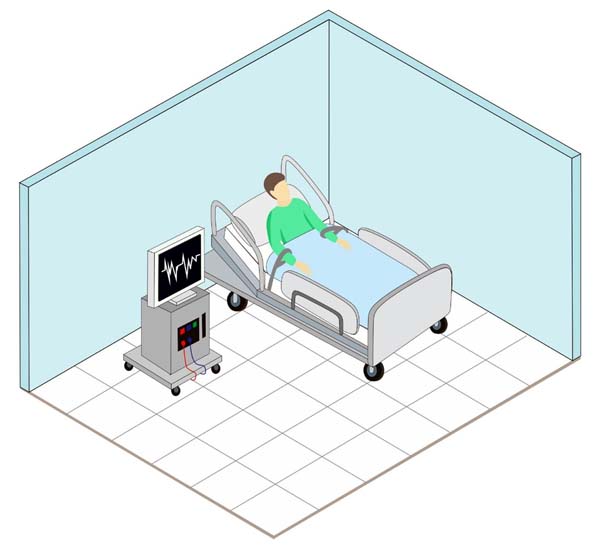
The PES must have an observation gurney for short stay, when located in emergency services (emergency medical services) or for longer stay, when they are located inside general hospitals (psychiatric wards in general hospitals). These gurneys should be different from ones in clinical or surgical wards, as they need to be simple, with a reinforced structure, and attached to the floor so that the patient is not able to move it.2,15,16,21,30 Obviously, the use of stretchers is not recommended, however in the absence of adequate beds, stretchers/beds with fasteners can be used to fix at floor level, to prevent falls, especially in containment restraint situations.14,15,31 It is important to have separate rooms for men and women, to limit situations of conflict and physical or sexual abuse.1 In cases of patients with other self-identifications for their gender, the team must evaluate the best place for their stay on a case-by-case basis.
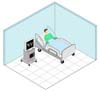
Some care is needed in relation to objects that can be easily destroyed. In such cases, they must be placed in suitable protective structures. Electrical objects, medicines, and medical equipment must be kept in lockers with secure locks. Glass cabinets should be avoided. Specific bed restraint strips need to be designed to prevent injury to the patient during prolonged physical restraint1,2,15,16,30 (Figure 4).
What are the minimum human resources required for a psychiatric emergency service?
According to the Brazilian Ministry of Health and the Federal Council of Medicine, PES and general emergency services that operate 24 hours a day must have a team that includes a psychiatrist or medical doctor, a psychologist, a social worker, a nursing team, and lower-level staff to perform all necessary activities.1,2,5,20,32-37 Ideally, the PES team should include a trained psychiatrist, rather than a medical doctor.1,2,5,20,32-37
Team training must include protocols for treating agitated patients, unaccompanied patients who need family support, and those with no social support, such as homeless or disoriented patients.1,2,5,20,32-37
Specific protocols, including adequate training and procedures, must be established for suicidal patients, first episode patients, and drug-dependent patients, in addition to a well-defined referral system for other health services in the PES' catchment area.1,6
These protocols must define all stages of care, specifying the role of each doctor, nurse, psychologist, and social worker in assisting the patient and solving problems, and they can be modeled after those of other services (with a different focus) that function in the health care network.1,6
Patients with behavioral changes are often sent to a PES by non-medical professionals for direct assessment by a psychiatrist. For example, police officers may assume that a psychiatrist should assess a particular case. Therefore, proper screening by a nurse is essential for appropriate referral, especially when a non-psychiatric pathology is suspected that requires initial exclusion. In such cases, it is important to implement a risk classification system,6,38 such as the Manchester System.38
The need to physically restrain patients is common in PES. The nursing and medical staff usually performs this procedure, but other professionals, such as security personnel, can also assist. In such cases, the staff must be trained to correctly perform the procedure.2,6,39,40
PES also need administrative staff, such as receptionists, who are trained in dealing with patients with behavioral changes.
In regions with greater immigration, these populations are reflected in ED admissions. Sharing a familiar language and culture can lead to better treatment for patients. Since potential patient diagnoses cannot be predicted by geographic and cultural characteristics, access to interpreters, whether in person or by telephone, can improve immigrant care and decision making in the ED.41
What are the service processes of a psychiatric emergency service?
The PES team has very demanding duties that require a complex balance between the needs and safety of patients, those of the community, and available health care resources for the mentally ill.
The PES' main activities include crisis intervention, risk assessment, and care for patients with numerous urgent or non-urgent medical and/or social issues. PES can involuntarily admit a patient, one of the few remaining areas in medicine in which coercion is clinically and ethically justified.
Studying local patient flow is essential to avoid overcrowding and reduce length of stay. Patient flow studies, which can lead to subsequent expansion of the PES or adjustments to the team, e.g., including an additional member at certain times, can improve care quality.42
The objectives of a PES are1,21,25,42: 1) to help acute mental health patients with behavioral changes; 2) to diagnose psychiatric disorders and determine psychological and social conditions; 3) to determine problem solving strategies according to the diagnosis; 4) to refer patients to the appropriate services. The primary function of the PES is to define problems and direct patients to the most appropriate available solutions.
Due to the heterogeneous nature of demand for a PES, a good way to organize care processes would be to determine the types of patients who seek help. The main types of patients could be1,6: 1) those using the PES as a gateway to the mental health system; 2) patients of the mental health system or a service of secondary complexity, such a day hospital; 3) patients who, due to behavioral changes, are brought in against their will by pre-hospital medical services, companions, or the police; 4) socially marginalized individuals seeking shelter and food not found in regional social support services.
For ideal care flow, patient reception procedures should be conducted by a trained nursing professional and structured in the form of a psychiatric pre-consultation. The nurse should immediately observe the initial complaints, screen for any signs and symptoms indicating high severity, immediately obtain medical and social information, provide basic orientation about how the PES team functions, and provide patients with a rough estimate of how long it will be until the doctor will see them, depending on current demand. This triage will direct patients to psychiatric evaluation, the medical clinic, or directly to social services. Contact with relatives, friends, or significant others is a priority for patients in crisis and, at the physician's discretion, should be included in the routine for patients who arrive unaccompanied.
The team should maintain frequent contact, defining the most appropriate procedures and referrals for each patient. This contact must involve standardized referral procedures for consultations with other medical specialties or services. After resolving the acute crisis, the patient will be referred to psychiatric or non-psychiatric health services by a post-consultation team that includes guidance from a nurse and a social worker. The relationship between patients and professionals should be direct and active.
Team members must be aware of their roles, the importance and limits of each area, and the laws that govern each professional council.43-45
How are crisis assessment requests managed and how is the psychiatric emergency service connected with the public health network?
In psychiatric emergencies, pre-hospital care should ideally involve mental health professionals trained to handle calls from crisis patients, since they can determine the call's importance and activate extra-hospital resources, such as ambulance services. During each call, the patient's identification and basic information about the crisis should be collected; it should also be determined whether police support is necessary (i.e., when violence appears to be involved).5,6
Regardless of the emergency service's location, once the situation is resolved, the patient will require maintenance treatment. Effective referral is essential to avoid new crises and returns to the emergency environment. Therefore, the PES must have direct contact with rapid response outpatient systems (outpatient clinics), basic health units, psychosocial care centers, day hospitals, and other services.5,6
In conclusion, PES, which are fundamental for an effective mental health system, must be prepared for patients having a first episode (i.e., who have not yet been diagnosed or treated), as well as for patients already in outpatient follow-up who are having a crisis. It is especially important for PES to have standardized infrastructure and care models, so that their objectives can be achieved appropriately and effectively, avoiding improvised actions and procedures, which depend on the heterogeneous experiences and conduct of the involved staff. The infrastructure of PES should be sufficient to provide care for and monitor critically ill patients and administer medications for psychiatric and clinical emergencies. Its team must include a psychiatrist and other trained professionals with established roles. PES must be linked with the health network to quickly and effectively treat patients and refer them as soon as they are stabilized. Since there are so few studies on this topic, novel solutions are needed.
 PDF
 Print
 Send this article by email
 How to cite this article
 Submit a comment
 Mendeley
 Pocket
 Share on Facebook
 Share on Twitter



