



ABSTRACT:
OBJECTIVE: To report on suicide plans and attempts among Brazilian physicians and to investigate
the associated risk factors.
METHODS: From January 2018 to January 2019, a nationwide online survey was conducted among
Brazilian physicians using the Tool for Assessment of Suicide Risk and the Satisfaction
with Life Scale. Multivariate exploratory associations of demographic, psychological,
and work-related factors were performed on reports of suicide plans and attempts.
RESULTS: Of the 4,148 participants, 1,946 (53.5%) were male, 2,527 (60.9%) were 30 to 60 years
old, 2,675 (64.5%) had two to four jobs, and 1,725 (41.6%) worked 40 to 60 hours a
week. The overall prevalence of suicide plans was 8.8% (n=364), and suicide attempts
were reported by 3.2% (n=133) of participants. Daily emotional exhaustion (ORadj = 7.857; 95%CI 2.282-27.051, p = 0.002), weekly emotional exhaustion (ORadj = 7.953; 95%CI 2.403-26.324, p = 0.001), daily frustration at work (ORadj = 3.093; 95%CI 1.711-5.588, p < 0.001), and bisexuality (ORadj = 5.083; 95%CI 2.544-10.158, p < 0.001) were significantly associated with higher
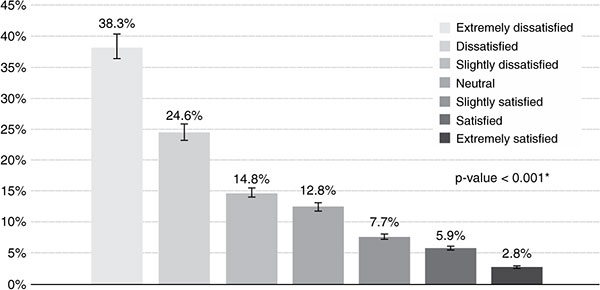
odds of suicide. Extremely dissatisfied physicians reported suicide plans and attempts
in 38.3% of cases, whereas extremely satisfied physicians reported suicide plans and
attempts in only 2.8% of cases (p < 0.001).
CONCLUSION: Brazilian physicians with a history of suicide plans and attempts express emotional
exhaustion and frustration at work. There is an urgent need for actions to promote
professional safeguards and resilience.
Keywords: Suicide; self-injurious behavior; suicidal ideation; physicians.
FIGURES
| Received: September 18 2023; Accepted: January 18 2024 |
INTRODUCTION
The need for mental health support has gained attention as a major public health issue in recent decades. Health care professionals, such as physicians, face challenges at the individual, organizational, and societal levels.1-3
Each year, approximately 800,000 people die by suicide worldwide, accounting for approximately 1.5% of all deaths.4-6 Most of these suicides (80%) occur in low- and middle-income countries.6 Suicidal behavior refers to any form of deliberate self-injury with known suicidal intent.7 Most suicidal behavior involves a sequence of suicidal ideation followed by suicidal planning, which might include acquiring the means to commit suicide (i.e., a suicide attempt that might succeed).8-11 Suicide plans or attempts are more common than suicide deaths (fatal outcomes), which are largely influenced by the availability of means. The type of method used affects the outcome.7,12 Approximately 4% of those who attempt suicide are projected to die by suicide within the next five years.13
Several risk factors for suicide and suicidal behavior have been identified,4,5,7,8 and health care workers are recognized as a high-risk group for suicide in several countries.14 A recent meta-analysis of 55 studies reported that physicians are professionals at risk of suicide.14 The analysis included studies involving North American (24 studies), European (23 studies), Asian (four studies), Australian (two studies), South American (one study), and African (one study) physicians.14 The overall standardized mortality ratio (SMR) was 1.44 (95%CI 1.16-1.72), with 1% of suicide attempts (95%CI 1.0-2.0; p < 0.001) and 17% of suicidal ideation (95%CI 12-21; p < 0.001) reported. In particular, female physicians (SMR = 0.67, 95%CI 0.19-1.14; p = 0.007) and some specialties (e.g., anesthesiology, psychiatry, general practice, and general surgery) might be at a greater risk for suicide attempts. Some evidence suggests that differences in satisfaction at work between countries might influence nonhomogeneous global rates.15,16
A recent systematic review of 46 studies revealed that suicide rates in Brazil have increased by more than 40% in recent years.17 These rates ranged from 4.6 to 6.6 per 100,000 inhabitants between 2000 and 2020. Furthermore, there is considerable variation in these rates among major regions, states, and cities, and consolidated information on the epidemiology of suicidal behavior in the general population is lacking.17 In addition, official mental health surveillance indicators face data collection challenges due to underreporting and the lack of a consistent guiding protocol.18 Few recent nationwide studies have examined working conditions, well-being, work-related distress, and emotional exhaustion, especially among healthcare professionals,19-25 and most of these studies have been limited to specific geographic regions in Brazil, with small samples that are not representative of the broader Brazilian population. These studies included nonphysician occupations19-23 as well as specific medical subspecialties24 but did not focus on risk factors or working conditions. For example, Rocha et al.24 reported that 20 Brazilian cardiac surgeons (54.1%) presented signs and symptoms of possible anxiety, depression, substance abuse, and burnout in a convenience sample survey at a national congress of medical subspecialties held in 2019. Faria et al.20 reported an 11.6% prevalence of suicidal ideation among 597 municipal health workers who participated in a cross-sectional study in a city in the South of Brazil in 2013. Of these workers, 75 (12.7%) were physicians, who had a self-reported suicidal ideation rate of 6.7%. Another study, which analyzed 50 cases of suicide among physicians in the state of São Paulo from 2000 to 2009, reported an average suicide rate of 4.2 per 100,000 people, suggesting possible underreporting of suicide in this group.25
Suicide plans or attempts are common among individuals at greater risk of committing suicide.4,7,8,10-14,16 The current study aimed to report the prevalence of suicide plans and attempts, identified as a composite variable derived from reported lifetime suicide plans and attempts.4,7,8,10-14,16 In addition, we aimed to explore associated factors (e.g., demographic, psychological, and work-related factors) among Brazilian physicians who participated in a nationwide online mental health survey.
METHODS
Study design, setting, and sample calculation
The present cross-sectional study has been reported according to the Strengthening the Reporting of Observational Studies in Epidemiology (STROBE).26
In Brazil, physicians are required to be registered with the Conselho Regional de Medicina (CRM) to legally practice medicine. The Conselho Federal de Medicina (CFM) comprises 27 CRMs, one for each state, and holds constitutional authority to regulate and inspect medical practice in Brazil.27 The CFM maintains an up-to-date database of all practicing physicians in Brazil, including email addresses and other registry details. This information is available upon reasonable request (e.g., for research purposes) after the completion of administrative and ethical procedures.
Between January 2018 and January 2019, we conducted an online survey of physicians with active medical records in Brazil (n=523,528). They received an institutional invitation by email with information about the study objectives and a unique access code. If physicians did not respond, we sent up to three reminder emails seven days apart.
The minimum sample size (n=3,915) was determined based on estimates of suicidal ideation from a field pilot study of 300 physicians. Of these physicians, 39% were estimated to be similar to reports of suicide plans and attempts (primary outcome). A margin of error of ± 3.5% and a 95% confidence interval were considered. The sample calculation was performed for each of the main geographical regions of Brazil: North, Northeast, South, Southeast, and Midwest. To ensure the quality of the sample inferences, a simple random sample with replacement was designed considering the distribution of physicians in the main geographical regions and states of Brazil28 as well as gender and age. In the event of nonparticipation or no response to the invitation sent by email within the maximum seven-day period, groups of potential "replacement sample professionals" were randomly selected based on geographical, age, and gender criteria and placed on a waiting list to recall. The replacement list was chosen to uphold the ratio of all original characteristics (i.e., geographical region/state, age, and gender), and the final sample was proportional to the nationwide distribution of physicians.28 Supplementary Table S1 illustrates the similarity between the proportional distribution of physicians, the physician population, and the sample.
Data collection, variables, and outcome definitions
Data were collected via an online form accessed by physicians who received an email invitation to participate in the study with a unique access code. For every 5.8 invitations sent, only one was responded to within the allotted time. Physicians who did not respond or did not wish to participate in the study were removed from the list and replaced according to standard operating procedures. For the participating physicians, their unique access code was automatically verified by the survey software and sent to an online Google form. Only one answer was allowed per access code.
The final questionnaire was based on the modified version of the Tool for Assessment of Suicide Risk and the Satisfaction with Life Scale (SWLS).8,29-31 The SWLS has been validated for the Brazilian population using a sample of 2,180 participants, including physicians.30 The five questions about satisfaction with life were rated using a Likert scale (ranging from 1 [strongly disagree] to 7 [strongly agree]). Questions directly related to suicide and predictors of suicidal behavior among physicians ("Have you ever thought about suicide?"; "Have you ever made specific plans to commit suicide?"; "Have you ever attempted suicide?") had dichotomous response options (i.e., yes or no). After discussion among the researchers, additional questions concerning weekly physical activities, weekly leisure activities, and working conditions (e.g., workload, work arrangements, salaries, and professional prospects in the medical field) were incorporated into the final questionnaire.
The primary focus of this study was physician-reported suicide plans and attempts. This is a binary composite outcome based on previous literature4,7,8,10-14,16 that identifies suicide plans7-11 or attempts (i.e., a deliberate, nonfatal self-injurious act associated with an implicit or explicit intention to die)11,13,16 during a physician's lifetime.
Other noncomposite secondary outcomes were suicidal ideation, suicide plans, and suicide attempts.8
Statistical analysis
First, sample characteristics were compared with those of the Brazilian physician population whenever data were available (95% CI overlap).28 The frequencies of the primary and secondary outcomes were then reported. Crude odds ratios (ORs) were estimated to assess the impact of individual factors (i.e., gender, age, religious beliefs or practices, sexual orientation, current or past substance dependence, self-prescription of antidepressants or anxiolytics, experience of a serious current unresolved problem, weekly leisure activities, weekly workload, perception of current income [categories: little, so I have several jobs; good but not enough to maintain consumption standards; enough to meet my needs; enough to meet my needs and save for the future; or very good, I have no financial problems], emotional exhaustion, and frustration at work [categories: once a month; once a week; several times a week; or every day]) on the primary outcome by univariate logistic regression. Adjusted ORs were calculated by multivariate logistic regression. Backward stepwise regression was used to reduce the number of predictor variables.32-34 The probability criterion of inclusion (p = 0.05) and exclusion (p = 0.10) was applied, and the best model was determined based on the lowest Akaike information criterion. To improve the final model, the predictor variables were tested for collinearity with the variance inflation factor and for the presence of influential values. The accuracy of the model was evaluated using a cross-validation system.35
The Cochran-Armitage test was used to determine the existence of a linear trend between SWLS and reports of suicide plans and attempts. The significance level was set at 5% (p < 0.05). All tests were two-tailed.
The database was exported to the Statistical Package for the Social Sciences (SPSS) 22 for Windows and R-GUI version 4.0.4 (http://www.r-project.org/) for statistical analysis.
Ethical considerations
The present study was reviewed and approved by the Institutional Review Board of the Universidade Federal do Piauí (protocol 19060619.8.0000.5214) and complied with Brazilian and international regulations for research involving human subjects.
The institutional review board waived the requirement for individually signed informed consent due to the online nature of the present study. Each participant was informed of the objectives and methods of the study, including the right to refuse participation, prior to participation. The participants provided online informed consent before completing the questionnaire.
The Institutional Review Board also mandated the confidentiality of individual data, which was maintained throughout all phases of the project. The following individual variables were deidentified to assure confidentiality of the information prior to analysis: name, date of birth, and email address.
RESULTS
The characteristics of the 4,148 participants are shown in Table 1. More than half of the participants (53.5% [n=1,946]) were male, and 60.9% (n=2,527) were between 30 and 60 years of age. All geographical regions were represented, with more than half of the physicians living in state capitals (55.9% [n=1,999]) or the most populous cities (62.1% [n=2,215]). There was a predominance of physicians from the Southeast region of Brazil (55.2% [n=2,290]). The sample characteristics studied were similar to those of the Brazilian physician population. Detailed comparisons by geographical region and state are shown in Supplementary Table S1.
| Characteristics | n | % (95%CI) | Physician population (%)28 |
|---|---|---|---|
| Male | 2,221 | 53.5 (52.0-55.1) | 53.4 |
| Age (years)┼ | |||
| = 29 | 716 | 17.6 (16.4-18.8) | 18.6 |
| 30-60 | 2,527 | 60.9 (59.4-62.4) | 61.1 |
| = 60 | 892 | 21.5 (20.3-22.8) | 20.3 |
| Specialist physician | 2,489 | 60.0 (58.5-61.5) | 61.3 |
| Brazilian region | |||
| North | 169 | 4.1 (3.5-4.7) | 4.3 |
| Northeast | 682 | 16.4 (15.5-17.9) | 19.7 |
| Southeast | 2,290 | 55.2 (53.7-56.7) | 54.7 |
| South | 659 | 15.9 (14.8-17.0) | 15.4 |
| Midwest | 348 | 8.4 (7.6-9.3) | 7.8 |
| State capitals | 1,999 | 55.9 (54.3-57.6) | 54.5 |
| Local population | |||
| 5,000 | 14 | 0.4 (0.2-0.6) | 0.3 |
| 5,001-10,000 | 23 | 0.6 (0.4-0.9) | 0.6 |
| 10,001-20,000 | 46 | 1.3 (1.0-1.7) | 1.6 |
| 20,001-50,000 | 200 | 5.6 (4.9-6.4) | 4.7 |
| 50,001-100,000 | 225 | 6.3 (5.5-7.1) | 6.0 |
| 100,001-500,000 | 845 | 23.7 (22.3-25.1) | 23.3 |
| > 500,000 | 2,215 | 62.1 (60.5-63.7) | 63.3 |
| Religious beliefs or practices | |||
| No | 916 | 22.1 (20.8-23.4) | |
| Yes | 3,232 | 77.9 (76.6-79.2) | |
| Sexual orientation | |||
| Heterosexual | 3,868 | 93.4 (92.6-94.1) | |
| Bisexual | 59 | 1.4 (1.1-1.8) | |
| Homosexual | 215 | 5.2 (4.5-5.9) | |
| Workplace | |||
| Ambulatory | 3,446 | 86.9 (85.9-88.0) | |
| Emergency | 1,946 | 49.1 (47.5-50.7) | |
| Surgery | 1,104 | 27.9 (26.5-29.3) | |
| Other | 357 | 9.0 (8.1-9.9) | |
| Types of services | |||
| Public | 1,357 | 32.7 (31.3-34.2) | |
| Private | 1,124 | 27.1 (25.8-28.5) | |
| Dual practice | 1,667 | 40.2 (38.7-41.7) | |
| Number of work contracts | |||
| 1 | 1,108 | 26.7 (25.4-28.1) | |
| 2-4 | 2,675 | 64.5 (63.0-65.9) | |
| > 4 | 365 | 8.8 (8.0-9.7) | |
| On-call work | 2,192 | 52.8 (51.3-54.4) | |
| Weekly workload (declared hours) | |||
| < 20 | 139 | 3.4 (2.8-3.9) | |
| 20-39 | 850 | 20.5 (19.3-21.7) | |
| 40-59 | 1,725 | 41.6 (40.1-43.1) | |
| 60-79 | 1,025 | 24.7 (23.4-26.0) | |
| > 80 | 409 | 9.9 (9.0-10.8) | |
| Weekly leisure activities (declared hours) | |||
| No practice or < 2 | 884 | 21.3 (20.1-22.6) | |
| 2-6 | 2,055 | 49.5 (48.0-51.1) | |
| > 6 | 1,209 | 29.1 (27.8-30.5) | |
| Weekly physical activities (declared hours) | |||
| Sedentary | 2,122 | 51.2 (49.6-52.7) | |
| 2-6 | 1,663 | 40.1 (38.6-41.6) | |
| > 6 | 363 | 8.8 (7.9-9.6) | |
| Ease to seek mental health help | |||
| Very difficult | 371 | 8.9 (8.1-9.8) | |
| Difficult | 856 | 20.6 (19.4-21.9) | |
| Neutral | 527 | 12.7 (11.7-13.7) | |
| Easy | 1,412 | 34.0 (32.6-35.5) | |
| Very easy | 982 | 23.7 (22.4-25.0) | |
| Level of satisfaction with life | |||
| Extremely dissatisfied | 81 | 2.0 (1.6-2.4) | |
| Dissatisfied | 264 | 6.4 (5.7-7.1) | |
| Slightly dissatisfied | 575 | 13.9 (12.8-14.9) | |
| Neutral | 144 | 3.5 (2.9-4.1) | |
| Slightly satisfied | 792 | 19.1 (17.9-20.3) | |
| Satisfied | 1,296 | 31.2 (29.8-32.7) | |
| Extremely satisfied | 996 | 24.0 (22.7-25.3) |
┼ Age categories defined to be comparable to official data.
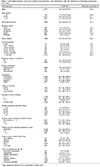
Outpatient clinics and emergency departments were the most common workplaces, with 86.9% (n=3,446) and 49.1% (n=1,946), respectively. Four out of 10 physicians (40.2%, n=1,667) reported working in both public and private settings, while 32.7% (n=1,357) worked exclusively in public settings. In addition, 64.5% (n=2,675) of the participants had between two and four work contracts, with a reported weekly workload between 40 and 60 hours (41.6% [n=1,725]). More than half of the physicians (52.8% [n=2,192]) also reported on-call work. Regarding satisfaction with life, one-third of participants (31.2% [n=1,296]) reported being satisfied or extremely satisfied with life (24% [n=996]), while 6.4% (n=264) were dissatisfied or extremely dissatisfied with life (2% [n=81]).
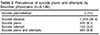
Table 2 shows that almost one in three doctors (29.4%) reported having had suicidal ideation (n=1,218) at least once. Suicide plans and attempts were reported by 8.8% (n=364) of participants.
| Suicide plan/attempt | n (%) |
|---|---|
| Suicide ideation | 1,218 (29.4) |
| Suicide plans | 335 (8.1) |
| Suicide attempt | 133 (3.2) |
| Suicide plans and attempts | 364 (8.8) |
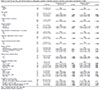
After adjustment, older age (35-50 years [OR = 0.753, 95%CI 0.575-0.988, p = 0.040]) and > 50 years [OR = 0.505, 95%CI 0.362-0.704, p < 0.001]), religious beliefs or practices (OR = 0.699, 95%CI 0.527-0.926, p < 0.013), more than six hours of weekly leisure activities (OR = 0.530, 95%CI 0.363-0.774, p < 0.001), and the perception of having enough current income to meet needs and save for the future (OR = 0.482, 95%CI 0.329-0.774, p < 0.001) were identified as protective factors for suicide plans and attempts (Table 3). However, emotional exhaustion at any frequency (i.e., once a month [OR = 5.105, 95%CI 1.530-17.030, p = 0.008], once a week [OR = 5.234, 95%CI 1.585-17.288, p = 0.007], several times a week [OR = 7.953, 95%CI 2.403-26.324, p = 0.001], and every day [OR = 7.857, 95%CI 2.282-27.051, p = 0.002]), bisexuality (OR = 5.083, 95%CI 2.544-10.158, p < 0.001), current unresolved problems (OR = 2.074, 95%CI 1.571-2.736, p < 0.001), self-prescription of antidepressants or anxiolytics (OR = 1.870, 95%CI 1.464-2.390, p < 0.001), current or past substance dependence (OR = 1.795, 95%CI 1.058-3.046, p < 0.001), and frustration at work (several times a week [OR = 1.799, 95%CI 1.087-2.979, p = 0.022] or every day [OR = 3.093, 95%CI 1.711-5.588, p < 0.001]) were associated with a high prevalence of suicide plans and attempts.
| n | % (95%CI) | Unadjusted analyses OR (95%CI) | p-value | Adjusted analyses OR (95%CI) | p-value | |
|---|---|---|---|---|---|---|
| Gender | ||||||
| Female | 194 | 10.1 (8.8-11.5) | Ref. | - | Ref. | - |
| Male | 170 | 7.7 (6.6-8.8) | 0.740 (0.597-0.919) | 0.006 | 0.796 (0.621-1.021) | 0.072 |
| Age (years) | ||||||
| < 35 | 164 | 13.6 (11.2-16.2) | Ref. | - | Ref. | - |
| 35-50 | 125 | 8.9 (7.8-10.1) | 0.622 (0.483-0.800) | < 0.001 | 0.753 (0.575-0.988) | 0.040 |
| > 50 | 75 | 4.5 (3.3-6.0) | 0.299 (0.204-0.437) | 0.001 | 0.505 (0.362-0.704) | < 0.001 |
| Religious beliefs or practices | ||||||
| No | 101 | 11.0 (9.1-13.2) | Ref. | - | Ref. | - |
| Yes | 263 | 8.1 (7.2-9.1) | 0.972 (0.950-0.993) | < 0.001 | 0.699 (0.527-0.926) | < 0.013 |
| Sexual orientation | ||||||
| Heterosexual | 315 | 8.1 (7.3-9.0) | Ref. | - | Ref. | - |
| Bisexual | 19 | 32.2 (21.4-44.8) | 5.358 (3.066-9.362) | < 0.001 | 5.083 (2.544-10.158) | < 0.001 |
| Homosexual | 28 | 13.0 (9.0-18.0) | 1.689 (1.117-2.554) | 0.037 | 1.402 (0.886-2.219) | 0.149 |
| Self-prescription of antidepressants or anxiolytics | ||||||
| No | 140 | 5.6 (4.7-6.5) | Ref. | - | Ref. | - |
| Yes | 224 | 13.6 (12.0-15.4) | 2.670 (2.140-3.331) | < 0.001 | 1.870 (1.464-2.390) | < 0.001 |
| Substance dependence (current or past) | ||||||
| No | 333 | 8.3 (7.5-9.2) | Ref. | - | Ref. | - |
| Yes | 31 | 22.5 (16.1-30.0) | 2.670 (2.140-3.331) | < 0.001 | 1.795 (1.058-3.046) | < 0.001 |
| Current unresolved serious problem | ||||||
| No | 241 | 6.8 (6.0-7.7) | Ref. | - | Ref. | - |
| Yes | 123 | 20.3 (17.2-23.6) | 3.488 (2.751-4.422) | < 0.001 | 2.074 (1.571-2.736) | < 0.001 |
| Weekly workload | ||||||
| Reduced | 21 | 10.6 (6.9-15.5) | Ref. | - | Ref. | - |
| Almost adequate, possible to increase | 27 | 10.0 (6.8-14.0) | 0.933 (0.511-1.703) | 0.821 | 0.523 (0.794-1.611) | 0.523 |
| Adequate, impossible to increase | 113 | 6.2 (5.1-7.3) | 0.554 (0.339-0.905) | 0.018 | 0.631 (0.347-1.146) | 0.130 |
| Overloaded | 203 | 11.0 (9.6-12.5) | 1.041 (0.647-1.675) | 0.867 | 0.505 (0.362-0.704) | 0.020 |
| Weekly leisure activities (hours) | ||||||
| < 2 | 124 | 14.0 (11.9-16.4) | Ref. | - | Ref. | - |
| 2-6 | 177 | 8.6 (7.5-9.9) | 0.578 (0.452-0.738) | < 0.001 | 0.821 (0.623-1.083) | 0.162 |
| > 6 | 63 | 5.2 (4.1-6.6) | 0.337 (0.245-0.463) | < 0.001 | 0.530 (0.363-0.774) | < 0.001 |
| Emotional exhaustion at work | ||||||
| Never | 4 | 0.8 (0.3-2.0) | Ref. | - | Ref. | - |
| Once a month | 38 | 4.8 (3.5-6.5) | 5.944 (2.108-16.761) | 0.001 | 5.105 (1.530-17.030) | 0.008 |
| Once a week | 76 | 6.7 (5.3-8.2) | 8.381 (3.048-23.040) | < 0.001 | 5.234 (1.585-17.288) | 0.007 |
| Several times a week | 159 | 12.0 (10.3-13.8) | 15.955 (5.881-43.283) | < 0.001 | 7.953 (2.403-26.324) | 0.001 |
| Every day | 87 | 20.3 (16.7-24.3) | 29.850 (10.85-82.115) | < 0.001 | 7.857 (2.282-27.051) | 0.002 |
| Frustration at work | ||||||
| Never | 27 | 2.7 (1.9-3.9) | Ref. | - | Ref. | - |
| Once a month | 71 | 6.5 (5.2-8.1) | 2.480 (1.578-3.896) | < 0.001 | 1.599 (0.973-2.630) | 0.064 |
| Once a week | 54 | 7.7 (5.9-9.8) | 2.954 (1.841-4.738) | < 0.001 | 1.393 (0.817-2.377) | 0.224 |
| Several times a week | 137 | 12.7 (10.8-14.8) | 5.182 (3.397-7.906) | < 0.001 | 1.799 (1.087-2.979) | 0.022 |
| Every day | 75 | 25.8 (21.0-31.0) | 12.346 (7.763-19.635) | < 0.001 | 3.093 (1.711-5.588) | < 0.001 |
| Perception of current income | ||||||
| Little, so I have several jobs | 108 | 15.8 (13.2-18.7) | Ref. | - | Ref. | - |
| Good but not enough to maintain consumption standards | 57 | 10.3 (8.0-13.0) | 0.612 (0.434-0.862) | 0.004 | 0.744 (0.508-1.088) | 0.127 |
| Enough to meet my needs | 121 | 9.1 (7.7-10.7) | 0.534 (0.404-0.705) | < 0.001 | 0.139 (0.788-0.575) | 0.139 |
| Enough to meet my needs and save for the future | 56 | 4.5 (3.5-5.8) | 0.253 (0.180-0.355) | < 0.001 | 0.482 (0.329-0.774) | < 0.001 |
| Very good, I have no financial problems | 22 | 6.3 (4.1-9.2) | 0.358 (0.222-0.578) | < 0.001 | 0.875 (0.500-1.533) | 0.624 |
ORadj = adjusted odds ratio; OR = odds ratio.
Bold type denotes statistical significance.
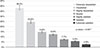
The prevalence of suicide plans and attempts according to reported satisfaction with life among Brazilian physicians is shown in Figure 1. A total of 38.3% of extremely dissatisfied physicians reported suicide plans and attempts, but only 2.8% of extremely satisfied physicians reported the same. A statistically significant linear inverse relationship was found between suicide plans and attempts and satisfaction with life (p < 0.001).
DISCUSSION
The current study provides new evidence on the mental health of Brazilian physicians, showing that suicide plans and attempts were reported by nearly one in 10 professionals. To the best of our knowledge, this is the first nationwide study to present data on the quality of life and working conditions of Brazilian physicians, focusing on the associations with emotional exhaustion and frustration at work. Comparisons between our data and the general population in Brazil are challenging because of the limited information available on suicide attempt rates in the country.36 Most studies are limited to single institutions, specific cities, or geographical regions.37-44 Even when suicide attempts result in hospitalization, underreporting is possible because the Sistema de Informações Hospitalares covers only public hospital admissions, and the percentage of the population using private health plans varies by state.36
Nevertheless, our findings align with data from the broader Brazilian population, which shows a spike in suicide rates in Brazil from 2000 to 2017,45 and with recent systematic reviews14,17 alerting to the rise in suicide rates among physicians and healthcare workers in several countries, including Brazil. Palhares-Alves et al.25 suggested underreporting of suicide cases among physicians in a Brazilian region and was the only study from South America included in a recently published meta-analysis.14 Other authors have noted that most Brazilian studies of suicide deaths, whether based on autopsy or psychological autopsy, often lack consideration of individual factors, including occupation.46 Individual factors have the strongest effect on suicide rates in life course models and serve as a risk factors for suicide attempts.4 In our study, a history of suicide plans and attempts by Brazilian physicians showed a greater association with self-prescription of antidepressants or anxiolytics, substance dependence, and experiencing a serious current unresolved problem. Fazel et al.4 identified male gender and specific age groups (young or older adults) as risk factors for suicide. They also identified other risk factors, such as psychiatric disorders, childhood sexual abuse, family history of suicidal behavior, loss of a parent to suicide in early childhood, divorce, being widowed or single, and social isolation. In terms of gender, a meta-analysis47 compared suicide rates before and after 1980 and found that female physicians had higher suicide rates than women in general (1.46, 95%CI 1.02-1.91). However, the suicide mortality rates of male and female physicians decreased over time (p < 0.001). Our data does not reveal a gender-related influence on the frequency of suicide plans and attempts. However, considering the increasing number of Brazilian female physicians,48-51 future studies should continue to monitor rates in this population as well as in other healthcare workers with similar working conditions.
Our findings showing fivefold-fold greater rates of suicide plans and attempts among physicians who identified as bisexual were remarkable because of the known psychosocial vulnerability of the LGBTQIA+ population in Brazil.52-55 According to Salway et al.,56 this risk in the general population may be attributable to structural and interpersonal experiences of monosexism, bisexual erasure and invisibility, or lack of social support for bisexual affirmation. Future research could be useful for assessing and understanding the causes of suicide plans and attempts reported by LGBTQIA+ physicians.
Medical school in Brazil requires six years of study. Although postgraduate medical specialization is not required for clinical practice, it is highly sought after. Typically, specialization programs last from two to five years, depending on the specialty (55 options) or subspecialty (59 options).57-59 The Brazilian population is undergoing continuous sociodemographic changes characterized by a growing number of female physicians and younger medical graduates,48,60,61 possibly because of the increase in new medical schools since 2010.48,58 Similar to observations in other countries,61-67 Brazilian medical practice is characterized by numerous work contracts, the coexistence of multiple work arrangements, and demanding workloads.51,68 Consequently, the results of this study might provide insights for other nations that are experiencing similar professional work environments for physicians.
According to the recent guidelines of the Brazilian Psychiatric Association for addressing suicidal behavior,11,69 screening for this critical health issue can be performed independently or as part of a more comprehensive health assessment for specific individuals or universally (i.e., applied to all individuals in the target population regardless of their risk level compared to healthy individuals). Other authors have discussed the use of suicide prediction tools to identify high-risk groups, improve clinical decision-making models, and guide treatment planning. However, there is no consensus on the best approach for establishing a high-risk threshold, which limits the effectiveness of these tools.70 Considering the possible easy access of physicians to lethal means and the complexity of routine large-scale screening, the findings of this study directly call for action to develop protective public policies based on the establishment of specific intervention plans and monitoring systems over time.
A recent systematic review focusing exclusively on research from the United States and Australia revealed that intervention studies using psychosocial strategies to reduce suicide risk among healthcare workers are relatively rare.71 In light of this, it is critical to replicate successful interventions from other countries,72-76 such as prioritizing physician well-being or implementing legal safeguards against excessive workloads within the national framework. Nonmodifiable risk factors (e.g., age, religious beliefs or practices, and sexual orientation) can guide interventions to a well-defined profile of at-risk individuals to whom such interventions should be targeted. Modifiable risk factors (e.g., self-prescription of antidepressants or anxiolytics, substance dependence, serious current unresolved problems, lack of weekly leisure activities, emotional exhaustion, and frustration at work) should be mitigated by a variety of strategies. Some practical examples include reviewing medical school curricula (especially in psychiatry), addressing individual resilience and workplace mental health policies, developing incentives to seek mental health help when needed (our data show that nearly one-third of participants reported difficulty seeking help for mental health problems), and engaging in protective practices, such as promoting regular physical activity and maintaining adequate leisure time. Supportive peer supervision, which focuses on the national job market, the financing and planning of training, and the choice of specialty during the early stages of a physician's career, is likely to reduce the frustration at work that new physicians often experience. Medical institutions, employers, and universities should play an active role in implementing these preventive measures.
The primary outcome of interest is the lifetime prevalence of reported suicide plans and attempts. However, it is not possible to definitively determine when these plans and attempts occurred (i.e., prior to or after graduation and medical practice). Because they are indirect indicators of future suicide, it remains uncertain whether individuals who report suicide plans and attempts will actually commit suicide. Further research is needed to clarify this relationship. Our findings should be interpreted with caution, as this study design does not establish causality. Nevertheless, deaths by suicide have been documented in individuals with no previous diagnosis of psychiatric disorder. Individuals with current or past psychiatric disorders were not excluded from the study. In addition, self-reported suicide and certain sensitive exposure variables (such as self-prescription of antidepressants or anxiolytics and past or current substance dependence) were likely influenced by information bias because of stigma. To address potential biases in sample selection, we used random sampling with replacement, using an updated list of all physicians registered with a medical board. This included stratification by gender, age, state, and location (urban or rural). As a result, we obtained a dataset representative of physicians nationwide. We then used multiple logistic regression to adjust for confounders.
A significant proportion of Brazilian physicians have reported cases of suicidal planning and attempts. These data can be important for researchers and policymakers to use in formulating targeted public policies for this population. The goal of such interventions should focus on improving the quality of life of these professionals by promoting resilience and encouraging help-seeking behavior when necessary.
ACKNOWLEDGEMENTS
We would like to thank all the physicians who participated in the online survey. This study was supported by the Ministry of Health, Rome, Italy, in collaboration with the Institute for Maternal and Child Health, IRCCS Burlo Garofolo, Trieste, Italy.
 PDF
 Print
 Send this article by email
 How to cite this article
 Submit a comment
 Mendeley
 Pocket
 Share on Facebook
 Share on Twitter



