



ABSTRACT:
OBJECTIVE To investigate factors associated with violent behavior in a large nationally representative
sample of Brazilian adolescents.
METHODS The data were derived from the 2015 National Adolescent School-based Health Survey
(Pesquisa Nacional de Saúde do Escolar [PeNSE]). The independent variables of interest
included feelings of safety while on the way to and at school. The outcome was violent
behavior, including bullying. Logistic regression models were developed to examine
the relationship between violent behavior and each independent and control variable.
RESULTS In the adjusted regression model, male sex (aOR: 1.75; 95%CI 1.65-1.86), being assaulted
by a family member (aOR: 1.74; 95%CI 1.59-1.90), and being assaulted in the past year
(aOR: 1.70; 95%CI 1.57-1.85) all increased the chance of violent behavior. Feeling
safe on the way to school (aOR: 0.82; 95%CI 0.74-0.92) and at school (aOR: 0.82; 95%CI
0.73-0.92) reduced the chance of violent behavior.
CONCLUSION This study extends the body of literature on violent behavior among adolescents, demonstrating
a correlation between school, domestic, family, or community violence and violent
behavior. Our research supports the idea that adolescents who experience violence
act violently with greater frequency. This finding has significant implications for
pediatricians, child psychiatrists and psychologists, other health care professionals,
school professionals, and other professionals involved in adolescent health. School
professionals must be prepared to identify adolescents with violent behavior due to
its potential consequences for their mental and physical health.
Keywords: Adolescent; violent behavior; safety.
| Received: April 12 2022; Accepted: July 31 2022 |
INTRODUCTION
Since schools are a critical location for adolescent social development,1 creating a positive learning environment for adolescents is a significant priority for clinical practitioners, policymakers, teachers, and researchers. Among many other characteristics, a proper learning environment should be recognized as safe. Unfortunately, many adolescents experience physical and/or verbal violence at school.2 From a psychological perspective, safety is both a perceived and an objective phenomenon. Often, when perceived safety does not match reality, neither does perceived risk.3 As a result, individuals worry about the wrong things, i.e., paying too much attention to minor risks and not enough to major ones. They do not correctly assess the magnitude of different risks.4 Some studies have correlated feelings of safety and violent behavior among adolescents.3,5
Violent behavior, both verbal and physical, is common among adolescents. The World Health Organization defines violent behavior as the intentional use of physical force, in a real way or as a threat, against oneself, another person, a group, or a community, that results in injury, death, psychological damage, developmental disability, or deprivation, such as bullying among adolescents.6 Bullying is defined as repeated exposure over time to hostile and aggressive actions by one student or a group of students.7 It is characterized as physical or verbal abuse and social exclusion.8 Adolescents behave violently for a number of reasons, such as living in a violent environment or witnessing domestic and family violence.
Although experiencing violent behavior at school is a meaningful outcome in itself, it is also associated with a series of negative longer-term developmental consequences, including poorer academic achievement, depression, substance use, and internalizing and externalizing behaviors, e.g., perpetuating and reproducing violent behavior.2 Schools have used several strategies to prevent violent behavior and its developmental consequences, such as various types of school security measures.2 Although school security measures are intended to deter problem behavior in and around schools and may be expected to reduce violent behavior, some theoretical literature suggests that they may instead have a criminogenic effect and actually increase violent behavior. However, the findings are mixed in the empirical literature. Some studies have found that multiple school security measures are associated with increased victimization rates,9-11 while others have found the opposite.12 Given the mixed findings, there may be true heterogeneity in the effect of school security measures on violent behavior. For instance, Hirschfield13 suggests that there are racial differences in how and why specific school security measures are used. School security measures may disproportionately affect non-White students14,15 due to school discipline disparities16 and broader racialized patterns of implementation.17-19
Another reason for violent behavior among adolescents is domestic and family violence. Adolescence involves the transition from childhood to adulthood. Personality formation is related to socialization during this critical period. Adolescents may be influenced by their parents' socioeconomic circumstances (poverty, low education level, and inadequate attention) and factors such as parental conflict, a weak relationship between the parents, domestic violence, and divorce or separation.20 In addition, the parents' problem-solving methods, inadequate discipline, violence between the parents, and child maltreatment (including exclusion, beating, scaring, and suppressing) and neglect can also affect development.20 Studies have shown that adolescents exposed to domestic and intra-family violence can reproduce this violent behavior.20,21
The present study investigated factors associated with violent behavior in a large nationally representative sample of Brazilian adolescents. More specifically, it examined whether being assaulted and feeling safe on the way to and at school influence violent behavior in this population.
METHODS
Study design and sample
The data used in this study were derived from the 2015 National Adolescent School-based Health Survey (Pesquisa Nacional de Saúde do Escolar [PeNSE]).22 Using a cross-sectional design, PeNSE was developed according to World Health Organization recommendations for student health surveys, being part of the Brazilian Surveillance of Risk and Protective Factors for Chronic Diseases (Vigilância de Fatores de Risco e Proteção para Doenças Crônicas por Inquérito Telefônico).22 In this study, we analyzed data from 9th grade students.
The sample was selected using a complex survey design to ensure a nationally representative sample of students from public and private schools. The sampling framework was based on the 2013 School Census (Censo Escolar) database, and the sampling strategy included geographical stratification and multi-stage selection. There were 53 total geographical stratification units (27 in state capitals 26 not in state capitals). In all state capitals and the Federal District, the primary and secondary sampling units were schools and classrooms, respectively. To be included in the sample size calculation, the school had to have at least 15 students enrolled in the corresponding grade. School selection was proportional to the total number of 9th-grade classes, while the classes in each school were chosen by simple random selection. Those who declined to participate in the study or did not report their age or sex on the questionnaire were excluded. Further details about the sampling design can be found elsewhere.22 The sample consisted of 52,782 girls and 49,290 boys, with a mean age of 14.28 (SD, 1.03). After excluding the 1,659 students with missing values, the total population for the present study was 100,413.
Measures
The outcome variable, violent behavior, was defined as any violence (verbal, physical, or social) or bullying and was measured by asking students if they had committed any violent behavior in the past 30 days. Before answering the question, a short definition was given of what students should consider violent behavior. The response options were yes or no.
The independent variables of interest were: a) whether the student skipped school in the last month due to not feeling safe on the way there, b) whether the student skipped school in the last month due to not feeling safe there, c) whether the student was assaulted by a family member in the last month, d) the number of days in last year that the student was assaulted. Response options for the first two variables were none, 1, 2, 3, 4, or 5 or more times, and 0, 1, 2 or 3, 4 or 5, 6 or 7, 8 or 9, 10 or 11, or 12 or more times for the other variables. All variables were considered dichotomously: none vs. any or yes vs. no. The independent variables (skipping school in the last month due to not feeling safe on the way there, skipping school in the last month due to not feeling safe there, being assaulted by a family member in the last month, and the number of days in the last year that the student was assaulted) were classified in hierarchical groups of frequency (infrequent, frequent, and very frequent). Responses of none to the first two variables were classified as infrequent; responses of 1, 2, 3, or 4 were classified as frequent, and responses of 5 or more were classified as very frequent. For the other independent variables, responses of none were classified as infrequent; responses of 1,2 or 3, 4 or 5, 6 or 7, 8 or 9, 10 or 11 were classified as frequent; and responses of 12 times or more were classified as very frequent.
Other dichotomous independent variables included sex (male or female), race (White vs. non-White [e.g., Black, Indigenous, Asian, or mixed]), and full-time student status (determined by the yes or no question "Is your school day at least 7 hours long?").
Analyses
Univariate logistic regression models were used to examine the relationship between violent behavior and each independent variable. Adjusted and hierarchical models were then constructed. All analyses were performed in Stata 16.0. The results are presented with odds ratios and 95%CI. P-values < 0.05 were considered statistically significant.
Ethics statement
PeNSE 2015 was approved by the Brazilian National Commission on Research Ethics (CONEP), which regulates and approves health research involving human beings (Opinion 1,006,467, March 30, 2015).
RESULTS
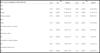
The descriptive statistics results are shown in Table 1. The majority of the sample was male (59.19%) and non-White (64.26%). A total of 22.74% of the sample were full-time students. In the adjusted regression model, male sex (adjusted odds ratio [aOR] 1.75; 95%CI 1.65-1.86), being assaulted by a family member (aOR: 1.74; 95%CI 1.59-1.90), and being assaulted in the last year (aOR: 1.70; 95%CI 1.57-1.85) were all correlated with violent behavior. Feeling safe on the way to school (aOR: 0.82; 95%CI 0.74-0.92) and at school (aOR: 0.82; 95%CI 0.73-0.92), were correlated with a lower chance of violent behavior (Table 2).
| Have you ever engaged in violent behavior? | Yes | No | ||||
|---|---|---|---|---|---|---|
| %wt | SE | 95%CI | %wt | SE | 95%CI | |
| Sex | ||||||
| Male | 59.19 | 0.0067 | 57.86-60.50 | 45.80 | 0.0032 | 47.86-48.98 |
| Female | 40.81 | 0.0067 | 39.50-42.14 | 51.58 | 0.0029 | 51.02-52.14 |
| Full-time student | 22.74 | 0.0056 | 21.66-23.86 | 21.5 | 0.0026 | 20.99-22.01 |
| Race | ||||||
| White | 35.74 | 0.0066 | 34.45-37.05 | 36.29 | 0.0031 | 35.70-36.89 |
| Feel safe on the way to school | ||||||
| No | 16.21 | 0.0050 | 15.24-17.22 | 10.26 | 0.0019 | 9.89-10.65 |
| Feel safe at school | ||||||
| No | 14.42 | 0.0049 | 13.49-15.41 | 8.22 | 0.0018 | 7.88-8.58 |
| Assaulted by a family member | ||||||
| Yes | 24.81 | 0.0058 | 23.69-25.96 | 11.95 | 0.0020 | 11.56-12.35 |
| Assaulted in the last year | ||||||
| Yes | 29.86 | 0.0062 | 28.65-31.09 | 15.52 | 0.0023 | 15.08-15.97 |
%wt = weighted percentage.
| Violent behavior | ||||
|---|---|---|---|---|
| cOR | aOR | 95%CI | p-value | |
| Sex (male) | 1.73 | 1.75 | 1.65-1.86 | < 0.0001 |
| Full-time student (yes) | 1.08 | 1.03 | 0.96-1.10 | 0.402 |
| Race (White) | 0.97 | 0.97 | 0.91-1.04 | 0.496 |
| Feel safe on the way to school | 0.59 | 0.82 | 0.74-0.92 | 0.001 |
| Feel safe at school | 0.53 | 0.82 | 0.73-0.92 | 0.002 |
| Assaulted by a family member | 2.43 | 1.74 | 1.59-1.90 | < 0.0001 |
| Assaulted last year | 2.31 | 1.70 | 1.57-1.85 | < 0.0001 |
aOR = adjusted odds ratio; cOR = crude odds ratio.
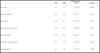
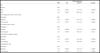
Table 3 shows that the more often an adolescent did not feel safe on the way to school (frequently [OR: 1.16, 95%CI 1.09-1.23], very frequently [OR: 1.29, 95%CI 1.14-1.45]), was assaulted by a family member (frequently [OR: 1.72, 95%CI 1.64-1.80], very frequently [OR: 1.81, 95%CI 1.60-2.06]), and was assaulted in last year (frequently [OR: 1.70, 95%CI 1.63-1.78], very frequently [OR: 1.93, 95%CI 1.71-2.17]), the higher the correlation with violent behavior.
| Violent behavior | ||||
|---|---|---|---|---|
| OR | SE | 95%CI | p-value | |
| Sex | ||||
| Female | Ref | |||
| Male | 1.82 | 0.3074 | 1.76-1.88 | < 0.0001 |
| Age | 1.01 | 0.0078 | 0.99-1.03 | 0.065 |
| Not feeling safe on the way to school | ||||
| Infrequent | Ref | |||
| Frequent | 1.16 | 0.0363 | 1.09-1.23 | < 0.0001 |
| Very frequent | 1.29 | 0.0773 | 1.14-1.45 | < 0.0001 |
| Not feeling safe at school | ||||
| Infrequent | Ref | |||
| Frequent | 1.26 | 0.0430 | 1.18-1.35 | < 0.0001 |
| Very frequent | 1.10 | 0.0750 | 0.96-1.25 | 0.162 |
| Assaulted by a family member | ||||
| Infrequent | Ref | |||
| Frequent | 1.72 | 0.4292 | 1.64-1.80 | < 0.0001 |
| Very frequent | 1.81 | 0.1181 | 1.60-2.06 | < 0.0001 |
| Assaulted last year | ||||
| Infrequent | Ref | |||
| Frequent | 1.70 | 0.3843 | 1.63-1.78 | < 0.0001 |
| Very frequent | 1.93 | 0.1176 | 1.71-2.17 | < 0.0001 |
OR = odds ratio.
DISCUSSION
Some substantive findings emerged from this cross-sectional study of a large nationally representative sample of Brazilian adolescents currently in the 9th grade: male sex, being assaulted by a family member, and being assaulted in the last year were correlated with violent behavior. Feeling safe on the way to and at school were correlated with a lower chance of violent behavior.
According to our results, feeling safe on the way to school and at school reduced the chance of violent behavior, which agrees with the literature. In a sample of 436 sixth-grade African-American students in the U.S. public school system, Farrell & Bruce23 found that those exposed to violence in their community, whether on the way to school or not, were more likely to engage in violent behavior.23 Recent studies have also shown that suffering physical or verbal aggression at school and, consequently, not feeling safe at school is correlated with a greater chance of externalized violent behavior among adolescents.24,25 A systematic review and meta-analysis by Zych et al.25 suggested that involvement in violent behavior, such as bullying victimization, could be a risk factor for violent behavior in other spheres of life, such as romantic relationships.
Some studies have found that experiencing verbal or physical aggression in the family environment (family or domestic violence) affects the formation of adolescent personality and behavior, including increased violent behavior.20,21 Another study found that adolescent exposure to domestic violence is a significant social problem, making them more likely to replicate violent behavior outside the family environment.21 These findings align with our conclusions that being assaulted by a family member can increase the chance of violent behavior among adolescents.
Adolescence is a unique period involving the transition from childhood to adulthood and personality formation. Stressful situations, such as violence, whether at school, at home, or in the community, impact the safety and physical health of adolescents and increase the risk of psychopathology26 and violent behavior.21,25 Furthermore, experiencing violence changes behavior, shapes personality, and is a risk factor for mental disorders. This association might be mediated by epigenetic modifications that affect gene expression, such as DNA methylation. For example, Serpeloni et al.26 found that experiencing violent events was significantly associated with decreased CpG methylation in two protein-coding genes: brain-derived neurotrophic factor and caseinolytic mitochondrial matrix peptidase chaperone subunit. Another study found that youth residing in high-violence neighborhoods show mobilization of classical monocytes, which suggests a pro-inflammatory mechanism through which contextual stressors, such as neighborhood violence, may compromise health.27 These findings show that experiencing violence changes behavior, shapes personality, and increases pro-inflammatory mechanisms that harm the mental and physical health of adolescents. Therefore, violence is a worldwide public health problem that deserves attention.
This study has some limitations that should be mentioned. Although careful sample selection procedures were used, our findings should be extrapolated with caution, since only adolescents currently enrolled in school were included. In addition, since we relied on a cross-sectional survey, it is impossible to establish causation between feeling safe, being assaulted, and violent behavior. Furthermore, to measure violent behavior, the 2015 PeNSE questionnaire did not assess violence reported by the schools or whether the adolescents had been questioned or arrested by the police, i.e., our findings were based on self-reported data. Future studies should test the associations found here in a longitudinal research design. Another limitation is that sensitive topics were addressed here, so the results may be underestimated.
Implications and contribution
Our results support the idea that adolescents who experience school, community, family, or domestic violence, specifically, being assaulted by a family member, being assaulted in the last year, or not feeling safe on the way to or at school, are more involved in violent behavior. This finding has significant implications for pediatricians, child psychiatrists and psychologists, other health care professionals, school professionals, and other professionals involved in adolescent health. School professionals must be ready to identify adolescents with violent behavior due to the potential consequences for their mental and physical health.28
After clearly identifying adolescents who have been exposed to violence, Mullender29 suggests that subsequent responses can occur along a continuum of primary, secondary, or tertiary interventions. This could involve both challenging and supportive interventions that are short- or long-term, individual or group based, formally or more informally organized, through the immediate or extended family or the community.30 The nature of this support will be influenced by the adolescent's immediate needs; resilient individuals have a wide range of coping skills and support and, thus, may not require direct intervention. Instead, emphasis can be placed on supporting the non-abusing parent or on attachment relationships.31 However, any intervention strategy should be individually tailored to the child's family context, focused on stabilizing the home environment and minimizing disruption32 while recognizing and enhancing informal support.33 The timing of interventions is crucial, with research suggesting that quick and intensive intervention should be provided when a child needs help.34 Moreover, certain interventions can reduce the impact of violence on adolescent behavior and mental and physical health.35 In general, interventions should strengthen the cognitive and/or behavioral functioning of children, youth, and adults.35
This study extends the body of literature on violent behavior among adolescents by demonstrating that experiencing school, domestic, family, or community violence can increase violent behavior among adolescents. Adolescents who have been exposed to violence and, thus, are at greater risk of violent behavior must be identified to provide intervention and support, improving their mental and physical health and reducing damage to their personality and behavior. It is important to recognize adolescents with violent behavior and realize that their behavior may stem from a violent environment. It is essential to offer psychological support and investigate the climate of a violent adolescent's home, school, and community environments.
 PDF
 Print
 Send this article by email
 How to cite this article
 Submit a comment
 Mendeley
 Pocket
 Share on Facebook
 Share on Twitter



