



ABSTRACT:
OBJECTIVE: To evaluate the impact of defense mechanisms at baseline on depressive symptoms after
brief psychotherapies and after 6-months of follow-up among depressed patients with
and without cluster B personality disorders (PDs).
METHODS: This quasi-experimental study nested within a randomized clinical trial included a
clinical sample of adults (18-60 years) diagnosed with major depressive disorder using
the Mini-International Neuropsychiatric Interview. The Millon Clinical Multiaxial
Inventory-III was applied to assess PD, the Defense Style Questionnaire 40 was used
to analyze defense mechanisms, and the Beck Depression Inventory was used to measure
the severity of depressive symptoms. Adjusted analysis was performed by linear regression.
RESULTS: The final sample consisted of 177 patients diagnosed with major depressive disorder,
of whom 39.5% had cluster B PDs. Immature defenses at baseline significantly predicted
the persistence of depressive symptoms at post-intervention and at 6-months of follow-up
only in patients with PDs.
CONCLUSION: In depressed patients with cluster B PDs, immature defenses predicted a poor response
to brief therapies. The assessment of immature defenses at baseline can help identify
patients at greater risk of poor therapeutic results and enable more appropriate treatment
choices.
Keywords: Major depressive disorder; depressive symptoms; personality disorder; defense mechanisms.
FIGURES
| Received: August 30 2021; Accepted: January 18 2022 |
INTRODUCTION
Major depressive disorder (MDD), commonly known as depression, is among the main causes of incapacitation worldwide, affecting approximately 265 million people.1 A frequent comorbidity among depressed patients is personality disorder (PD), present in approximately 11 to 40% of this population according to some studies.2-7 PD is characterized as a maladaptive pattern of personality functioning, which causes suffering and significant losses for the individual.8 The high prevalence of this comorbidity is a major public health problem, since it affects treatment outcomes for depression by doubling the risk of poor therapeutic response9 and suicide attempts and is associated with high mortality.10-12
PDs can be grouped into three clusters (A, B, and C), according to similar characteristics.13 Cluster B, whose central characteristics include being more dramatic, emotional, or erratic, includes antisocial, histrionic, narcissistic, and borderline PDs.8 Previous studies have indicated that depressed patients with cluster B PDs respond differently to depression treatment, which highlights the need to assess this group of disorders separately.14,15 We chose to investigate patients with cluster B PDs because these disorders are associated with a poorer therapeutic response, including 71% lower remission of depressive symptoms after treatment.16 In addition, the life expectancy of these patients is 20 years shorter than the general population,17,18 since cluster B PDs are associated with high rates of self-harm, suicide, and emergency hospitalizations,12 leading to overuse of healthcare services6 and greater difficulties in clinical management.11,12
One of the main components of the personality structure is the defense mechanism, which reveals psychodynamic aspects of the personality .19 Defenses are unconscious mechanisms that protect the individual from excessive anxiety due to internal or external threats, preserving the maximum psychic balance.20 Defenses can be classified as mature, neurotic, or immature.21 Mature defenses are defined by a greater ability to adapt to reality, allowing the individual to deal with threatening feelings without distorting reality.19 Neurotic defenses involve an excess of anxiety and less control of the situation. Immature defenses suppress painful affections from consciousness through severe changes to the self and external reality.22
Previous studies have reported that individuals who make greater use of immature defenses tend to exhibit more pathological personality traits,23 worsening depressive symptoms,24,25 an increased risk of suicide attempts,26 and impaired interpersonal relationships,27,28 in addition to lower treatment adherence 22,29 and poor therapeutic response.30 Although there is evidence that the coexistence of MDD with cluster B PDs is associated with a worse outcome in the treatment of depression, the effect of defense mechanisms underlying this worse therapeutic response remains poorly understood.15 A better understanding of the impact of defenses on the therapeutic response of individuals with cluster B PDs may facilitate baseline assessment and contribute to more adequate clinical management. Therefore, the objective of this study was to evaluate, in depressed patients with and without cluster B PDs, the impact of baseline defense mechanisms on depressive symptoms at the end of brief psychotherapies and after 6 months of follow-up.
METHODS
Study design and participants
This quasi-experimental study nested within a randomized clinical trial included adults (aged 18-60 years) diagnosed with MDD according to the Mini-International Neuropsychiatric Interview Plus, a structured clinical interview for the DSM-IV.13 From July 2012 to June 2015, the participants were recruited through advertisements in local community health centers and psychosocial assistance centers. This convenience sample included participants who voluntarily sought out the clinic after learning about the study in the media or who were referred by mental health professionals. Patients currently in psychiatric or psychological treatment, at risk of suicide, or who met the criteria for psychoactive substance abuse were excluded from the study.
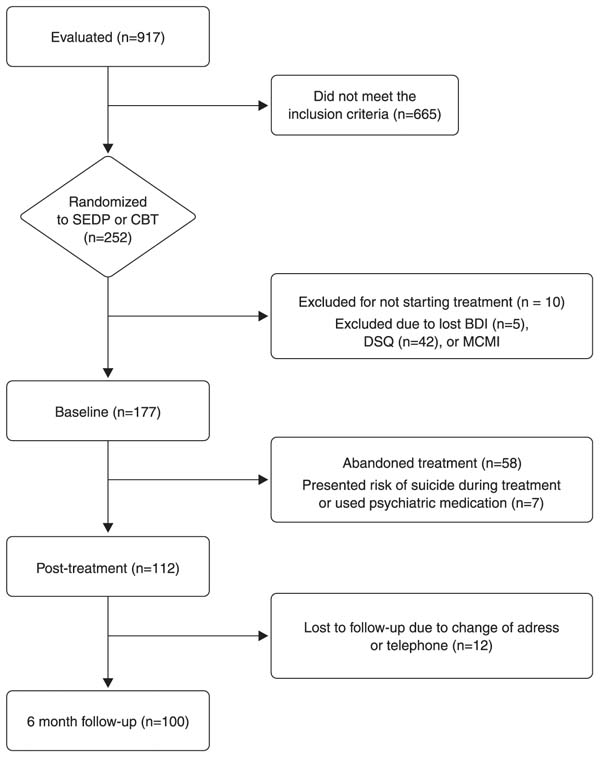
Of the 917 individuals assessed for inclusion, 665 did not meet the inclusion criteria. Therefore, the final sample consisted of 252 individuals who were randomized between two models of brief psychotherapy: cognitive behavioral therapy or short-term psychodynamic psychotherapy.31 Cognitive behavioral therapy proposes that distorted or dysfunctional thinking, which influences mood and behavior, is common to all psychological disorders.32 Short-term psychodynamic psychotherapy followed a protocol based on Luborsky's theory, providing time-limited supportive expressive dynamic psychotherapy.31 This model analyzes the patient's central pattern of interpersonal relationships. Both of these techniques are supportive (creating a positive, helpful, and empathic relationship between the therapist and the patient) and expressive (helping the patient express, understand, and change problems).
A researcher uninvolved in the assessment process and the psychotherapeutic interventions performed the randomization, determining which psychotherapy model each participant would be allocated to through a raffle. Thus, the team responsible for the baseline, post-intervention, and 6-month follow-up assessments was blind to the patient's intervention model. Both interventions included seven weekly 1-hour sessions at the Hospital Universitário São Francisco de Paula, Pelotas, Brazil. Clinically experienced psychologists conducted the psychotherapy sessions. The therapists received 2 months of training in weekly 2-hour meetings, after which they were supervised by two professionals with extensive experience in diagnosing mental disorders.
A previous study using the same clinical trial data determined that, according to biochemical markers, both cognitive behavioral therapy and short-term psychodynamic psychotherapy effectively treat depressive symptoms, regardless of the presence of PD.33 Further evidence suggests that both models of psychotherapy are efficacious for MDD symptoms.34,35 It should also be pointed out that, according to our linear regression analysis (described below), the psychotherapy model was not a confounding factor in determining the effect of defenses on depressive symptoms. Therefore, we grouped the therapy models to increase the statistical power of the variables and the reliability of the data.
A total of 75 individuals were excluded from the study: 10 did not begin treatment, five did not complete the Beck Depression Inventory-II (BDI-II), 42 did not complete the Defense Style Questionnaire (DSQ), and 18 did not complete the Millon Clinical Multiaxial Inventory-III (MCMI-III). A total of 177 participants began treatment, but 58 abandoned it and seven others either presented a risk of suicide during treatment or took psychiatric medications. Thus, 112 participants concluded psychotherapy. A further 12 participants were lost to follow-up due to change of address or telephone. Thus, 100 patients were followed up 6 months after treatment, as shown in Figure 1.
Measures
The socioeconomic, mood disorder, and PD data were collected at the baseline assessment. We also analyzed the defense mechanism and depressive symptom scores at baseline, post-treatment, and after 6 months of follow-up. The participants were interviewed to collect sociodemographic data (sex, age, education, and race). Economic status was assessed using the Brazilian National Economic Index (lndice Nacional de Preços ao Consumidor), which is based on principal component analysis and was used in the 2000 Brazilian census (Censo Demográfico 2000).36 This instrument determines a socioeconomic classes based on ownership of certain consumer products and the education level of the head of the household, classifying individuals as A, B, C, D, or E, with A representing the highest and E the lowest level.
MDD was evaluated using the MINI-Plus. According to international criteria, this instrument, a structural diagnostic interview designed for clinical practice,37 is an appropriate alternative for patient evaluation in both clinical and epidemiological studies.37 The BDI-II , which was used to detect depressive symptoms,38 consists of 21 items that assess the symptom severity in clinical and non-clinical samples. Its cutoff points are: = 27 for mild and moderate symptoms and = 28 for severe symptoms: the higher the score, the greater the depressive symptomatology. This instrument has good validity and reliability coefficients.38 The original instrument demonstrated excellent internal consistency, ranging from 0.91 to 0.93,39 as did the Brazilian version (a = 0.93).38 Many researchers have used the BDI-II to evaluate samples of outpatients.40-42
The MCMI-III was used to assess PDs43 according to DSM-IV criteria.8 It consists of 175 statements that the respondent rates as "true" or "false". MCMI-III scores range from 0 to 115, with = 85 indicating the presence of a PD. The only PD included in this study was cluster B PDs (antisocial, histrionic, narcissistic, and borderline). In the original version, the scale's internal consistency ranged from 0.66 (compulsive scale) to 0.99 (major depressive disorders).43 In the Brazilian version of the MCMI-III, the Cronbach's alpha coefficients ranged from 0.54 to 0.87.44 This instrument has been used in other studies evaluating depression outpatients.45,46
The DSQ, published by Bond et al. in 198347, was used to assess defense mechanisms, seeking to identify the characteristic style respondents use to deal with conflict. In 1993 Andrews et al. restructured the instrument into 40 questions based on the defenses described in the DSM-III.48,49 Four of the defenses are related to the mature factor (sublimation, humor, anticipation, and suppression), four to the neurotic factor (undoing, pseudo-altruism, idealization, and reaction formation), and twelve to the immature factor (projection, passive-aggression, acting-out, isolation, devaluation, "autistic fantasy," denial, displacement, dissociation, splitting, rationalization, and somatization). Each item is responded on a nine-point Likert scale ranging from 1 (strongly disagree) to 9 (strongly agree): the higher the score, the more predominant the defense mechanism. The scores for each factor are calculated using by the mean scores of the defenses associated with that factor. The Brazilian version of the questionnaire has demonstrated good reliability,50 with Cronbach's alpha coefficients of 0.68 for the mature style, 0.71 for the neurotic style, and 0.77 for the immature style. Test-retest reliability analysis determined coefficients of 0.68 for the mature style, 0.71 for the neurotic style, and 0.81 for the immature style. For the present study, reliability was estimated in terms of internal consistency, with Cronbach's alpha results of 0.58 for the mature style, 0.84 for the immature style, and 0.69 for the neurotic style. Other studies with samples of depressed patients have also used this instrument.51-53
Statistical analysis
After the assessment instruments were applied at baseline, post-intervention, and after 6 months of follow-up, the data were double-entered into Epi-Info 6.04d software, and were subsequently checked for consistency using the VALIDATE command. Statistical analysis was performed using SPSS 22.0. The chi-square test and Student's t-test were used to evaluate whether the sociodemographic and clinical characteristics of the sample were homogeneously distributed between the intervention models.
Hierarchical linear regression analyses were used to evaluate the association between depressive symptoms and immature defense mechanisms. The following covariates were sequentially entered in each analysis: sex, age, depressive symptoms at baseline, and intervention model. Variables were required not to exceed variance inflation factor values > 10. Outliers were also explored by applying casewise diagnostics (> 3 standard deviations [SD] above or below the mean). We also controlled all significant autocorrelation terms in the initial regression models and examined the Durbin-Watson statistic in the final adjusted models to determine the non-significance of first-order autocorrelation of the regression residuals. Statistical significance was set at p < 0.05.
Ethics statement
The project was approved by the Universidade Católica de Pelotas research ethics committee (#46/2012). All patients were informed about the study objectives by the researchers and provided written informed consent.
RESULTS
Baseline data
The sample consisted of 177 patients diagnosed with MDD. Of these, 77 (39.5%) had cluster B PDs, while the other 100 (51.3%) did not. The mean age was 35.66±11.58 years, the majority were female (81.9%), White (81.4%), and had nine or more years of education (74.6 %). The majority belonged to socioeconomic classes C, D, or E (54.8%) (Table 1).
| Variable | Whole sample | With cluster B PDs | Without cluster B PDs | p-value |
|---|---|---|---|---|
| Age (years),┼ mean (SD) | 35.66±11.58 | 33.78±10.57 | 37.11±12.15 | 0.058 |
| Sex╬ | 0.449 | |||
| Female | 145 (81.9) | 65 (84.4) | 80 (80.0) | |
| Male | 32 (18.1) | 12 (15.6) | 20 (20.0) | |
| Race╬ | 0.890 | |||
| White | 144 (81.4) | 63 (81.8) | 81 (81.0) | |
| Non-White | 33 (18.6) | 14 (18.2) | 19 (19.0) | |
| Education╬ (years) | 0.883 | |||
| = 8 | 45 (25.4) | 20 (26.0) | 25 (25.0) | |
| = 9 | 132 (74.6) | 57 (74.0) | 75 (75.0) | |
| Socioeconomic status╬ § | 0.952 | |||
| A or B | 80 (45.2) | 35 (45.5) | 45 (45.0) | |
| C, D, or E | 97 (54.8) | 42 (54.5) | 55 (55.0) | |
| BDI-II,┼ mean (SD) | 32.16±10.56 | 33.72±11.40 | 30.97±9.77 | 0.085 |
| DSQ,┼ mean (SD) | ||||
| Matures | 4.52±1.28 | 4.53±1.38 | 4.51±1.20 | 0.916 |
| Neurotics | 4.64±1.19 | 4.85±1.11 | 4.48±1.23 | 0.042 |
| Immature | 4.30±0.94 | 4.53±0.92 | 4.11±0.93 | 0.003 |
Data presented as n (%), unless otherwise specified.
BDI-II = Beck Depression Inventory-II; DSQ = Defense Style Questionnaire; PDs = personality disorders; SD = standard deviation.
┼ Student's t-test.
╬ Chi-square test.
§ A-E refer to Brazilian National Economic Index classifications used for census purposes, with A representing the highest and E the lowest income classes.
There was no significant difference between the intervention models regarding sociodemographic variables, depressive symptoms, or DSQ subscale (p > 0.05). Comparisons at baseline were performed between participants who dropped out and those who continued treatment. No significant differences were found in depressive symptoms, t(75) = 0.772; p = 0.443; DSQ-mature, t(75) = -1.47; p = 0.145; DSQ-neurotic t(75) = 0.24; p = 0.811; and DSQ-immature defense styles t(75) = -0.762; p = 0.449.
Considering the total sample, the mean severity of depressive symptoms was 32.16±10.56, with 11.3% (n=20) of the patients presenting mild depression, 28.2% (n=50) moderate depression, and 60.5% (n=107) severe depression. Regarding defensive styles at baseline, the mean scores were 4.52±1.28 points for mature defenses, 4.64±1.19 for neurotic defenses, and 4.30±0.94 points for immature defenses.
The mean neurotic defense scores among depressed patients with and without cluster B PDs were 4.85±1.11 and 4.48±1.23 points, respectively, which was statistically significant (p = 0.042). Likewise, the mean immature defense score at baseline among patients with and without cluster B PDs were 4.53±0.92 and 4.11±0.93 points, respectively, which was also a significant difference (p = 0.003) (Table 1).
Post-intervention and follow-up data
In the overall sample, pairwise comparison with Bonferroni correction showed significant improvement in depressive symptoms between baseline and post-intervention (mean diff = 12.72; standard error [SE] = 1.79; p < 0.001) and between baseline and the 6-month follow-up assessment (mean diff = 14.80; SE = 1.93; p < 0.001). However, there was no significant difference in depressive symptoms between the post-intervention and the 6-month follow-up assessment (p = 0.811) (data not shown).
There was a significant improvement in DSQ-mature defense style from baseline to post-intervention (mean diff = -0.587; SE = 0.19; p < 0.0013), and from baseline to the 6-month follow-up assessment (mean diff = -0.86; SE = 0.233; p = 0.003) in the overall sample. However, it did not differ significantly between the post-intervention and the 6-month follow-up (p = 0.611) assessments. Moreover, the DSQ-neurotic defense style did not differ significantly between the baseline, post-intervention, and 6-month follow-up (p = 1.000) assessments, nor between the post-intervention and 6-month follow-up (p = 0.928) assessments. Similarly, the DSQ-immature defense style did not differ significantly between the baseline, post-intervention, and 6-month follow-up (p > 0.05) assessments, nor between the post-intervention and 6-month follow-up (p = 1.000) assessments (data not shown).
Table 2 shows the correlation between defense style scores at baseline and depressive symptoms at the post-intervention and 6-month follow-up assessments. Regarding depressed patients without cluster B PDs, no defense style factor showed statistically significant correlation with persistent depressive symptoms after the intervention. However, in depressed patients with cluster B PDs, significant positive correlations were found between immature defenses and persistent depressive symptoms at both the post-intervention (r = 0.505; p < 0.001) and 6-month follow-up assessments (r = 0.54; p < 0.001) (Table 2).
| Without cluster B PDs | With cluster B PDs | |||||||
|---|---|---|---|---|---|---|---|---|
| Post-intervention | 6-month follow-up | Post-intervention | 6-month follow-up | |||||
| DSQ | r | p-value | r | p-value | r | p-value | r | p-value |
| DSQ mature | -0.028 | 0.834 | -0.300 | 0.612 | -0.136 | 0.391 | -0.167 | 0.253 |
| DSQ neurotic | -0.186 | 0.154 | -0.168 | 0.168 | 0.201 | 0.202 | 0.008 | 0.956 |
| DSQ immature | 0.073 | 0.580 | 0.016 | 0.898 | 0.505 | < 0.001 | 0.54 | < 0.001 |
DSQ = Defense Style Questionnaire; PDs = personality disorders.
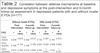
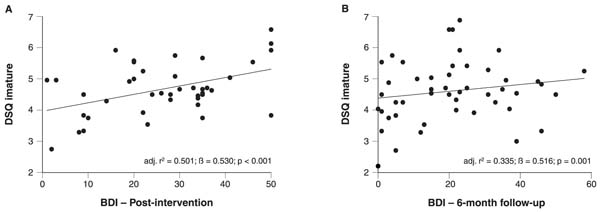
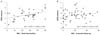
Figure 2 shows the linear regression between immature defense mechanisms at baseline and depressive symptoms after psychotherapy. At post-intervention, after adjusting for age (ß = 0.106; p = 0.472), sex (ß = 0.065; p = 0.649), treatment conditions (ß = -0.041; p = 0.777), and depressive symptoms at baseline (ß = 0.588; p < 0.001), the DSQ-immature defense style at baseline significantly predicted persistent depressive symptoms (adj. r2 = 0.501; ß = 0.530; p < 0.001) only in patients with PD. Similarly, at the 6-month follow-up assessment, after adjusting for age (ß = -0.010; p = 0.940), sex (ß = 0.199; p = 0.115), treatment conditions (ß = 0.060; p = 0.635), and depressive symptoms at baseline (ß = 0.407; p < 0.001), having a DSQ-immature defense style at baseline also significantly predicted persistent depressive symptoms (adj. r2 = 0.335; ß = 0.516; p < 0.001) only in patients with PD.
DISCUSSION
This study sought to expand knowledge about the impact of immature defenses on depression after brief psychotherapies in patients with cluster B PDs. The hypothesis that immature defenses at baseline would be associated with persistent depressive symptoms only in depressed patients with PDs was confirmed, both at the post-intervention and 6-month follow-up assessments, even after adjusting for sociodemographic and clinical characteristics and type of psychotherapy.
Two previous studies that evaluated defenses at baseline as predictors of therapeutic outcome in patients with comorbid PD had conflicting results.30,54 Unlike our study, Hersoug et al.54 found that immature defenses were not associated with poor therapeutic results in patients with comorbid PD. It is assumed that this result was due both to the heterogeneity and limited size of the sample (n=43), as well as the way the defense mechanisms were analyzed, since mature, neurotic, and immature defenses were grouped together without allowing observation of the real impact of immature defenses on treatment response. However, the results of Laaksonen et al.30 corroborated our findings in that immature defenses at baseline predicted poor response to brief psychotherapy in patients with comorbid PD.
We also found that depressed patients with cluster B PDs used immature defenses significantly more than depressed patients without cluster B PDs. This corroborates a study that observed different defense profiles in depressed patients with comorbidities than in those with depression alone.55 Just as in comorbidities, where the disorders coexist and worsen each other,56-58 the immature defenses associated with each comorbid psychopathology can overlap, causing even more suffering and harm to the patient. Cluster B PDs patients make massive use of image-distorting defenses, such as splitting, omnipotence, denial, or externalizing defenses, such as excessive acting out,59 while patients who have depression use more internalizing defenses, such as passive aggression, isolation, somatization,60 and projection.61 The coexistence of these defenses may be associated with significantly greater use of immature defenses observed in depressed patients with cluster B PDs in our study, compared to those without PDs.
Thus, the results showed that one of the main factors responsible for the worst therapeutic response of patients with cluster B PDs in our study was this higher predominance of immature defenses, corroborating the initial hypothesis. Several characteristics of the predominant use of primitive defenses may contribute to this worse outcome in brief therapies, considering that immature defenses are related to greater experience distortion with the therapist, greater difficulty in understanding interventions, impairments in therapeutic alliance,29,30 greater impulsivity, and risk behaviors,12,19,26 leading to worse adherence to treatment.62,63 In addition, studies show that patients who make predominant use of immature defenses tend to be more resistant to changes,19,25,54 demonstrating that long-term therapy can be more effective than short-term therapies.30 Long-term therapies allow greater adaptive changes in defense mechanisms, which are necessary to achieve improvements in pathological aspects of personality,25,64 and therefore, can bring more benefits to patients with cluster B PDs.64
Furthermore, it is noteworthy that previous research has sought to explain other reasons for the lower remission of depressive symptoms in patients with cluster B. According to Jacob et al.,65 cluster B patients have genetic variants that play a significant role in altering the results of mood disorders. These authors investigated an allelic variation of monoamine oxidase A (MAOA) activity, which was associated with the presence of cluster B PDs.65 These biological factors suggest an important difference in how cluster B patients physiologically process stressors and respond to interventions, which may explain the worst therapeutic outcomes of these patients.57 Another explanation is that the childhood traumatic experiences that these patients usually suffer19,66 can lead to impairments in therapeutic alliance and therefore, on the treatment outcomes.19,67,68 Complementing as previous findings, other studies suggest that cluster B patients exhibit interpersonal chronic stress,69 which in turn has been associated with greater severity of depressive symptoms.69 Thus, the present study reveals a new possibility: the immature defenses of depressed patients with cluster B PDs as predictors of low reduction of depressive symptoms.
Regarding the depressed patients without PD, the studies that have evaluated the defense mechanisms as predictors of therapeutic response70,71 showed results that corroborate those obtained in our study. Interestingly, in the studies by Kronström & Salminen,70 which included patients with mild MDD, in those by Van Henricus & Dekker,71 with moderate MDD, as well as in our study, which treated patients with severe MDD, the immature defenses were not predictors of worse therapeutic outcomes in patients with MDD. One explanation for this finding is that a lower use of immature defenses observed in depressed patients without PD may be more flexible to the adaptive changes that occur during treatment,25,72 causing a decrease in the impact of immature defenses at baseline and enabling better therapeutic response. This finding may be one of the reasons that clarify the best therapeutic outcome of depressed patients without PD compared to those with PD, as observed in a meta-analysis.9
It is noteworthy that in studies that evaluated defenses as predictors of therapeutic outcomes,30,54,70,71 groups of depressed patients with PD were not evaluated compared to groups of depressed individuals without PD, especially the cluster B was not evaluated separately. It is known that there is an uneven effect of the defenses in each psychopathology,73 and therefore it is necessary to evaluate them separately in each group of disorders. Nowadays, many disorders are defined according to their defenses.63 Thus, the present study was the first to analyze immature defenses as predictors of therapeutic outcome in a group of depressed patients with cluster B PDs, compared to depressed patients without cluster B PDs.
Some limitations should be considered in understanding the results of the present study. First, the impact of the immature defenses of patients with cluster B PDs on the outcome of long-term therapies has not been analyzed. Therefore, it is not known to what extent the immature defenses may also be considered predictors of outcomes in long-term therapies with these patients. Another limitation is that the convenience sample in our study, which did not allow generalizing of these results to patients without MDD. However, this feature can be considered a strong point in our findings, since it is valid for patients with MDD, as well as for those with comorbid PD. Another strong point is related to the methodology, as it is nested within randomized clinical trial. In addition, the assessments have been made by professionals trained for this purpose, giving high validity to the diagnostic process.
In conclusion, some points should be considered: first, a significantly higher predominance of immature defenses was observed in depressed patients with cluster B PDs compared to depressed patients without cluster B PDs. Second, in patients diagnosed with depression without cluster B PDs, the immature defenses were not predictors of worse therapeutic outcomes. Finally, only in depressed patients with cluster B PDs the immature defenses were significant predictors of worse therapeutic response in terms of persistence of depressive symptoms at post-intervention and 6-month follow-up. These findings suggest the importance of assessing immature defenses at baseline to assist in the identification of patients who are at greater risk of having a worse therapeutic outcome, allowing for the choice of more appropriate interventions, and avoiding ineffective treatments. Thus, further studies are needed to corroborate our findings on the negative impact of immature defenses of depressed patients with cluster B PDs on the response to brief therapies. Other studies that analyze the effect of the immature defenses of these patients with cluster B PDs on long-term therapies may also be relevant.
Disclosure
The authors report no conflicts of interest.
 PDF
 Print
 Send this article by email
 How to cite this article
 Submit a comment
 Mendeley
 Pocket
 Share on Facebook
 Share on Twitter



