OBJECTIVE: The present meta-analysis was conducted to determine the diagnostic accuracy of the
bipolarity index (BI) and Rapid Mode Screener (RMS) as compared with the Bipolar Spectrum
Diagnostic Scale (BSDS), the Hypomania Checklist (HCL-32), and the Mood Disorder Questionnaire
(MDQ) in people with bipolar disorder (BD). METHODS: We systematically searched five databases using standard search terms, and relevant
articles published between May 1990 and November 30, 2021 were collected and reviewed. RESULTS: Ninety-three original studies were included (n=62,291). At the recommended cutoffs
for the BI, HCL-32, BSDS, MDQ, and RMS, the pooled sensitivities were 0.82, 0.75,
0.71, 0.71, and 0.78, respectively, while the corresponding pooled specificities were
0.73, 0.63, 0.73, 0.77, and 0.72, respectively. However, there was evidence that the
accuracy of the BI was superior to that of the other tests, with a relative diagnostic
odds ratio (RDOR) of 1.22 (0.98-1.52, p < 0.0001). The RMS was significantly more
accurate than the other tests, with an RDOR (95%CI) of 0.79 (0.67-0.92, p < 0.0001)
for the detection of BD type I (BD-I). However, there was evidence that the accuracy
of the MDQ was superior to that of the other tests, with an RDOR of 1.93 (0.89-2.79,
p = 0.0019), for the detection of BD type II (BD-II). CONCLUSION: The psychometric properties of two new instruments, the BI and RMS, in people with
BD were consistent with considerably higher diagnostic accuracy than the HCL-32, BSDS,
and MDQ. However, a positive screening should be confirmed by a clinical diagnostic
evaluation for BD.
Received: November 1 2021; Accepted: December 27 2021
INTRODUCTION
The mood disorders encompass a large group of psychiatric diseases, of which major
depressive disorders, bipolar disorder (BD), and cyclothymia can be detected on the
basis of DSM-IV diagnostic criteria.1 BDs are often undiagnosed and, thus, often go untreated2; delays in diagnosis will delay treatment accordingly. The lifetime prevalence range
for BD is 1.4 to 6.4% globally.3-5 BD is subdivided into type I (BD-I) and type II (BD-II). According to the DSM-5 criteria,
the lifetime prevalence of BD-I is about 1% and that of BD-II is 1.3% in the general
population.6-8
According to earlier reports, some individuals who met criteria for BD were never
diagnosed with it, but in comparison, more people were misdiagnosed with BD, with
correct diagnosis often being delayed by about 10 years.9 Accurate and concise tools have since largely improved the diagnosis of BD, including
the Mood Disorders Questionnaire (MDQ), a 13-item checklist based on DSM-IV criteria
and clinical experience10; the Hypomania Checklist-32 (HCL-32), a globally validated self-applied questionnaire
to facilitate the diagnosis of BD-II11; and the Bipolar Spectrum Diagnostic Scale (BSDS), a self-report questionnaire for
BD.12
The estimated sensitivity and specificity of the MDQ are in the range of 73-76% and
86-90%, respectively.13-16 The HCL-32 was reported to have 48-66% and 59-71% sensitivity and specificity respectively
for screening BD.17,18 Thus, both the MDQ and HCL-32 tools have relatively acceptable sensitivity and specificity
for BD screening. At lower prevalence or low clinical pretest probability, high negative
predictive values were confirmed, indicating that available instruments effectively
rule out BD; however, the positive predictive value decreases significantly, leading
to a greater number of "false positives."19 Recently, two new instruments for the diagnosis of BD have been introduced: the Bipolarity
Index (BI)20 and the Rapid Mood Screener (RMS).21 BI, a diagnostic aid, is a clinician-rated tool that focuses on five clinical domains,
including signs and symptoms, age at onset, disease course, treatment response, and
family history. Considering the clinical domains covered by BI, this diagnostic method
may be more conducive than the MDQ, BSDS, and HC-32, of which previous studies reported
a specificity of 100% in the differential diagnosis of BD.22
Various studies have shown that about 40-50% of patients with BD are undiagnosed at
the time of referral and are often treated as having monopolar depression.23,24 Since a large number of individuals with BD suffer substantial complications and
consequences due to this lack of proper diagnosis, a diagnostic tool with appropriate
psychometric properties is still needed. The present meta-analysis was conducted to
determine the diagnostic accuracy of psychometric properties of the BI and RMS as
compared to the BSDS, the HCL-32, and the MDQ in people with BD.
METHODS
This systematic review with meta-analysis was conducted according to the Meta-analyses
of Observational Studies in Epidemiology,25 Preferred Reporting Items for Systematic reviews and Meta-Analyses,26 and Synthesizing Evidence from Diagnostic Accuracy Tests27 guidelines.
Search strategy
We systematically searched databases including Scopus, ISI Web of Sciences (WOS),
PubMed/MEDLINE, EMBASE, and PsycINFO using the standard search terms "Bipolarity index"[Text]
AND ("Bipolar Disorder" OR "Bipolar and Related Disorders" OR "Mood Disorders" OR
"Mania") OR ("Depression" OR "Depressive Disorder") AND ("Hypomania Checklist" OR
"HCL" OR "Hypomania/Mania Symptoms Checklist" OR "Hypomania Symptoms Checklist").
Relevant articles published between May 1990 and November 30, 2021 were collected
and reviewed.
Inclusion and exclusion criteria
Prospective, national, population-based studies considering individuals with BD and
using the BI tool for diagnosis were included. Articles that had incomplete or unidentified
data, various designs (conference abstracts, reviews, case reports, letters), and
duplicate publications were excluded.
Study selections
After exclusion of duplicates, two authors (MS and FR) independently screened titles
and abstracts of potential papers considering predefined inclusion and exclusion criteria.
Any disagreements were resolved by either reevaluation of the source article or consulting
a third author (ME).
Data extraction
Information, including authors' names, year of publication, country, age, sample size,
and study design were extracted for analysis.
Methodological quality assessment
Two reviewers (MS and FR) assessed the methodological quality of the included studies
using the Newcastle-Ottawa Scale and the Quality Assessment of Diagnostic Accuracy
Studies tools. Disagreements were resolved by either discussion or reevaluation of
the original article with a third reviewer (ME).
Statistical analysis
We retrieved odds ratios (ORs) with 95% confidence intervals (95%CIs) from the eligible
studies, and calculated summary ORs with the random-effects or fixed-effect models,
depending on the level of heterogeneity, to evaluate the diagnostic utility of the
BI in the screening and diagnosis of individuals with BD.28 We then measured heterogeneity across studies using Cochran's Q statistic and the
I2 test. When the I2 values exceeded 50%, indicating high heterogeneity, sensitivity and subgroup analyses
were performed to discover the source of the heterogeneity. A hierarchical summary
receiver-operating characteristic (HSROC) curve and a summary receiver operating characteristic
(SROC) curve were constructed. All experiments were viewed with the HSROC curve as
a circle and plotted. The area under the curve (AUC) was computed to determine the
diagnostic precision. An AUC approaching 1.0 would mean outstanding results, while
one approaching 0.5 would denote poor performance. Among numerous subgroups, the 95%CI
of the AUC was compared. When the sensitivity and specificity were directly unavailable,
they were calculated according to the following formulas: sensitivity = TP / (TP +
FN) and specificity = TN / (FP + TN). Publication bias was measured using Deeks' regression
test.29 The analysis was conducted using version 1.4 of the Meta-DiSc software30 and RevMan 5.3.
Ethics statement
As this systematic review with meta-analysis relied exclusively on previously published
studies, ethics committee approval and informed consent were waived.
RESULTS
Search results
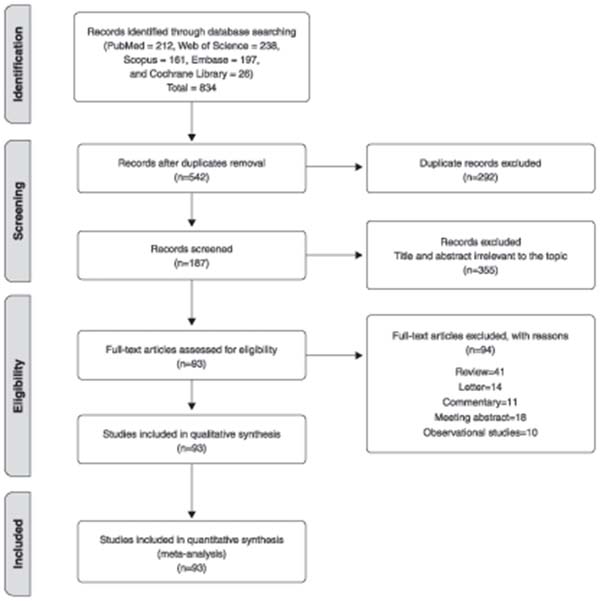
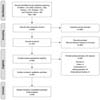
Overall, 834 records were found through the initial search. Of 679 articles, 292 duplicates
were found and 357 were omitted due to irrelevant titles and abstracts. The remaining
185 entered full-text screening; of these, 94 were excluded due to predefined criteria
(Figure 1). Ultimately, 93 studies (n=62,291) were included (Table S1, available as online-only supplementary material).11-16,20,21-24,31-100
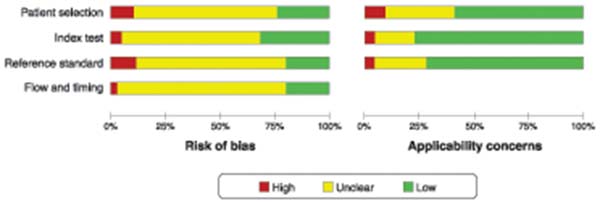
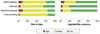
The methodological quality of the included studies is shown in Figure S1, available as online-only supplementary material. A total of nine studies were at
high risk of bias in the participant selection domain.13,24,31,40,41,51,63,64,93 Also nine studies were at high risk of bias in the reference standard domain.32,39,42,45,46,52,77,86,98 Moreover, a total of two studies were at high risk of bias in the flow and timing
domain.42,107 Three studies were at high risk of bias for all index tests other than one threshold32,42,77 (Figure 2).
Figure 2. Summary risk of bias and applicability concerns: review authors' judgments regarding
each domain of each included study.
Figure 2. Summary risk of bias and applicability concerns: review authors' judgments
regarding each domain of each included study.
Comparison of the BI, HCL-32, BSDS, MDQ, and RMS for the detection of bipolar disorder
(indirect comparison)
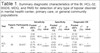
The pooled sensitivities and specificities for the BI, HCL-32, BSDS, MDQ, and RMS
at specific cutoffs were measured for a separate meta-analysis of each instrument
at a common cutoff (Table 1). At the recommended cutoffs for the BI, HCL-32, BSDS, MDQ, and RMS, the pooled sensitivities
were 0.82 (95%CI 0.81-0.83), 0.75 (95%CI 0.74-0.76), 0.71 (95%CI 0.69-0.73), 0.71
(95%CI 0.70-0.73), and 0.78 (95%CI 0.73-0.82), respectively. The corresponding pooled
specificities were 0.73 (95%CI 0.72-0.74), 0.63 (95%CI 0.62-0.63), 0.73 (95%CI 0.71-0.74),
0.77 (95%CI 0.76-0.78), and 0.72 (95%CI 0.68-0.77), respectively. However, there was
evidence that the accuracy of the BI was superior to that of the other tests with
a relative diagnostic OR (RDOR) (95%CI) of 1.22 (0.98-1.52, p < 0.0001).
Table 1. Summary diagnostic characteristics of the BI, HCL-32, BSDS, MDQ, and RMS for detection
of any type of bipolar disorder in mental health center, primary care, or general
community populations
Table 1. Summary diagnostic characteristics of the BI, HCL-32, BSDS, MDQ, and RMS
for detection of any type of bipolar disorder in mental health center, primary care,
or general community populations
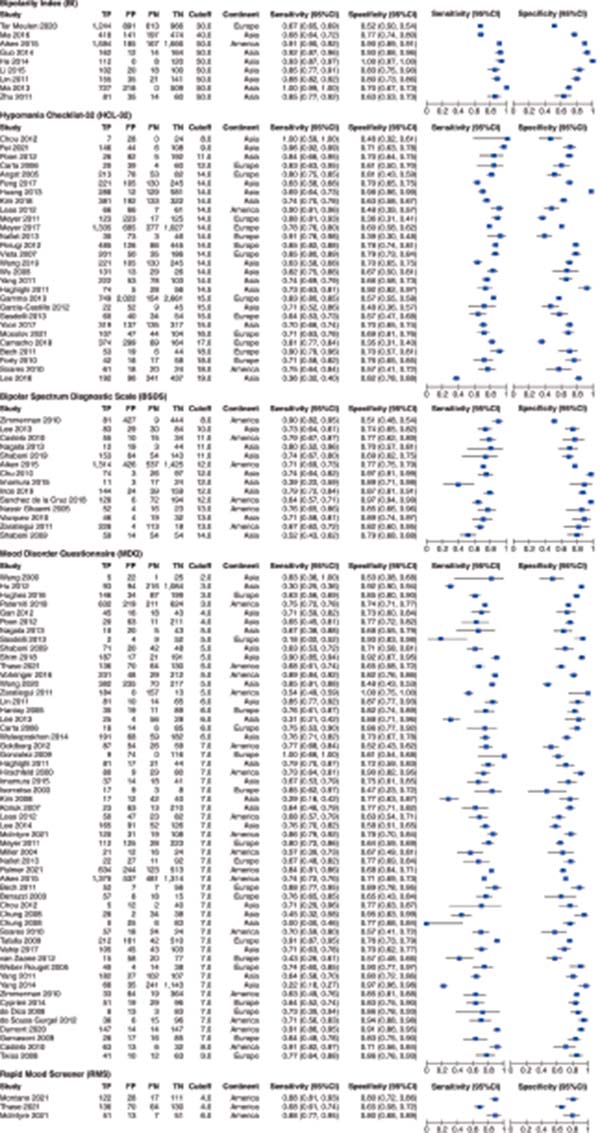
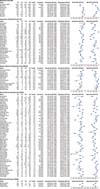
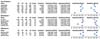
We compared the performance of the three existing tools, including the HCL-32 (28
studies), MDQ (55 studies), and BSDS (14 studies), with the two new instruments, BI
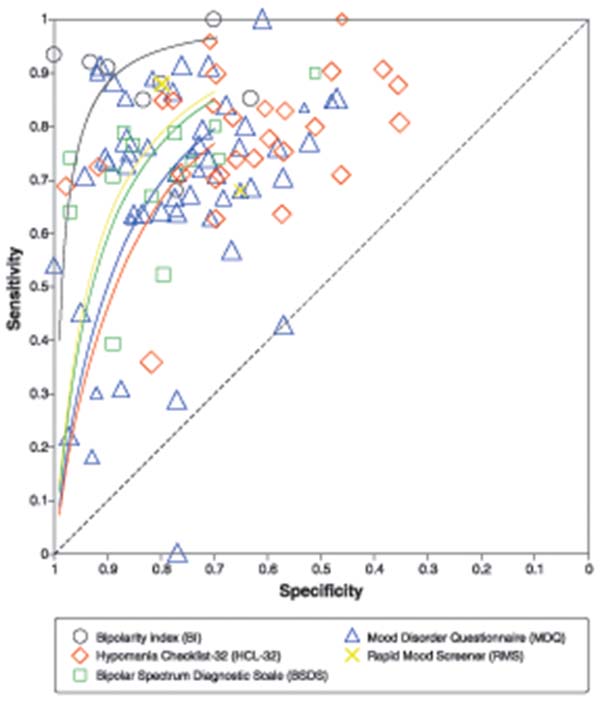
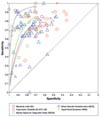
(nine studies) and RMS (three studies), using all available studies (Figure 3). The pattern of the SROC curves and the accuracy of the screening instruments varied
considerably, because accuracy of each tool differed with different cutoffs (Figure 4). Though the number of studies was not comparable, the BI curve was consistently
above those of the HCL-32, BSDS, MDQ, and RMS in the region covering maximum observed
data at higher values of sensitivity and lower specificity. Both the BSDS and RMS
curves were above the HCL-32 and MDQ curves.
Figure 3. Forest plot of BI, HCL-32, BSDS, MDQ, and RMS, including sensitivity and specificity
of included studies. 95%CI = 95% confidence interval; BI = bipolarity index; BSDS
= Bipolar Spectrum Diagnostic Scale; FN = false negative; FP = false positive; HCL-32
= Hypomania Checklist-32; MDQ = Mood Disorder Questionnaire; RMS = Rapid Mood Screener;
TN = true negative; TP = true positive.
Figure 4. Summary estimates and 95% confidence region of the meta-analyses showing
diagnostic test accuracies of BI, HCL-32, BSDS, MDQ, and RMS for detection of any
type of bipolar disorder (BD). BI = bipolarity index; BSDS = Bipolar Spectrum Diagnostic
Scale; FN = false negative; FP = false positive; HCL-32 = Hypomania Checklist-32;
MDQ = Mood Disorder Questionnaire; RMS = Rapid Mood Screener; TN = true negative;
TP = true positive.
Direct comparison
-
Comparison of the BI with HCL-32 for the detection of BD: The BI curve was consistently
above the HCL-32 curve in the region encompassing most of the observed data (Figure
S2).
-
Comparison of the BI with BSDS for the detection of BD: The BI curve was consistently
above the BSDS curve in the region comprising most of the observed data (Figure S3).
-
Comparison of the BI with MDQ for the detection of BD: The BI curve was consistently
above the MDQ curve in the region involving most of the observed data (Figure S4).
-
Comparison of the RMS with HCL-32 for the detection of BD: The RMS curve was consistently
above the HCL-32 curve in the region encompassing most of the observed data (Figure
S5).
-
Comparison of the RMS with BSDS for the detection of BD: The RMS curve was not consistently
above the BSDS curve in the region comprising most of the observed data (Figure S6).
-
Comparison of the RMS with MDQ for the detection of BD: The BI curve was consistently
above the MDQ curve in the region involving most of the observed data (Figure S7).
-
Comparison of the BI with RMS for the detection of BD: The BI curve was consistently
above the RMS curve in the region involving most of the observed data (Figure S8).
Detection of BD-I
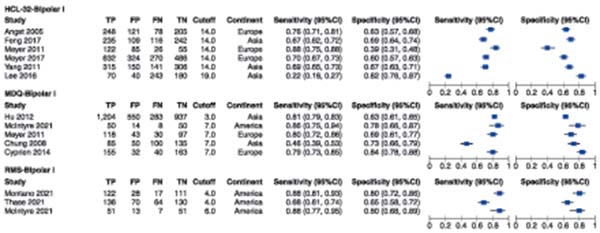
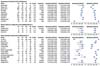
Overall, 14 studies used various instruments to detect BD-I using the HCL-32 (six
studies, 4,799 patients), MDQ (five studies, 4,144 patients), and RMS (three studies,
800 patients) (Figure 5).
Figure 5. Forest plot of BI, HCL-32, MDQ, and RMS including sensitivity and specificity of included
studies on patients with BD-I. 95%CI = 95% confidence interval; BI = Bipolarity Index;
FN = false negative; FP = false positive; HCL-32-Bipolar I = Hypomania Checklist-32
(HCL-32)-Bipolar disorder type I; MDQ-Bipolar I = Mood Disorder Questionnaire (MDQ)-Bipolar
disorder type I; RMS-Bipolar I = Rapid Mood Screener (RMS)-Bipolar disorder type I;
TN = true negative; TP = true positive.
Figure 5. Forest plot of BI, HCL-32, MDQ, and RMS including sensitivity and specificity
of included studies on patients with BD-I. 95%CI = 95% confidence interval; BI = Bipolarity
Index; FN = false negative; FP = false positive; HCL-32-Bipolar I = Hypomania Checklist-32
(HCL-32)-Bipolar disorder type I; MDQ-Bipolar I = Mood Disorder Questionnaire (MDQ)-Bipolar
disorder type I; RMS-Bipolar I = Rapid Mood Screener (RMS)-Bipolar disorder type I;
TN = true negative; TP = true positive.
Overall, each instrument had acceptable diagnostic accuracy for the detection of BD
(Figures S9-12).
At the recommended cutoffs for the HCL-32, MDQ, and RMS, the pooled sensitivities
were 0.65 (0.63-0.67), 0.78 (0.76-0.80), and 0.78 (0.73-0.82), respectively. The corresponding
pooled specificities were 0.64 (0.62-0.66), 0.67 (0.65-0.69), and 0.72 (0.68-0.77),
respectively (Table 2).
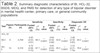
Table 2. Summary diagnostic characteristics of BI, HCL-32, BSDS, MDQ, and RMS for detection
of any type of bipolar disorder in mental health center, primary care, or general
community populations
Test
Papers (n)
Participants (n)
Sensitivity
Specificity
Diagnostic OR
Pooled (95%CI)
I2 (%)
p-value
Pooled (95%CI)
I2 (%)
p-value
Pooled (95%CI)
I2 (%)
p-value
HCL-32
BD-I
6
4,799
0.65 (0.63-0.67)
98.3
< 0.0001
0.64 (0.62-0.66)
93.8
< 0.0001
3.48 (2.50-4.85)
84.2
< 0.0001
BD-II
10
6,316
0.70 (0.68-0.72)
97.7
< 0.0001
0.65 (0.63-0.66)
95.5
< 0.0001
5.53 (4.21-7.79)
78.6
< 0.0001
BSDS
BD-II
4
515
0.78 (0.67-0.87)
0.0
0.9659
0.63 (0.58-0.67)
84.9
0.0002
6.85 (3.72-12.6)
0.0
0.7693
MDQ
BD-I
5
4,144
0.78 (0.76-0.80)
96.0
< 0.0001
0.67 (0.65-0.69)
91.1
< 0.0001
8.67 (4.44-16.93)
91.6
< 0.0001
BD-II
14
3,772
0.52 (0.49-0.56)
92.6
< 0.0001
0.77 (0.76-0.79)
97.0
< 0.0001
3.93 (4.21-7.79)
60.2
0.0019
RMS
BD-I
3
800
0.78 (0.73-0.82)
91.4
< 0.0001
0.72 (0.68-0.77)
82.1
0.0038
14.24 (3.16-64.1)
93.7
< 0.0001
95%CI = 95% confidence interval; BD-I = bipolar disorder type I; BD-II = bipolar disorder
type II; BI = bipolarity index; BSDS = Bipolar Spectrum Diagnostic Scale; DOR = diagnostic
odds ratio; HCL-32 = Hypomania Checklist-32; MDQ = Mood Disorder Questionnaire; OR
= odds ratio; RMS = Rapid Mood Screener.
Table 2. Summary diagnostic characteristics of BI, HCL-32, BSDS, MDQ, and RMS for
detection of any type of bipolar disorder in mental health center, primary care, or
general community populations
Detection of BD-II
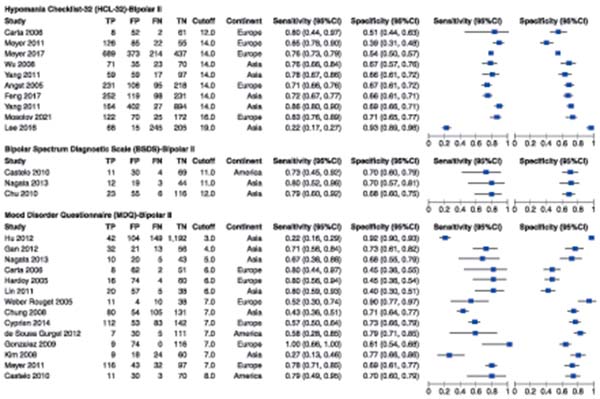
Overall, 28 studies used various instruments to detect BD-II: the HCL-32 (10 studies,
6,316 patients), BSDS (five studies, 515 patients), MDQ (14 studies, 3,772 patients),
and BI (one study, 800 patients) (Figure 6).
Figure 6. Forest plot of HCL-32, BSDS, MDQ, and BI including sensitivity and specificity of
included studies on patients with BD-II. 95%CI = 95% confidence interval; BI = Bipolarity
Index; FN = false negative; FP = false positive; HCL-32-Bipolar I = Hypomania Checklist-32
(HCL-32)-Bipolar disorder type I; MDQ-Bipolar II = Mood Disorder Questionnaire (MDQ)-Bipolar
disorder type II; RMS-Bipolar I = Rapid Mood Screener (RMS)-Bipolar disorder type
I; TN = true negative; TP = true positive.
Figure 6. Forest plot of HCL-32, BSDS, MDQ, and BI including sensitivity and specificity
of included studies on patients with BD-II. 95%CI = 95% confidence interval; BI =
Bipolarity Index; FN = false negative; FP = false positive; HCL-32-Bipolar I = Hypomania
Checklist-32 (HCL-32)-Bipolar disorder type I; MDQ-Bipolar II = Mood Disorder Questionnaire
(MDQ)-Bipolar disorder type II; RMS-Bipolar I = Rapid Mood Screener (RMS)-Bipolar
disorder type I; TN = true negative; TP = true positive.
At the recommended cutoffs for the HCL-32, BSDS, and MDQ, the pooled sensitivities
were 0.70 (0.68-0.72), 0.78 (0.67-0.87), and 0.52 (0.49-0.56), respectively. The corresponding
pooled specificities were 0.65 (0.63-0.66), 0.63 (0.58-0.67), and 0.77 (0.76-0.79),
respectively (Table 2).
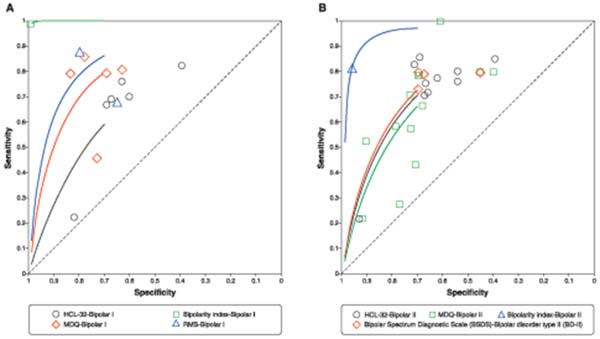
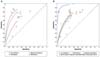
We compared the test performance and diagnostic accuracies of the BI, HCL-32, BSDS,
MDQ, and RMS for detection of BD-I (Figure 7A) vs. BD-II (Figure 7B). The RMS was significantly more accurate than the other tests, with an RDOR (95%CI)
of 0.79 (0.67-0.92, p < 0.0001), for the detection of BD-I. However, there was evidence
that the accuracy of the BI was superior to that of the other tests, with an RDOR
of 1.93 (0.89-2.79, p = 0.0019), for the detection of BD-II (Table 2). More detailed components of diagnostic accuracy, including sensitivity, specificity,
positive and negative predictive values, and likelihood ratios for each test, are
given in Supplementary Material S13.
Figure 7. Summary estimates and 95% confidence region of the meta-analyses showing diagnostic
test accuracies of BI, HCL-32, BSDS, MDQ, and RMS for detection of any type of BD-I
(A) vs. BD-II (B). BD-1 = bipolar disorder type I; BD-II = bipolar disorder type II;
HCL-32-Bipolar I = Hypomania Checklist-32 (HCL-32)-Bipolar disorder type I; HCL-32-Bipolar
II = Hypomania Checklist-32 (HCL-32)-Bipolar disorder type II; MDQ-Bipolar I = Mood
Disorder Questionnaire (MDQ)-Bipolar disorder type I; MDQ-Bipolar II = Mood Disorder
Questionnaire (MDQ)-Bipolar disorder type II; RMS-Bipolar I = Rapid Mood Screener
(RMS)-Bipolar disorder type I.
Figure 7. Summary estimates and 95% confidence region of the meta-analyses showing
diagnostic test accuracies of BI, HCL-32, BSDS, MDQ, and RMS for detection of any
type of BD-I (A) vs. BD-II (B). BD-1 = bipolar disorder type I; BD-II = bipolar disorder
type II; HCL-32-Bipolar I = Hypomania Checklist-32 (HCL-32)-Bipolar disorder type
I; HCL-32-Bipolar II = Hypomania Checklist-32 (HCL-32)-Bipolar disorder type II; MDQ-Bipolar
I = Mood Disorder Questionnaire (MDQ)-Bipolar disorder type I; MDQ-Bipolar II = Mood
Disorder Questionnaire (MDQ)-Bipolar disorder type II; RMS-Bipolar I = Rapid Mood
Screener (RMS)-Bipolar disorder type I.
DISCUSSION
The present meta-analysis was conducted to determine the diagnostic accuracy of two
new instruments, the BI and RMS, in people with BD, comparing these instruments to
already available tools such as the HCL-32, BSDS, and MDQ. The findings showed that
the utility and diagnostic accuracy of the BI were significantly superior to those
of the other tools, especially for BD-II.
BD and other chronic mental disorders such as schizophrenia are different, but their
symptoms are sometimes confused. If a good clinical history is lacking or the context
of the patient's current life situation is ignored, misdiagnosis may occur. Substantial
misdiagnosis rate between BD and other chronic mental disorders, especially mood disorders,
may lead to delay in receiving proper and timely treatment and achieving symptom control.
Overall, for the detection of both types of BD, the BI was significantly more accurate
than the HCL-32, MDQ, BSDS, and RMS, while to detect BD-I, the RMS was significantly
more accurate, and for the detection of BD-II, the MDQ had superior diagnostic accuracy.
Differences in the characteristics of the studied instruments can explain these findings.
Our meta-analysis showed 0.82 and 0.73 for the BI at recommended cutoff in psychiatric
services, respectively. In this context, Carvalho et al.18 performed a meta-analysis to compare the diagnostic accuracy of the BSDS, the HCL-32,
and the MDQ, and reported summary sensitivities of 81, 66, and 69%, as well as specificities
of 67, 79, and 86% for the HCL-32, MDQ, and BSDS in psychiatric services, respectively.
Thus, the BI could be more accurate than the other available tools for the detection
of BD in primary-care or general-population settings. Given that the BSDS, HCL-32,
and MDQ were proposed to improve the diagnosis of less exuberant cases of BD,12,31 this may explain why the other tools are less accurate than the BI for detection
of BD.
Recently, Sun et al.111 conducted a meta-analysis to assess the diagnostic accuracy of BI for the detection
of BD and found diagnostic superiority of the BI, with significant heterogeneity.
The pooled sensitivity, specificity, and accuracy of the BI were 93% (95%CI 93-100),
85% (95%CI 69-96), and 86% (95%CI 77-93), respectively.112 Our meta-analysis of an individual test showed that the pooled sensitivity, specificity,
and accuracy of the BI were 82% (95%CI 61-100), 73% (95%CI 52-100), and 93% (95%CI
77-97), respectively. Thus, our meta-analysis also showed a diagnostic superiority
of the BI over other instruments, with significant heterogeneity. The Sun et al.111 meta-analysis included only five studies that used the Chinese version of the BI,
but our analysis encompasses studies from America, Asia, and Europe. Wang et al.17 performed a meta-analysis of studies that directly compared the HCL-32 and the MDQ
in detecting BD, and reported that the HCL-32 showed higher sensitivities (82% [95%CI
72-89] vs. 80% [95%CI 71-86]) and lower specificities (57% [95%CI 48-66] vs. 70% [95%CI
59-71]) compared to the MDQ. Our findings are in line with those of Wang et al.17 in terms of direct comparison of these two instruments, but they included only nine
studies, while our meta-analysis included 28 studies using the HCL-32 and 55 using
the MDQ. In another meta-analysis, Carvalho et al.18 assessed the diagnostic accuracy of 53 original studies, both directly and indirectly,
and showed that the HCL-32 is consistently more accurate than the MDQ, especially
for BD-II. The present meta-analysis showed that the BI has a higher sensitivity for
the diagnosis of BD-II compared to other instruments. Given that around 70% of individuals
with BD-I are first misdiagnosed, with an average disease onset-to-diagnosis delay
of 5 to 10 years, a group of multidisciplinary professionals developed the RMS (a
six-item instrument) to offer a pragmatic method to shed light on the necessity for
accurate and timely detection of BD.21,113,114 In line with our findings, the RMS provided high accuracy for detection of BD-I,
with a sensitivity, specificity, and accuracy of 88, 80, and 84%, respectively.76
Although this meta-analysis involved a large number of studies and participants, there
were some limitations. Comparing the accuracy and diagnostic value of the two new
instruments with the three existing ones was prone to confounding due to differences
in study characteristics and population.115 The main limitation of the BI is that the observer is not blind to the results of
the Mini International Neuropsychiatric Interview (MINI), which, as a structured diagnostic
interview, has become an integral part of psychiatry, not only being considered the
diagnostic gold standard in psychiatric research but also increasingly being used
to help ensure diagnostic precision in clinical practice.116 Because several parts of the BI are derived from structured interviews, it is difficult
to completely ignore the influence of MINI results. This may limit the generalizations
of the findings, but is consistent with how the scale is used in clinical practice.
Another limitation is relying on a sole interviewer in a practice environment and
the absence of longitudinal follow-up.
The present meta-analysis shows that the diagnostic value and accuracy of a new instrument,
the BI, exceeded those of existing instruments including the BSDS, HCL-32, and MDQ.
However, it should be noted that these tools should not be considered as a means of
definitive diagnosis, because a significant proportion of patients diagnosed with
BD do not actually have the disorder.110 Therefore, it is recommended that a confirmatory diagnostic interview and clinical
observation be performed simultaneously. Moreover, cost-benefit analysis to assess
the cost of false positives with the use of screening tools not only is important,
but failure to account for real cases of BD may lead to erroneous results and suboptimal
decision making. Finally, well-designed clinical studies, especially randomized controlled
trials (RCT), of BD screening instruments should offer evidence of their impact on
patient outcomes.
In conclusion, a large number of patients with BD continue to experience complications
and consequences due to a lack of proper diagnosis. To diagnose these disorders accurately,
in addition to a clinical interview, a diagnostic tool with appropriate psychometric
properties is still needed. Though available BD screening tools have acceptable diagnostic
accuracy, as shown in previous studies, the results are still not entirely satisfactory
because only a limited number of parameters are considered. The present study showed
that the diagnostic accuracy of two new instruments, the BI and RMS, is considerably
higher than that of available tools such as the HCL-32, BSDS, and MDQ. Nevertheless,
a positive screening result should still be confirmed by a clinical diagnostic evaluation
for BD.
ACKNOWLEDGEMENTS
We express our thanks to the Deputies of Research and Technology Affairs of Ahvaz
Jundishapur University of Medical Sciences and Tehran University of Medical Sciences
for their support.
Calabrese JR, Hirschfeld RM, Frye MA, Reed ML. Impact of depressive symptoms compared
with manic symptoms in bipolar disorder: results of a U.S. community-based sample.
J Clin Psychiatry. 2004;65:1499-504.
Akiskal HS, Bourgeois ML, Angst J, Post R, Möller H, Hirschfeld R. Re-evaluating
the prevalence of and diagnostic composition within the broad clinical spectrum of
bipolar disorders. J Affect Disord. 2000;59 Suppl 1:S5-30.
Judd LL, Akiskal HS. The prevalence and disability of bipolar spectrum disorders
in the US population: re-analysis of the ECA database taking into account subthreshold
cases. J Affect Disord. 2003;73:123-31.
Clemente AS, Diniz BS, Nicolato R, Kapczinski FP, Soares JC, Firmo JO, et al. Bipolar
disorder prevalence: a systematic review and meta-analysis of the literature. Braz
J Psychiatry. 2015;37:155-61.
Grunze H, Schaefer M, Scherk H, Born C, Preuss UW. Comorbid bipolar and alcohol
use disorder-a therapeutic challenge. Front Psychiatry. 2021;12:660432.
Dodd S, Williams LJ, Jacka FN, Pasco JA, Bjerkeset O, Berk M. Reliability of the
Mood Disorder Questionnaire: comparison with the structured clinical interview for
the DSM-IV-TR in a population sample. Aust N Z J Psychiatry. 2009;43:526-30.
Wu YS, Angst J, Ou CS, Chen HC, Lu RB. Validation of the Chinese version of the
hypomania checklist (HCL-32) as an instrument for detecting hypo(mania) in patients
with mood disorders. J Affect Disord. 2008;106:133-43.
Nassir Ghaemi S, Miller CJ, Berv DA, Klugman J, Rosenquist KJ, Pies RW. Sensitivity
and specificity of a new bipolar spectrum diagnostic scale. J Affect Disord. 2005;84:273-7.
Isometsä E, Suominen K, Mantere O, Valtonen H, Leppämäki S, Pippingsköld M, et
al. The mood disorder questionnaire improves recognition of bipolar disorder in psychiatric
care. BMC Psychiatry. 2003;3:8.
Waleeprakhon P, Ittasakul P, Lotrakul M, Wisajun P, Jullagate S, Ketter TA. Development
and validation of a screening instrument for bipolar spectrum disorder: the Mood Disorder
Questionnaire Thai version. Neuropsychiatr Dis Treat. 2014;10:1497-502.
Leão IA, Del Porto JA. Cross validation with the mood disorder questionnaire (MDQ)
of an instrument for the detection of hypomania in Brazil: the 32 item hypomania symptom
check-list, first revision (HCI-32-R1). J Affect Disord. 2012;140:215-21.
Hirschfeld RM, Williams JB, Spitzer RL, Calabrese JR, Flynn L, Keck PE Jr, et
al. Development and validation of a screening instrument for bipolar spectrum disorder:
the Mood Disorder Questionnaire. Am J Psychiatry. 2000;157:1873-5.
Wang YY, Xu DD, Liu R, Yang Y, Grover S, Ungvari GS, et al. Comparison of the
screening ability between the 32-item Hypomania Checklist (HCL-32) and the Mood Disorder
Questionnaire (MDQ) for bipolar disorder: a meta-analysis and systematic review. Psychiatry
Res. 2019;273:461-6.
Carvalho AF, Takwoingi Y, Sales PM, Soczynska JK, Köhler CA, Freitas TH, et al.
Screening for bipolar spectrum disorders: a comprehensive meta-analysis of accuracy
studies. J Affect Disord. 2015;172:337-46.
McIntyre RS, Patel MD, Masand PS, Harrington A, Gillard P, McElroy SL, et al.
The Rapid Mood Screener (RMS): a novel and pragmatic screener for bipolar I disorder.
Curr Med Res Opin. 2021;37:135-44.
Zhu Y, Ma YT, Wei J, XY. Recognition potency of three diagnostic definition of
bipolar disorder in patients with current depressive episode. Chin Ment Health J.
2011;25:588-93.
Ince B, Cansız A, Ulusoy S, Yavuz KF, Kurt E, Altınbas K. Reliability and validity
study of the Turkish Version of Bipolar Spectrum Diagnostic Scale. Turk Psikiyatri
Derg. 2019;30:272-8.
Konuk N, Kiran S, Tamam L, Karaahmet E, Aydin H, Atik L. [Validation of the Turkish
version of the mood disorder questionnaire for screening bipolar disorders]. Turk
Psikiyatri Derg. 2007;18:147-54.
Stroup DF, Berlin JA, Morton SC, Olkin I, Williamson GD, Rennie D, et al. Meta-analysis
of observational studies in epidemiology: a proposal for reporting. Meta-analysis
of Observational Studies in Epidemiology (MOOSE) group. JAMA. 2000;283:2008-12.
Liberati A, Altman DG, Tetzlaff J, Mulrow C, Gøtzsche PC, Ioannidis JP, et al.
The PRISMA statement for reporting systematic reviews and meta-analyses of studies
that evaluate health care interventions: explanation and elaboration. J Clin Epidemiol.
2009;62:e1-34.
Song F, Khan KS, Dinnes J, Sutton AJ. Asymmetric funnel plots and publication
bias in meta-analyses of diagnostic accuracy. Int J Epidemiol. 2002;31:88-95.
Angst J, Adolfsson R, Benazzi F, Gamma A, Hantouche E, Meyer TD, et al. The HCL-32:
towards a self-assessment tool for hypomanic symptoms in outpatients. J Affect Disord.
2005;88:217-33.
Apfelbaum S, Regalado P, Herman L, Teitelbaum J, Gagliesi P. Comorbidity between
bipolar disorder and cluster B personality disorders as indicator of affective dysregulation
and clinical severity. Actas Esp Psiquiatr. 2013;41:269-78.
Bech P, Christensen EM, Vinberg M, Bech-Andersen G, Kessing LV. From items to
syndromes in the Hypomania Checklist (HCL-32): psychometric validation and clinical
validity analysis. J Affect Disord. 2011;132:48-54.
Bouchra O, Maria S, Abderazak O. Screening of the unrecognised bipolar disorders
among outpatients with recurrent depressive disorder: a cross-sectional study in psychiatric
hospital in Morocco. Pan Afr Med J. 2017;27:247.
Camacho M, Almeida S, Moura AR, Fernandes AB, Ribeiro G, da Silva JA, et al. Hypomania
symptoms across psychiatric disorders: screening use of the hypomania check-list 32
at admission to an outpatient psychiatry clinic. Front Psychiatry. 2018;9:527.
Carta MG, Hardoy MC, Cadeddu M, Murru A, Campus A, Morosini PL, et al. The accuracy
of the Italian version of the Hypomania Checklist (HCL-32) for the screening of bipolar
disorders and comparison with the Mood Disorder Questionnaire (MDQ) in a clinical
sample. Clin Pract Epidemiol Ment Health. 2006;2:2-2.
Castelo MS, Carvalho ER, Gerhard ES, Macêdo DS, Ferreira ED, Carvalho AF. Validity
of the Brazilian Portuguese version of the bipolar spectrum diagnostic scale. J Bras
Psiquiatr. 2010;59:266-70.
Chou CC, Lee IH, Yeh TL, Chen KC, Chen PS, Chen WT, et al. Comparison of the validity
of the Chinese versions of the Hypomania Symptom Checklist-32 (HCL-32) and Mood Disorder
Questionnaire (MDQ) for the detection of bipolar disorder in medicated patients with
major depressive disorder. Int J Psychiatry Clin Pract. 2012;16:132-7.
Chu H, Lin CJ, Chiang KJ, Chen CH, Lu RB, Chou KR. Psychometric properties of
the Chinese version of the Bipolar Spectrum Diagnostic Scale. J Clin Nurs. 2010;19:2787-94.
Chung KF, Tso KC, Cheung E, Wong M. Validation of the Chinese version of the Mood
Disorder Questionnaire in a psychiatric population in Hong Kong. Psychiatry Clin Neurosci.
2008;62:464-71.
Cyprien F, Guillaume S, Jaussent I, Lopez-Castroman J, Mercier G, Olie E, et al.
Impact of axis-I comorbidity and suicidal behavior disorders on sensitivity and specificity
of the Mood Disorder Questionnaire in complex depressed inpatients. Compr Psychiatry.
2014;55:876-82.
de Dios C, Ezquiaga E, García A, Montes JM, Avedillo C, Soler B. Usefulness of
the Spanish version of the mood disorder questionnaire for screening bipolar disorder
in routine clinical practice in outpatients with major depression. Clin Pract Epidemiol
Ment Health. 2008;4:14.
de Sousa Gurgel W, Rebouças DB, Negreiros de Matos KJ, Carneiro AH, Gomes de Matos
e Souza F; Grupo de Estudos em Transtornos Afetivos Affective Disorders Study Group.
Brazilian Portuguese validation of Mood Disorder Questionnaire. Compr Psychiatry.
2012;53:308-12.
Dumont CM, Sheridan LM, Besancon EK, Blattner M, Lopes F, Kassem L, et al. Validity
of the Mood Disorder Questionnaire (MDQ) as a screening tool for bipolar spectrum
disorders in anabaptist populations. J Psychiatr Res. 2020;123:159-63.
Fei Y, Liu L, Zheng D, Li X, Li W, Yang H, et al. Reliability and validity of
the Chinese version of the CUDOS-M in patients with mood disorders: a multicenter
study across China. J Affect Disord. 2021;294:723-9.
Feng Y, Wang YY, Huang W, Ungvari GS, Ng CH, Wang G, et al. Comparison of the
32-item hypomania checklist, the 33-item hypomania checklist, and the Mood Disorders
Questionnaire for bipolar disorder. Psychiatry Clin Neurosci. 2017;71:403-8.
Feng L. Comparative study on efficacy of identification between bipolarity index
and DSM-V criteria in screening patients with bipolar disorder. Chin Mod Med. 2015;22:66-9.
Ford KA, Théberge J, Neufeld RJ, Williamson PC, Osuch EA. Correlation of brain
default mode network activation with bipolarity index in youth with mood disorders.
J Affect Disord. 2013;150:1174-8.
Forty L, Kelly M, Jones L, Jones I, Barnes E, Caesar S, et al. Reducing the hypomania
checklist (HCL-32) to a 16-item version. J Affect Disord. 2010;124:351-6.
Gamma A, Angst J, Azorin JM, Bowden CL, Perugi G, Vieta E, et al. Transcultural
validity of the Hypomania Checklist-32 (HCL-32) in patients with major depressive
episodes. Bipolar Disord. 2013;15:701-12.
Gan Z, Han Z, Li K, Diao F, Wu X, Guan N, et al. Validation of the Chinese version
of the "Mood Disorder Questionnaire" for screening bipolar disorder among patients
with a current depressive episode. BMC Psychiatry. 2012;12:8.
Gervasoni N, Weber Rouget B, Miguez M, Dubuis V, Bizzini V, Gex-Fabry M, et al.
Performance of the Mood Disorder Questionnaire (MDQ) according to bipolar subtype
and symptom severity. Eur Psychiatry. 2009;24:341-4.
Goldberg JF, Garakani A, Ackerman SH. Clinician-rated versus self-rated screening
for bipolar disorder among inpatients with mood symptoms and substance misuse. J Clin
Psychiatry. 2012;73:1525-30.
Guo X, Xue H, Feng L, Geng Y. Study of reliability and validity of Chinese version
of the bipolarity index in clinic. China Med Herald. 2014;24:119-23.
Haghighi M, Bajoghli H, Angst J, Holsboer-Trachsler E, Brand S. The Farsi version
of the Hypomania Check-List 32 (HCL-32): applicability and indication of a four-factorial
solution. BMC Psychiatry. 2011;11:14.
Hardoy MC, Cadeddu M, Murru A, Dell'Osso B, Carpiniello B, Morosini PL, et al.
Validation of the Italian version of the "Mood Disorder Questionnaire" for the screening
of bipolar disorders. Clin Pract Epidemiol Ment Health. 2005;1:8.
Heyman-Kantor R, Rizk M, Sublette ME, Rubin-Falcone H, Fard YY, Burke AK, et al.
Examining the relationship between gray matter volume and a continuous measure of
bipolarity in unmedicated unipolar and bipolar depression. J Affect Disord. 2021;280:105-13.
Hu C, Xiang YT, Wang G, Ungvari GS, Dickerson FB, Kilbourne AM, et al. Screening
for bipolar disorder with the Mood Disorders Questionnaire in patients diagnosed as
major depressive disorder - the experience in China. J Affect Disord. 2012;141:40-6.
Huang X, Liu W, Feng B, Tan Q, Ji J. Applicability of the Chinese version of the
Hypomania Symptom Checklist (HCL-32) scale for outpatients of psychiatric departments
in general hospitals. PLoS One. 2013;8:e75631.
Hughes T, Cardno A, West R, Marino-Francis F, Featherstone I, Rolling K, et al.
Unrecognised bipolar disorder among UK primary care patients prescribed antidepressants:
an observational study. Br J Gen Pract. 2016;66:e71-7.
Imamura K, Kawakami N, Naganuma Y, Igarashi Y. Development of screening inventories
for bipolar disorder at workplace: a diagnostic accuracy study. J Affect Disord. 2015;178:32-8.
Kim B, Wang HR, Son JI, Kim CY, Joo YH. Bipolarity in depressive patients without
histories of diagnosis of bipolar disorder and the use of the Mood Disorder Questionnaire
for detecting bipolarity. Compr Psychiatry. 2008;49:469-75.
Kim BN, Lee EH, Kim HJ, Kim JH. Comparing the screening property of the shortened
versions of the Hypomania Checklist-32 (HCL-32): cross-validation in Korean patients
with bipolar disorder and major depressive disorder. J Affect Disord. 2018;227:384-90.
Lee D, Cha B, Park CS, Kim BJ, Lee CS, Lee S. Usefulness of the combined application
of the Mood Disorder Questionnaire and Bipolar Spectrum Diagnostic Scale in screening
for bipolar disorder. Compr Psychiatry. 2013;54:334-40.
Lee HJ, Joo Y, Youngstrom EA, Yum SY, Findling RL, Kim HW. Diagnostic validity
and reliability of a Korean version of the parent and adolescent general behavior
inventories. Compr Psychiatry. 2014;55:1730-7.
Lee K, Oh H, Lee EH, Kim JH, Kim JH, Hong KS. Investigation of the clinical utility
of the hypomania checklist 32 (HCL-32) for the screening of bipolar disorders in the
non-clinical adult population. BMC Psychiatry. 2016;16:124.
Lin CJ, Shiah IS, Chu H, Tsai PS, Chen CH, Chang YC, et al. Reliability and validity
of the Chinese Version of the Mood Disorder Questionnaire. Arch Psychiatr Nurs. 2011;25:53-62.
Ma Y, Gao H, Yu X, Si T, Wang G, Fang Y, et al. Bipolar diagnosis in China: evaluating
diagnostic confidence using the bipolarity index. J Affect Disord. 2016;202:247-53.
Ma YT, Yu X, Wei J, Zeng Y. Recognition validity of bipolarity specifier for bipolar
disorders among patients with major depressive episode: BRIDGE-China. Chin J Psychiatry.
2013;46:271-6.
Meyer TD, Bernhard B, Born C, Fuhr K, Gerber S, Schaerer L, et al. The hypomania
checklist-32 and the Mood Disorder Questionnaire as screening tools--going beyond
samples of purely mood-disordered patients. J Affect Disord. 2011;128:291-8.
Meyer TD, Castelao E, Gholamrezaee M, Angst J, Preisig M. Hypomania checklist-32
- cross-validation of shorter versions screening for bipolar disorders in an epidemiological
study. Acta Psychiatr Scand. 2017;135:539-47.
Miller CJ, Klugman J, Berv DA, Rosenquist KJ, Ghaemi SN. Sensitivity and specificity
of the Mood Disorder Questionnaire for detecting bipolar disorder. J Affect Disord.
2004;81:167-71.
Montano CB, Patel M, Jain R, Masand PS, Harrington A, Gillard P, et al. The rapid
mood screener: a novel and pragmatic screener tool for bipolar I disorder. CNS Spectr.
2021;26:167-8.
Mosolov S, Ushkalova A, Kostukova E, Shafarenko A, Alfimov P, Kostyukova A, et
al. Bipolar II disorder in patients with a current diagnosis of recurrent depression.
Bipolar Disord. 2014;16:389-99.
Mosolov SN, Yaltonskaya PA, Senko OV, Angst J. Validation of the Russian version
of the hypomania checklist (HCL-33) for the detection of bipolar disorder in patients
with a current diagnosis of recurrent depression. J Affect Disord Rep. 2021;4:100086.
Nagata T, Yamada H, Teo AR, Yoshimura C, Kodama Y, van Vliet I. Using the mood
disorder questionnaire and bipolar spectrum diagnostic scale to detect bipolar disorder
and borderline personality disorder among eating disorder patients. BMC Psychiatry.
2013;13:69.
Nallet A, Weber B, Favre S, Gex-Fabry M, Voide R, Ferrero F, et al. Screening
for bipolar disorder among outpatients with substance use disorders. Eur Psychiatry.
2013;28:147-53.
Palmer BA, Pahwa M, Geske JR, Kung S, Nassan M, Schak KM, et al. Self-report screening
instruments differentiate bipolar disorder and borderline personality disorder. Brain
Behav. 2021;11:e02201.
Pan PY, Yeh CB. Mood disturbance in adolescents screened by the Mood Disorder
Questionnaire predicts poorer social adjustment. J Adolesc Health. 2015;56:652-7.
Paterniti S, Bisserbe JC. Factors associated with false positives in MDQ screening
for bipolar disorder: insight into the construct validity of the scale. J Affect Disord.
2018;238:79-86.
Perugi G, Fornaro M, Maremmani I, Canonico PL, Carbonatto P, Mencacci C, et al.
Discriminative hypomania checklist-32 factors in unipolar and bipolar major depressive
patients. Psychopathology. 2012;45:390-8.
Poon Y, Chung KF, Tso KC, Chang CL, Tang D. The use of Mood Disorder Questionnaire,
Hypomania Checklist-32 and clinical predictors for screening previously unrecognised
bipolar disorder in a general psychiatric setting. Psychiatry Res. 2012;195:111-7.
Ratheesh A, Cotton SM, Betts JK, et al. Prospective progression from high-prevalence
disorders to bipolar disorder: Exploring characteristics of pre-illness stages. J
Affect Disord. 2015;183:45-8.
Saatcioglu O, Erim R, Tomruk N, Oral T, Alpay N. Antidepressant-associated mania
or hypomania: a comparison with personality and bipolarity features of bipolar I disorder.
J Affect Disord. 2011;134:85-90.
Sánchez de la Cruz JP, Fresán A, González Moralez DL, López-Narváez ML, Tovilla-Zarate
CA, Pool-García S, et al. Validation of the bipolar spectrum diagnostic scale in Mexican
psychiatric patients. Span J Psychol. 2018;21:E60.
Sasdelli A, Lia L, Luciano CC, Nespeca C, Berardi D, Menchetti M. Screening for
bipolar disorder symptoms in depressed primary care attenders: comparison between
Mood Disorder Questionnaire and Hypomania Checklist (HCL-32). Psychiatry J. 2013;2013:548349.
Shabani A, Koohi-Habibi L, Nojomi M, Chimeh N, Ghaemi SN, Soleimani N. The Persian
Bipolar Spectrum Diagnostic Scale and mood disorder questionnaire in screening the
patients with bipolar disorder. Arch Iran Med. 2009;12:41-7.
Shabani A, Mirzaei Khoshalani M, Mahdavi S, Ahmadzad-Asl M. Screening bipolar
disorders in a general hospital: psychometric findings for the Persian version of
mood disorder questionnaire and bipolar spectrum diagnostic scale. Med J Islam Repub
Iran. 2019;33:48.
Shim SH, Lee J, Song JH, Nam B, Yoon BH, Jin HY, et al. Screening with the Korean
Version of the Mood Disorder Questionnaire for bipolar disorders in adolescents: Korean
validity and reliability study. Clin Psychopharmacol Neurosci. 2018;16:316-23.
Soares OT, Moreno DH, de Moura EC, Angst J, Moreno RA. Reliability and validity
of a Brazilian version of the Hypomania Checklist (HCL-32) compared to the Mood Disorder
Questionnaire (MDQ). Braz J Psychiatry. 2010;32:416-23.
Tafalla M, Sanchez-Moreno J, Diez T, Vieta E. Screening for bipolar disorder in
a Spanish sample of outpatients with current major depressive episode. J Affect Disord.
2009;114:299-304.
Ter Meulen WG, Draisma S, Beekman AT, Penninx BW, Kupka RW. The predictive performance
of the bipolarity index in a Dutch epidemiological sample manuscript. J Affect Disord.
2020;262:373-80.
Thase ME, Stahl SM, McIntyre RS, Matthews-Hayes T, Patel M, Harrington A, et al.
Healthcare provider perspectives on bipolar I disorder screening and the Rapid Mood
Screener (RMS), a pragmatic, new tool. CNS Spectr. 2021;26:181.
Twiss J, Jones S, Anderson I. Validation of the Mood Disorder Questionnaire for
screening for bipolar disorder in a UK sample. J Affect Disord. 2008;110:180-4.
Vahip S, Aydemir O, Akkaya C, Altınbas K, Kora K, Dikici DS, et al. [Reliability
and validity study of the Turkish Version of Hypomania Checklist-32-revised]. Turk
Psikiyatri Derg. 2017;28:117-23.
Vázquez GH, Romero E, Fabregues F, Pies R, Ghaemi N, Mota-Castillo M. Screening
for bipolar disorders in Spanish-speaking populations: sensitivity and specificity
of the Bipolar Spectrum Diagnostic Scale-Spanish version. Compr Psychiatry. 2010;51:552-6.
Vieta E, Sánchez-Moreno J, Bulbena A, Chamorro L, Ramos JL, Artal J, et al. Cross
validation with the mood disorder questionnaire (MDQ) of an instrument for the detection
of hypomania in Spanish: the 32 item hypomania symptom check list (HCL-32). J Affect
Disord. 2007;101:43-55.
Wang HR, Bahk WM, Yoon BH, Kim MD, Jung YE, Min KJ, et al. The influence of current
mood states on screening accuracy of the Mood Disorder Questionnaire. Clin Psychopharmacol
Neurosci. 2020;18:25-31.
Wang YT, Yeh TL, Lee IH, Chen KC, Chen PS, Yang YK, et al. Screening for bipolar
disorder in medicated patients treated for unipolar depression in a psychiatric outpatient
clinic using the Mood Disorder Questionnaire. Int J Psychiatry Clin Pract. 2009;13:117-21.
Wang YY, Feng Y, Wang F, Huang W, Ng CH, Ungvari GS, et al. Comparing two short
versions of the 32-item Hypomania Checklist (HCL-32) for patients with bipolar disorder.
Perspect Psychiatr Care. 2019;55:396-400.
Weber Rouget B, Gervasoni N, Dubuis V, Gex-Fabry M, Bondolfi G, Aubry JM. Screening
for bipolar disorders using a French version of the Mood Disorder Questionnaire (MDQ).
J Affect Disord. 2005;88:103-8.
Yang HC, Liu TB, Rong H, Bi JQ, Ji EN, Peng HJ, et al. Evaluation of Mood Disorder
Questionnaire (MDQ) in patients with mood disorders: a multicenter trial across China.
PLoS One. 2014;9:e91895.
Yang HC, Yuan CM, Liu TB, Li LJ, Peng HJ, Liao CP, et al. Validity of the 32-item
Hypomania Checklist (HCL-32) in a clinical sample with mood disorders in China. BMC
Psychiatry. 2011;11:84.
Yoon BH, Angst J, Bahk WM, Wang HR, Bae SO, Kim MD, et al. Psychometric properties
of the Hypomania Checklist-32 in Korean patients with Mood Disorders. Clin Psychopharmacol
Neurosci. 2017;15:352-60.
Zaratiegui RM, Vázquez GH, Lorenzo LS, Marinelli M, Aguayo S, Strejilevich SA,
et al. Sensitivity and specificity of the mood disorder questionnaire and the bipolar
spectrum diagnostic scale in Argentinean patients with mood disorders. J Affect Disord.
2011;132:445-9.
Zimmerman M, Galione JN, Chelminski I, Young D, Ruggero CJ. Performance of the
Bipolar Spectrum Diagnostic Scale in psychiatric outpatients. Bipolar Disord. 2010;12:528-38.
Sun FL, Zhu JF, Tao HJ, Jin WD. The study of diagnostic value of bipolarity index
for bipolar disorder in china: Metaanalysis of sensitivity and specificity. Psychiatr
Clin Psychopharmacol. 2021;31:173-80.
Sun F, Jianfeng Z, Hejian T, Weidong J. The study of diagnostic value of bipolarity
index for bipolar disorder in China: meta-analysis of sensitivity and specificity.
Psychiatry Clin Psychopharmacol. 2021;31:173-80.
Hirschfeld RM, Lewis L, Vornik LA. Perceptions and impact of bipolar disorder:
how far have we really come? Results of the national depressive and manic-depressive
association 2000 survey of individuals with bipolar disorder. J Clin Psychiatry. 2003;64:161-74.
Berk M, Dodd S, Callaly P, Berk L, Fitzgerald P, de Castella AR, et al. History
of illness prior to a diagnosis of bipolar disorder or schizoaffective disorder. J
Affect Disord. 2007;103:181-6.
Takwoingi Y, Leeflang MM, Deeks JJ. Empirical evidence of the importance of comparative
studies of diagnostic test accuracy. Ann Intern Med. 2013;158:544-54.
Nordgaard J, Revsbech R, Sæbye D, Parnas J. Assessing the diagnostic validity
of a structured psychiatric interview in a first-admission hospital sample. World
Psychiatry. 2012;11:181-5.
We use essential cookies for the site to work and, with your permission, Google Analytics cookies to understand how the site is used. You can change your choice at any time. Privacy and Cookie Policy.




 PDF
 Print
 Send this article by email
 How to cite this article
 Submit a comment
 Mendeley
 Pocket
 Share on Facebook
 Share on Twitter



