



ABSTRACT:
Anxiety disorders affect up to 50% of individuals with autism spectrum disorder (ASD)
and are significantly impairing to the person affected, as well as to their loved
ones. Cognitive-behavioral therapy (CBT) has been established as the gold-standard
treatment for anxiety disorders among typically developing youth and adults, and demonstrates
similar efficacy among youth with high-functioning autism (HFA). Many CBT interventions
utilize a "full-package" treatment approach to treat co-occurring anxiety in youth
with ASD. However, these service delivery systems are often therapist-intensive, costly,
and impractical, thereby compromising full engagement and treatment adherence. This
paper describes the design, rationale, and methodology of a study examining stepped-care
CBT for youth with HFA and co-occurring anxiety - a clinical trial examining the efficacy
of low-intensity, parent-led CBT as the first line of treatment and utilizing a more
intensive, therapist-led intervention for nonresponders. The study will evaluate the
potential benefits of stepped-care and parent-led therapist-assisted interventions,
predictors of treatment response, and the economic value of using a stepped-care model.
Implications for practice will be discussed.
Keywords: Anxiety; autism spectrum disorder; children; cognitive behavior therapy; stepped-care; parent-led treatment.
FIGURES
| Received: February 10 2020; Accepted: March 1 2020 |
INTRODUCTION
Comorbid behavioral health disorders are common among youth with autism spectrum disorder (ASD),1-3 with anxiety disorders affecting approximately 50% of this population.1-7 Impairing anxiety in those with ASD is associated with gastrointestinal illness, self-injurious behavior, depression, familial stress, and poor social functioning.6,8-12 Given the high prevalence of anxiety disorders, the impact of anxiety-related impairment,13,14 and worsening symptom trajectory over time without appropriate treatment,15,16 there is a need for interventions that specifically address anxiety-related symptoms among those with ASD.
Cognitive-behavioral therapy (CBT) has been established as the gold-standard treatment for anxiety disorders among typically developing youth and adults, with similar efficacy among youth with high-functioning autism (HFA).17-19 A recent meta-analysis that included studies published until 2017, comprising 23 studies with 745 participants, supported CBT as an efficacious anxiety-reduction treatment for youth with HFA and anxiety.20 More recent studies have provided further support for CBT in small samples.21,22 Further, findings from a large randomized trial (n=167) using ASD-adapted CBT for youth indicated that personalized CBT (addressing social communication, self-regulation, and behavioral challenges) was superior to standard CBT, both of which were superior to treatment as usual.19
Although there is good evidence supporting CBT for anxiety in youth with HFA, there are significant barriers to accessing treatment. These include limited availability of trained therapists, costs and lack of medical insurance coverage, stigma, logistics (e.g., time, work demands, transportation),23 and parents' desire to solve problems on their own.24,25 Traditional CBT models usually involve 12-16 hourly sessions delivered weekly in an individual format or group model.26 Such a service model is highly demanding of therapist and family time and resources; thus, alternative models are needed to address barriers to care.
PARENT-LED AND STEPPED-CARE INTERVENTIONS
Parent-led therapist-assisted (PLTA) and stepped-care (SC) models may improve accessibility and efficiency while providing personalized care at reduced costs. PLTA models are characterized by parents implementing a structured, evidence-based treatment protocol independently at home while receiving limited assistance from a trained therapist. Studies on PLTA treatment for anxiety27-36 have yielded promising results. Notably, one study34 comparing treatment responses of varied CBT delivery formats targeting anxiety in a pooled sample of typically developing youth (n=1,253) found no significant differences between therapist-led individual or group treatment and PLTA interventions (except for primary specific phobia, where therapist-led individual treatment was superior). Beyond efficacy data, findings suggest that PLTA is acceptable to parents,29,32 and that 41-50% of youth who received PLTA responded to treatment.27,32,37 These promising results for PLTA for anxiety in typically developing youth provide a strong basis for examining the outcomes of PLTA for anxiety in youth with HFA.
Stepped-care trials for childhood anxiety38-40 and PTSD41 have also consistently yielded favorable findings. Stepped-care interventions provide an efficient allocation of resources by providing a set number of sessions before the child is reevaluated and "stepped up" if they require additional care (versus providing a set number of sessions to all children regardless of clinical need).41,42 This approach balances efficacy with significantly less resource investment from therapists as well as families (e.g., traveling to treatment).40 In addition, stepped-care interventions include guidelines on how decisions are made to "step up" to subsequent treatment or monitoring options, or to step down and end treatment.43 Given the potential benefits of stepped-care models to provide accessible, efficient, acceptable, and effective individualized treatments, the National Institutes of Health (NIH),44 as well as health organizations in other countries, are encouraging examination and utilization of stepped-care mental health approaches.
It is estimated that the cost of ASD to the United States is $61 billion per year for youth and $175 billion per year for adults,45 with estimates forecasting total costs to rise from $268 billion in 2015 to $461 billion by 2025.46,47 Coupled with this reality, mental health care costs more per child than any other health care expenditure for youth; this is even more substantial for youth with ASD.45 A PLTA-SC CBT model may have the potential to provide an innovative approach for delivery of a lower-cost effective treatment. Supporting parents in providing care during the initial step of treatment requires less therapist time and associated costs, and thus could be made more readily available than standard therapist contact treatment models. Indeed, this approach may also serve as a model for parent-led interventions for other mental health treatments targeting youth with ASD.
INNOVATIONS OF THE PARENT-LED STEPPED-CARE CBT MODEL
There are several innovations to a PLTA-SC CBT model. First, the service delivery approach being tested can lead to more children with ASD receiving effective treatment while also reducing overall burden and costs to the provider, patient, payer, and society. With a stepped-care approach, wait times could decrease, as youth can immediately begin first-line treatment with minimal therapist assistance, allowing therapists to spend more time with patients who need intensive therapist-directed care while still providing an adequate initial treatment dose.43,48 Second, PLTA-SC CBT utilizes a parent-led approach based on providing families with a step-by-step guide49 to deliver an evidence-based, first-line, at-home, parent-led treatment, thus contributing to improved access. A first-line, parent-led treatment with minimal therapist assistance may also be useful for providing treatment to youth who live in rural areas where there are fewer trained therapists, as well as urban areas where the demand significantly outpaces supply. Moreover, this type of approach is likely to be well received by parents who are busy with multiple life demands, including their role as caregiver of a child with ASD. Third, it will be possible to understand which children require a higher dose right away versus everyone starting in PLTA. Behavioral and environmental first-stage treatment tailoring variables will be explored to create an adaptive intervention where children can be matched to the appropriate intensity level prior to starting treatment. For example, if a child exhibits severe anxiety or the family engages in considerable accommodation (both predictors of attenuated response in anxiety treatment),50-52 they may immediately step up to a full dose of intervention. Tailoring variables can include the individual's symptom severity, impairment, comorbid diagnoses, parental psychopathology,53 and caregiver strain.54
Parent-led, stepped-care models may improve accessibility and efficiency, help provide personalized care, and reduce mental health treatment costs, making them compelling approaches to address the aforementioned barriers and limitations. Matching treatment to families and individual patients' needs, and tailoring subsequent treatment, may be an efficient and effective approach consistent with parents' desire to help their child. Previous studies on PLTA treatment for anxiety27-34 and recent stepped-care trials for childhood anxiety38-40 provide strong preliminary evidence to support the advancement of testing stepped-care models for internalizing symptoms among youth. Together with the substantial impairment associated with clinical anxiety in individuals with ASD across the age span,13-15 this provides a strong rationale for the use of a parent-led, flexible, individually-tailored cognitive-behavioral intervention for anxiety in youth with ASD. Effective, efficient, and cost-effective models that match children to the appropriate level of care at baseline have guidelines to indicate when to change treatment approaches, provide alternatives to traditionally costly and limited access care, and actively involve parents. These models should shift clinical practice paradigms from providing full-package, therapist-directed interventions to all patients to providing more optimized, individualized, and accessible treatment. This does not yet exist in the realm of ASD, which was the goal of this project.
AIMS AND HYPOTHESES
To address barriers to child mental health care in youth with ASD, the research team developed a PLTA-SC service delivery model and designed a study to examine the following aims:
Aim 1: To examine the effectiveness of stepped-care CBT in ASD (SC-CBT; e.g., starting with PLTA treatment and then either maintenance or standard CBT).
1.1 Hypothesis: Given the second stages (maintenance or standard CBT), youth in SC-CBT will demonstrate significant improvements in: (a) anxiety symptom severity and functional impairment (primary outcomes), internalizing and externalizing behaviors, and global improvement; and (b) parents will report high acceptability and satisfaction levels.
1.2 Hypothesis: Youth in SC-CBT will continue to maintain outcomes throughout the 3-month follow-up period.
Aim 2: To examine potential predictors of response to PLTA that could be used as baseline tailoring variables to match youth to the best level of care (i.e., PLTA or standard CBT).
2.1 Hypothesis: Higher baseline child anxiety and externalizing symptoms, as well as higher caregiver strain/depressive symptoms, will be associated with attenuated PLTA response.
Aim 3: To examine the economic value of SC-CBT.
3.1 Hypothesis: SC-CBT will be more cost-effective than a standard treatment protocol.
PARTICIPANTS AND PROCEDURES
A total of 120 youths (ages 4-14 years) with a historical diagnosis of ASD and clinically significant co-occurring anxiety, along with their parent or legal guardian, will be enrolled. Families are recruited through local autism clinics, social media, referrals from providers, and community organizations. Parents that express interest participate in a 20-minute telephone screening interview to elicit preliminary inclusion/exclusion information. Individuals who meet core eligibility requirements (age, ASD diagnosis, symptoms of anxiety, and communication skills) during the phone interview and remain interested are invited for a screening visit (i.e., baseline assessment). At this time, a member of the research team also explains what the treatment consists of, the time commitment involved, and the timeline of the study. This information is also shared with families in writing prior to scheduling the screening visit. Those families that do not meet preliminary inclusion criteria are given community resources.
Inclusion criteria include: (a) an established diagnosis of ASD (as well as older diagnoses based on DSM-IV, including PDD-NOS and Asperger's syndrome) made by a standardized assessment (e.g., Autism Diagnostic Observation Schedule-Second Edition, Childhood Autism Rating Scale-Second Edition) or a school classification of ASD along with a score of = 65 on the Social Responsiveness Scale-Second Edition55 (SRS-2). Documentation to be provided by the family; (b) clinically elevated symptoms of anxiety and/or OCD as indicated by a Clinical Severity Rating (CSR) of = 4 on the Anxiety Disorders Interview Schedule - Child - Parent Version56 (ADIS-IV C/P) and a five-item severity score of = 12 on the Pediatric Anxiety Rating Scale57 (PARS); (c) anxiety and/or OCD must be the primary non-ASD presenting problem; (d) a full scale IQ > 70 as assessed by the Differential Ability Scales-Second Edition (DAS-II; participants 4-5 years old) or Wechsler Abbreviated Scale of Intelligence-Second Edition (WASI-II; participants 6-14 years old). This level of intellectual ability is frequently used to demarcate the boundary of "high-functioning" ASD, and has been adopted in past CBT trials to ensure participants will have the necessary cognitive skills to benefit from a verbally-mediated treatment; and (e) the parent must be able to read and understand English.
Youth are excluded if they have a historical DSM-5 diagnosis of bipolar or psychotic disorder. In addition, participants experiencing active suicidal ideation and/or self-injury requiring medical interventions are excluded. Youth receiving concurrent psychotherapy for anxiety are also excluded. Youth taking psychotropic medications can participate; however, medication must be stable, with no plans of adding or altering dosage. There are no exclusion criteria for parents other than ability to read and understand English.
TREATMENTS
Overview
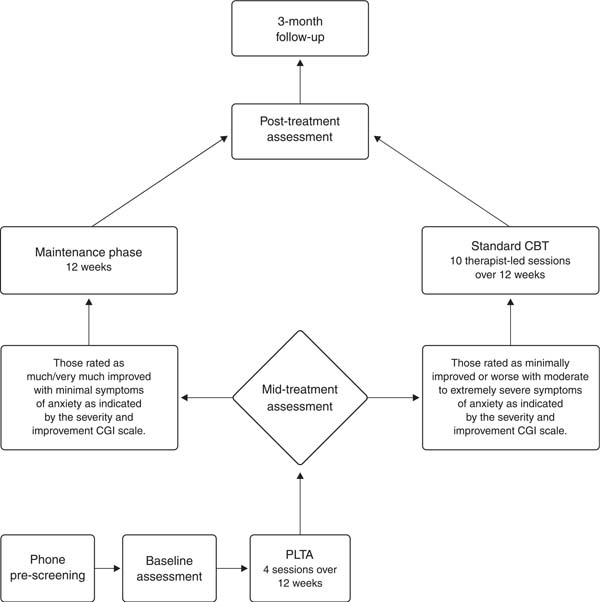
All eligible participants start with a low-intensity intervention (PLTA) characterized by 12 weeks of parent-led bibliotherapy with four in-person therapist appointments. After 12 weeks, a mid-treatment assessment is held to determine if further treatment is needed to address anxiety symptoms. Those that respond to treatment (rated as much/very much improved with minimal symptoms of anxiety as indicated by the severity and improvement Clinical Global Impressions scale)58 proceed to the maintenance phase, where they are followed for an additional 12 weeks. During the maintenance phase, families are encouraged to continue using the tools and practicing the skills learned at home, but do not receive additional therapist support. Those who do not demonstrate an adequate response to PLTA are "stepped up" to standard CBT, which consists of 10 therapist-led, parent-supported sessions, each lasting 60 minutes over the course of 12 weeks, following either the Cool Kids ASD Adaptation (for youth ages 6-14 years) or the Family-Based Exposure-Focused Treatment manual (for youth ages 4-5 years).21,59 After completing the standard CBT phase, participants complete treatment and undergo a post-treatment assessment. In order to maintain consistency with procedures in the standard CBT phase, participants in the maintenance phase (i.e., responders to PLTA) complete the post-treatment assessment approximately 12 weeks after the completion of the mid-treatment assessment. All participants are then reassessed 3-months after completion of the post-treatment assessment. Figure 1 provides an overview of the treatment model.
PLTA: Helping Your Anxious Child
The PLTA phase consists of a 12-week parent-led and therapist-assisted treatment with multifaceted components based on empirical support for CBT for youth with anxiety.26,60,61 Parents are given evidence-based materials that correspond to a validated CBT protocol to guide their implementation of the treatment, which uses in vivo exposure to confront feared stimuli as well as cognitive therapy.60,61 Materials include the book Helping Your Anxious Child - A Step-by-Step Guide for parents,49 which is written on a 6th-grade reading level, and an accompanying parent-child workbook.62 The book is broken down into 10 chapters and provides a step-by-step approach for parents to provide treatment at home.
During PLTA, parents also attend four 45-minute in-person sessions with a therapist over a 12-week period; in-person sessions occur during the third, fifth, seventh, and ninth weeks of treatment. The primary role of the therapist at this stage is to provide encouragement and support to parents while they work through the treatment program. During the in-person sessions, therapists gather information about adherence to the intervention and engagement with the material, checking for understanding and addressing questions as needed. They review with parents the necessary skills for conducting exposures and provide guidance in the delivery of exposures. The therapist also assists the parent in setting clear goals and assignments for the coming weeks. In addition to the in-person sessions, brief phone contacts between parents and staff are provided to enhance support, coaching, and motivation.
Standard CBT: Cool Kids and FET
For youth 6 years of age and older, The Cool Kids Anxiety Program: Autism Spectrum Disorder Adaptation (Cool Kids ASD), 2nd Edition is used.63 This protocol includes group and individual session options. For the purpose of our study, we use the individual session format, consisting of 10 sessions, each lasting 60 minutes, with the parent and youth in the room.59 Each of the 10 sessions has a different topic; these include youth, parent, and family tasks. Certain sessions also have an "at home" component where youth or family must complete tasks related to anxiety management. Youth and parents each have their own treatment manual that contains all the in-session and at home information. Session topics include psychoeducation, learning to relax, realistic thinking, creating stepladders (fear hierarchies), parenting anxious behaviors, challenges to exposure, social skills and assertiveness, and structured problem solving.
For youth aged 4-5 years, the Exposure-Focused, Family-Based CBT for Youth with ASD and Comorbid Anxiety manual (FET) is used.21 The FET protocol also consists of 10 sessions, each 60 minutes long, with both the parent and youth present. Each session includes a statement of session goals, a review of the preceding week's at-home tasks, and graduated therapist assistance with session activities, including in-session exposures, home tasks for the coming week, and monitoring procedures. Information sheets describing the goals and at-home tasks for each week are given at the end of each session. Session one focuses on psychoeducation about anxiety and developing an anxiety or fear hierarchy. Session two includes review of the hierarchy and reward information. Sessions three through nine focus solely on exposure with response prevention (ER/P), which involves repeated, systematic confrontations with feared stimuli. Lastly, session ten includes termination and relapse prevention information.
ASSESSMENT
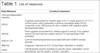
All participants are asked to complete assessment sessions at baseline, mid-treatment, post-treatment, and 3-month follow-up. The timepoint (i.e., baseline, mid-treatment, etc.) determines what measures are administered during each assessment session (Table 1). All measures are administered by trained Independent Evaluators (IEs). The IEs are experienced clinicians, trained professionals, or advanced graduate trainees who are provided with extensive training prior to administering study measures, along with weekly supervision by a licensed psychologist. The clinicians and participants cannot be blinded to treatment assignment. However, the IEs do not attend clinical supervision meetings with the therapists, have a workspace separate from the treatment area, and are trained to avoid any discussion of treatment programs with the families. Twenty percent of audio-recorded PARS interviews are reviewed to assess interrater reliability and rater drift.
| Rater/Measure | Construct assessed |
|---|---|
| Clinician/independent evaluator | |
| DAS-II64 | Cognitive assessment for children ages 2:6-6:11 (early years) to 5:0-17:11 (school years), which generates a general conceptual ability (GCA) composite score. Efficacious for use in children with cognitive and/or developmental delay. |
| WASI-II65 | Brief cognitive assessment for children aged 6:0 and up. Four-subtest version (30 min) and two-subtest version (15 min) generate FSIQ estimates. |
| ADIS-IV C/P56 | Level of severity/impairment associated with each DSM-IV anxiety disorder. |
| MINI-Kid66 | Diagnostic interview for ICD-10 psychiatric disorders in children. |
| PARS57 | Overall anxiety severity including six specific areas: separation, social, generalized, specific phobic, somatic, and other. |
| CY-BOCS-II67 | Nature and severity of OCD symptoms. |
| CGI-S58 | Psychopathology severity. |
| CGI-I58 | Treatment response and clinical worsening. |
| SACA68 | Parent report of the broad use of mental health services. |
| Therapist Time Tracking System69 | Time for treatment completed by the therapist. |
| Parent | |
| SRS-II55 | Child's social impairment associated with ASD. |
| Parent Time Tracking System69 | Time for treatment completed by the parent. |
| Cost Characteristics Information | Estimated costs (e.g., out-of-pocket treatment expenses, lost income due to missing work for therapy, patient time associated with treatment). |
| Child | |
| RCADS70 | Youth anxiety, OCD, and depression. |
| CSDS-C71 | Child functional impairment. |
ADIS-IV C/P = anxiety disorders interview schedule for children; ASD = autism spectrum disorder; CGI-I = Clinical Global Impression-Improvement; CGI-S = Clinical Global Impression-Severity; CSDS-C = Child Sheehan Disability Scale-Child; CY-BOCS-II = Children's Yale-Brown Obsessive-Compulsive Scale, Second Edition; DAS-II = Differential Ability Scales-Second Edition; FSIQ = Full Scale Intelligence Quotient; GCA = general conceptual ability; MINI-Kid = Mini-International Neuropsychiatric Interview for Children and Adolescents; OCD = obsessive-compulsive disorder; PARS = Pediatric Anxiety Rating Scale; RCADS = Revised Children's Anxiety and Depression Scale- Short Form; SACA = Service Assessment for Children and Adolescents; SRS-II = Social Responsiveness Scale Second Edition; WASI-II = Wechsler Abbreviated Scale of Intelligence-Second Edition.
TREATMENT FIDELITY
Fidelity measures have been developed in pilot work and adapted for the proposed project. The Parent Completion and Effort Rating (PCER) is an adapted measure72,73 that assesses parent completion of at-home tasks and the amount of effort the parent puts forth, as well as parent ratings on how often therapy skills are practiced at home. The total number of parent-child meetings completed is also documented. The PLTA Treatment Checklist tracks therapist adherence to PLTA. The standard CBT Treatment Checklist tracks adherence to standard CBT tasks, which are typically completed in-session with a therapist. Up to 20% of treatment audiotapes are assessed for interrater reliability.
CONCLUSION AND FUTURE DIRECTIONS
This study approach will provide valuable information regarding both the clinical outcomes and cost-effectiveness of a parent-led intervention for youth with HFA and comorbid anxiety. This service delivery model is expected to offer multiple advantages (such as improved accessibility and efficiency), help provide personalized care, and reduce costs. For clinics with waiting lists, rural areas with limited trained therapists, communities where therapists cannot meet demands, and clinics that have therapists who are funded via other sources that must meet patient treatment quotas, stepped care may be a desired treatment approach. This approach is anticipated to produce a validated, low-cost, parent-led treatment protocol that is able to be disseminated into "real-world" settings. Additionally, this model also provides the ability to identify predictors of responder status, thus enabling providers to deliver more appropriate treatment recommendations regarding level of care (i.e., PLTA or standard CBT) and allocating resources more efficiently. Furthermore, while the present study only includes one youth per family, parents learning these skills could potentially have an impact on parenting strategies for other children in the family due to changes in parenting behavior, as well as reduced family stress as the child improves. Future studies should explore the generalization of treatment effects to other untreated youth within the same household, as well as explore if the mechanism of treatment involves improved parenting practices.
However, the PLTA-SC model may pose some disadvantages. For example, a low-intensity first line of treatment may not be an effective intervention for complex or severe cases. Thus, tailoring variables are needed to personalize treatment. Furthermore, high rates of attrition may be observed, especially for parents with their own psychological concerns or among families with a high degree of stress. Nevertheless, findings from this study will help tackle these problems by yielding data on predictors of treatment response and adherence.
Given the high incidence of anxiety in youth with ASD, and the associated pressing need for more accessible evidence-based treatments for anxiety in this population, novel approaches and additional research are critical. This study serves as a model for developing and assessing the efficacy and cost-effectiveness of adaptive interventions that address significant known treatment barriers and improve outcomes in this population. It also provides a foundation for future studies to comprehensively evaluate the benefits of a stepped-care approach relative to usual care for youth with ASD and anxiety.
ACKNOWLEDGEMENTS
This manuscript was supported by a grant to the last author from the Texas Higher Education Coordinating Board. SCS receives funding from the Texas Higher Education Coordinating Board and Red Cross. AS receives grant support from the National Institute of Mental Health (1R01MH107522-01) and from the Patient-Centered Outcomes Research Institute. EAS receives funding from the National Institutes of Health (NIH), Red Cross, ReBuild Texas, Greater Houston Community Foundation, and Texas Higher Education Coordinating Board.
We thank Dr. Rachel Fein, Katherine C. Bergez, Mayra I. Perez, Rebecca J. Clayton, Keith T. Thomas, and Sindy M. Mejia for their contributions to this project.
Disclosure
RPG-K has served as a consultant for Yamo Pharmaceuticals on the design of clinical trials for individuals with ASD. AS receives royalties from Taylor and Francis; is one of the developers of Stepped Care Trauma-Focused Cognitive Behavioral Therapy (TF-CBT) and is a national trainer for TF-CBT. EAS receives book royalties from Elsevier, Wiley, APA, Springer, Lawrence Erlbaum, and Oxford; receives travel support from the IOCDF for training behavioral therapy for OCD. The other authors report no conflicts of interest.
 PDF
 Print
 Send this article by email
 How to cite this article
 Submit a comment
 Mendeley
 Pocket
 Share on Facebook
 Share on Twitter



